The future of Kesennuma
"When I think about where we can check our answers, I wonder if it's by observing the growth of high school students."
(Teacher Chida, Kesennuma Municipal Shishiori Elementary School)
Since the Great East Japan Earthquake, there is a town that has been focusing on "the sea" as its theme in education for the sake of future sustainability. That town is Kesennuma City in Miyagi Prefecture.
Fifteen years have passed since the disaster struck in 2011, and for those who will reach adulthood in 2026, the memories of the earthquake are not necessarily clear, but rather hazy.
Whenever a major disaster strikes, there are voices from society saying, "We must not let it fade away." However, as 15 years pass, those memories begin to fade, and this is not limited to children.
Since 2013, Kesennuma City has been focusing on education as part of its efforts to create a city that "lives with the sea," under the name of "marine education," which includes not only the dangers of the sea but also its blessings.
Marine education is an educational approach that teaches about the connection between people and the ocean, which is deeply intertwined with life, the environment, and daily life on Earth. While various attempts are being made across Japan to live in harmony with the sea, marine education in Kesennuma has also been progressing as a community-based educational initiative through trial and error.
As the children who experienced marine education now take their first steps into adulthood, how do they view the education they received? In this two-part series, we look back on 13 years of marine education in Kesennuma, together with the children and the school staff in Kesennuma who carried out the education.

Those appearing in the interview (common to both parts)
(Teachers)
Ryo Asano (Chief Operations Officer (Operations Supervisor), Kesennuma City/Miyagi University of Education Collaboration Center)
Hirofumi Onodera (Principal of Shikaori Elementary School)
Ayami Kameya (Teacher at Menose Elementary School)
Misako Sakurai (Principal of Hashikami Junior High School)
Yumiko Sato (Principal of Menose Elementary School)
Kota Chida (Teacher at Shikaori Elementary School)
(To all high school students)
Shiina Onodera (3rd year student at Kesennuma High School)
Natsuki Kuranaga (3rd year student at Kesennuma Koyo High School)
Akari Suhara (3rd year student at Kesennuma Koyo High School)
Shohei Nakamura (3rd year student at Kesennuma High School)
Aoi Hatakeyama (3rd year student at Kesennuma High School)
Matsuoka Neika (3rd year student at Kesennuma High School)
Kazuyoshi Murakami (3rd year student at Kesennuma Koyo High School)
*Names are listed in alphabetical order. All elementary schools are Kesennuma City schools, and all high schools are Miyagi Prefecture schools. Affiliations and positions are as of February 2026.
Learning about the ocean for children
These learning activities have been developed as "marine education." How have the children received them, and what meaning do they now associate with them?
Murakami: "I remember the aquaculture experience in elementary school. We grew seaweed and scallops. I like scallops and was curious about how they grow, so I was glad to learn about it and it was fun. I wanted to learn more about the sea and I was also interested in boats, so that's why I chose Mukaiyo High School."
At Oshima Elementary School, where Murakami attended, they offered aquaculture experiences in the sea as part of their curriculum. This experience became one of the factors he considered for his future. This spring, he graduated from Kesennuma Koyo High School and will work as a sailor.
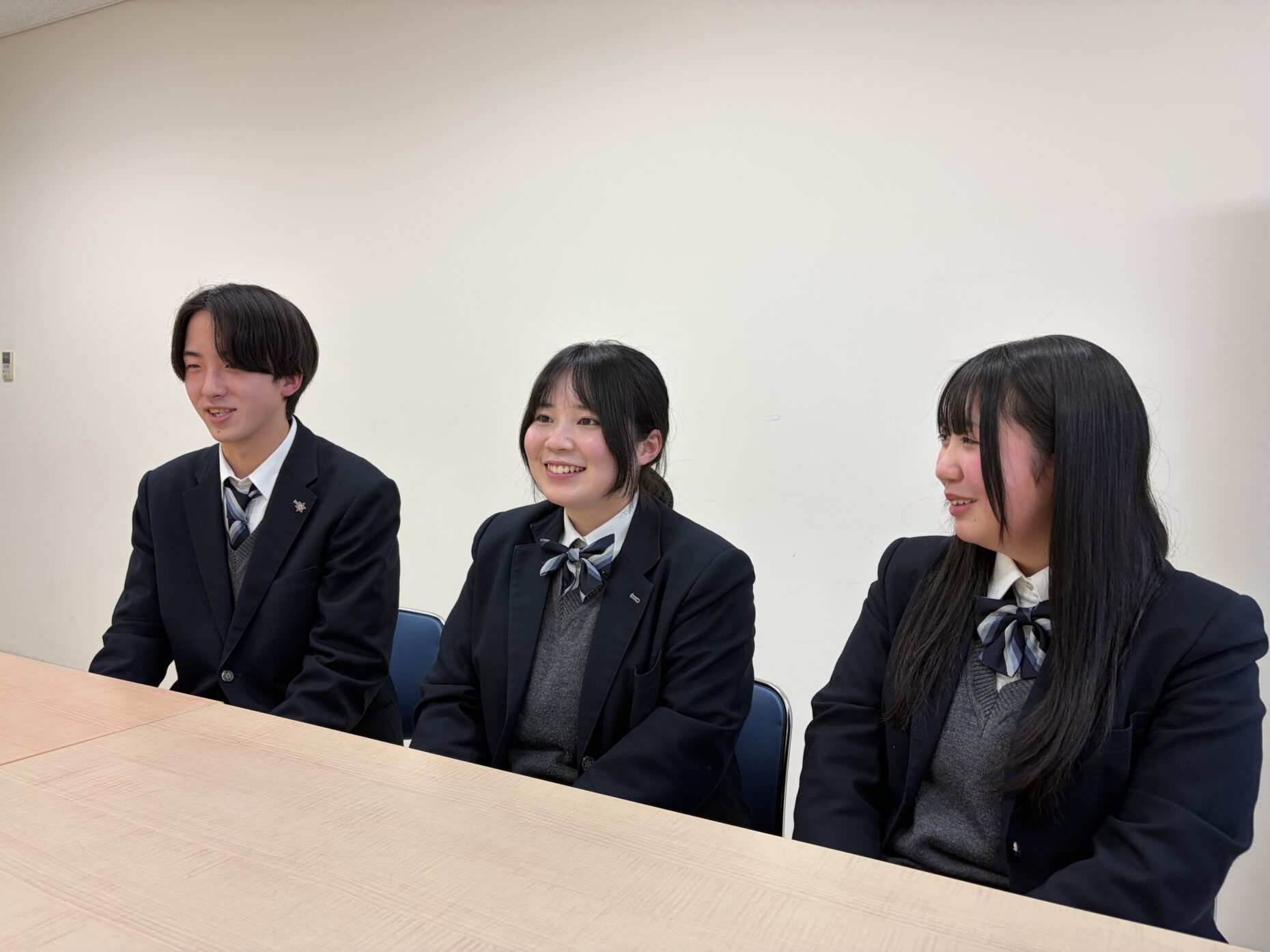
Students graduating from Kesennuma High School also spoke.
Nakamura: "I often think about how I did that as an elementary school student. It might be an exaggeration to say that marine studies are my pride and joy, but I think it was something I was able to do the most. Because of that experience, I still have a lot of confidence that I can do it. It's my origin."
Hatakeyama: "I became interested in technical trainees during my marine education, and I continued to explore that topic all the way through high school. It was the first time I'd ever been able to stick with something for such a long time, so I think it was really great."
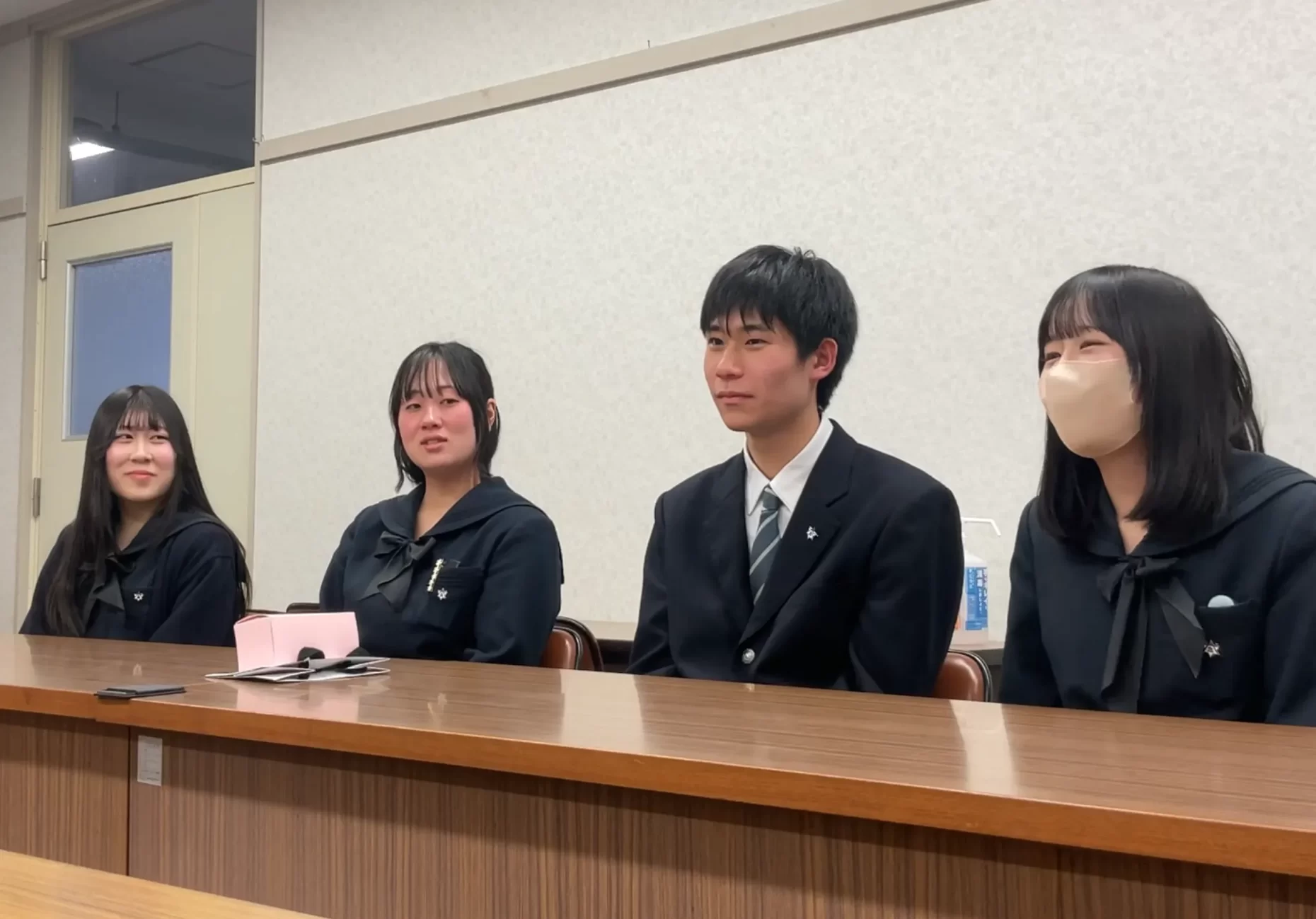
On the other hand, for Ms. Kuranaga of Kesennuma Koyo High School, marine education seems to have been a somewhat different experience.
Kuranaga: "Once a year, we have a school-wide event where we all go to the beach to pick up trash and then create sand sculptures. That's why we cleaned up the beach."
Although she had regular experiences playing in the sea, she says she doesn't have a strong impression of marine education at school.
Despite these varying degrees of impact, there was a shared understanding that it was meaningful for Kesennuma. Shiina Onodera of Kesennuma High School explains:
Onodera (Shiina): "I didn't really understand the meaning of marine education, and at first I wondered if our small efforts could really do anything for Kesennuma. But as a resident of Kesennuma, I felt like it was something we should do."
Education that supports the progress of reconstruction
The concept of marine education arrived in Kesennuma in 2013. This was due to an encounter between the Ocean Alliance Research Center for Marine Education Promotion at the University of Tokyo (reorganized into the Marine Education Center attached to the Graduate School of Education in 2019), which aims to spread marine education, and the Kesennuma City Board of Education. In 2014, a "Cooperation Agreement as a Hub for Promoting Marine Education" was signed, marking the starting point for full-scale marine education.
The construction of seawalls and land relocation have physically distanced the sea, and the fear of the sea, which has caused major disasters, has also created psychological distance. Nevertheless, Kesennuma cannot be separated from the sea. Rather than distancing itself from the sea, marine education has been positioned as a means to support the exploration of how to live in harmony with it.
Shikaori Elementary School Principal Onodera (Yutaka): "In a town where many people make a living from the sea, we felt it would be good for the citizens to strongly emphasize education that is connected to the idea that 'people work together with the sea.' Kesennuma, with its ria coast, is close to the sea even in the mountainous areas, and the whole of Kesennuma has the characteristic of being one 'sea town,' so I think both teachers and citizens were positive about having learning based on that at school."

Ms. Onodera says that marine education was a positive activity from a citizen's perspective. Ms. Chida, a teacher at the school, also believed it would be an opportunity to shed light on local industries through education.
Chida: "It was a great fit for Kesennuma, and I got the impression that we could deepen our learning from various angles. I had the expectation that marine education would give value to the work of fishermen."

The phrase "Living with the Sea," which was a slogan for post-earthquake reconstruction, also served as one of the impetus for engaging in marine education. Mr. Sakurai, the principal of Hashikami Junior High School, was a member of the Board of Education at the time and witnessed its inception.
Sakurai: "'Living with the Sea' became a major catchphrase. At the time, there was a sense of loneliness as we gradually drifted away from the sea after the earthquake, but because we were a region that had to continue living with the sea, we wanted the children to feel that 'the sea is amazing.' For me, I thought it was great that we were incorporating marine education as a way to turn our attention back to the sea, and that this was truly Kesennuma."
The affinity between Kesennuma and the phrase and vision of "marine education" is self-evident. However, having the sea as a matter of course and being a town that "lives with the sea" is different from it being the focus of educational activities. From that perspective, Kesennuma has not necessarily adequately treated the sea as the subject of its educational activities. Kameya, a teacher at Menose Elementary School, describes his own childhood as follows:
Kameya: "Even though I'm from the area, I didn't know anything about Kesennuma. This year, I visited Mirai Shipbuilding (Mirai Shipbuilding Co., Ltd., a company mainly engaged in shipbuilding located in Asahi-cho, Kesennuma City) for the first time and realized, 'Kesennuma is a shipbuilding town.' I myself am learning along with the children of today."
The concept of marine education became the catalyst for Kesennuma to once again focus on the sea and make it the theme of its education.

The beginnings and expansion of marine education
To reiterate, marine education is education that teaches about the connection between the sea and people. The sea supports a great deal of life and the environment, and is deeply intertwined with our lives. The aim of marine education is to think about and practice how to live in harmony with the sea. Under the principle of "coexistence between the sea and humankind" enacted in the Basic Act on Ocean Policy in 2007, various initiatives have been promoted throughout the country. (See reference) What is marine education? (by 3710Lab)
However, no specific guidelines were provided regarding "what kind of lessons should be taught" in schools, and the actual lessons were left to the ingenuity and judgment of the administration and individual schools. For this reason, the number of regions undertaking marine education did not increase initially, but especially after the Great East Japan Earthquake, a movement emerged in various places to re-examine the relationship between the sea and people and to structure marine education as a form of learning that envisions the future. Kesennuma's initiative is one such example.
Furthermore, Kesennuma has been working to create a system that prevents marine education from being confined to schools and local communities. The "Marine Education Children's Summit" (hereinafter referred to as the "Children's Summit"), which began in 2016, is a prime example of this initiative.
Asano, who worked tirelessly to make the Children's Summit a reality as the principal of Menose Elementary School, the venue for the first summit, and as a member of the Kesennuma City Board of Education, reflects on that time as follows:
Asano: "We needed someone to share what we've learned in marine education and to exchange ideas with. By interacting with schools outside of Kesennuma, we could create a more focused and engaging experience than we would with schools within the city. Also, the results of the learning that has taken root in the children's school life would naturally be expressed in their presentations, so we thought it would be a meaningful opportunity for both the children and the teachers."
At the first Children's Summit, children and teachers from Hirono Town, Iwate Prefecture, visited Kesennuma to present the results of their learning and deepen their exchanges. Since then, Kesennuma City and Hirono Town have alternated as venues, and the summit has been held in person many times. From 2020, due to the COVID-19 pandemic, it shifted to an online format and has continued until 2025.

Teachers hitting a wall
Meanwhile, as marine education gradually expanded, it faced various challenges.
Onodera (Yutaka): "First of all, the question is, 'What exactly is marine education?' I think that what constitutes marine education was vague, both for myself and for the city as a whole, and the discussion was somewhat superficial."
I understand the significance of engaging in marine education. However, what should be done in the lessons? Which subject should it be in, and what content should be covered? Class time is already tight, and there's a lot to cover; adding even more new content seems excessive...
Early approaches to marine education, both nationwide and in Kesennuma, centered on "science." This was because much of the content related to the sea, such as marine life, its mechanisms, and the environment, was included. In addition, many lessons connected topics such as water and air to the sea.
However, in Kesennuma, these perspectives represent only one aspect of "living with the sea." There are also industrial structures that rely on the sea to support the region, as well as festivals, customs, and food culture that have arisen from the relationship with the sea. While it is important to deepen our natural scientific understanding of the sea, the question arises whether that alone is sufficient.
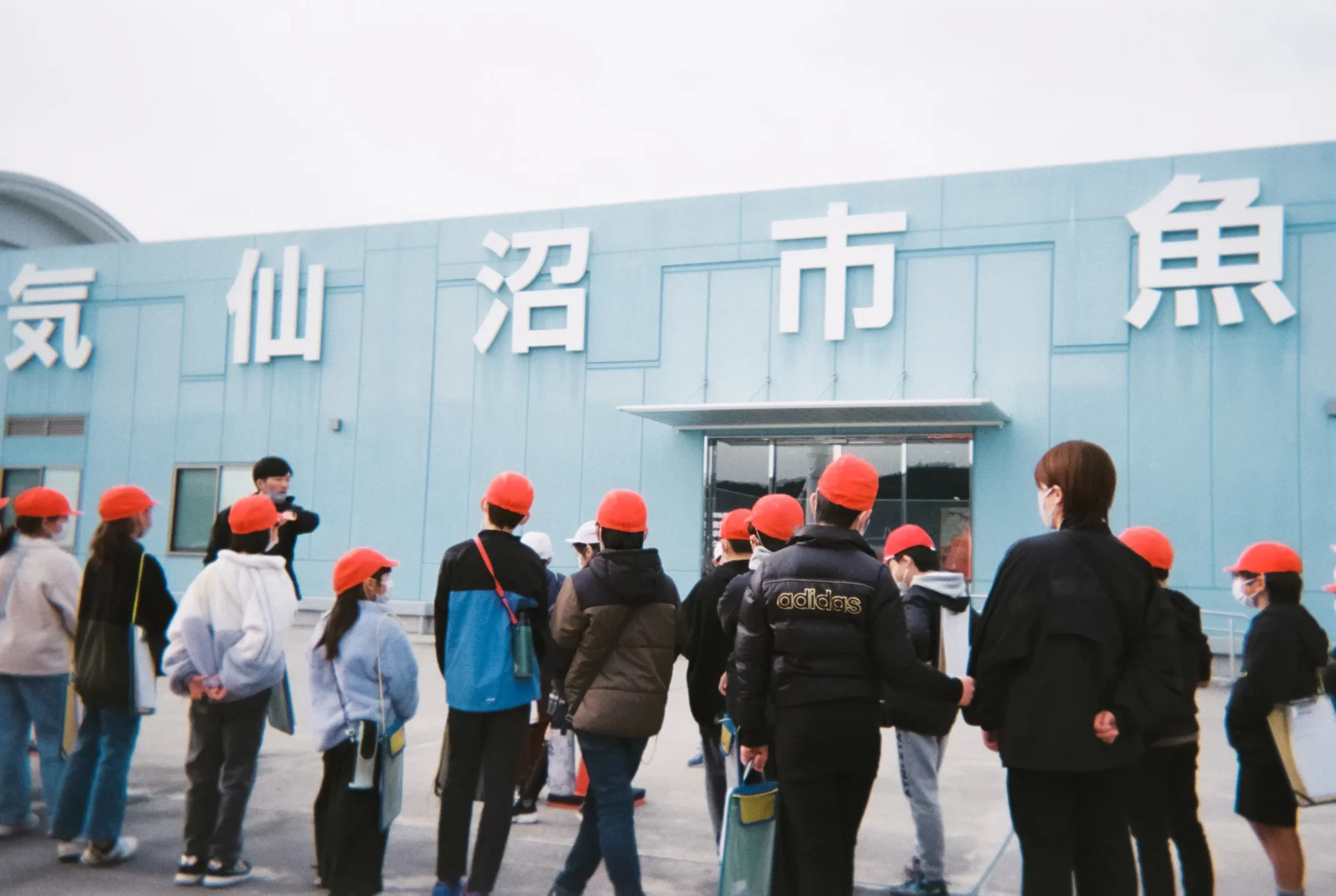
Furthermore, even if the perspective that "marine education is the scientific study of the sea" is established, the next step is to choose specific learning topics. However, it is difficult for all children to be positive about learning about a particular topic.
Hatakeyama: "Marine plastics were difficult. I was listening and trying to understand, but it's not my area of expertise, so it just didn't sink in. When asked, 'What are marine plastics?', I couldn't answer like someone who was interested in the topic."
Nakamura: "It's not like everyone will find it fun. Some people couldn't find something they were interested in, or they were forced to work on a theme they didn't like. There were quite a few people who, even when told to 'do what you like,' weren't particularly interested."
The marine education program in Kesennuma, which started with the aim of "living in harmony with the sea," encountered the question of "what and how should we teach?"
Nevertheless, teachers in Kesennuma continued to explore and discuss the ideal form of marine education through their daily lessons. The Board of Education also supported the challenge to fundamental questions by establishing the "Kesennuma City Educational Researcher System" to enable teachers to conduct research, and by organizing a committee that brought together research institutions from inside and outside the city.
Sakurai: "The teacher's passion was incredible. He was really putting his all into it, thinking, 'What materials should I use to teach this to the children?' I thought, 'This is what a teacher should be.' It really made me realize how much fun lesson planning can be."
What should we convey to children, and what should we teach them? What is necessary for children to live in the future? What should lessons be like? Through repeatedly creating lessons, which is the most concrete dimension of all, we gradually began to take shape a path towards a vision of marine education for "living with the sea."
Realization: 3710Lab