"The Meaning of the Sea" Vol. 4
Kohei Kosaka (Spear Fisher)
A childhood spent chasing after living creatures and learning the preciousness of life.
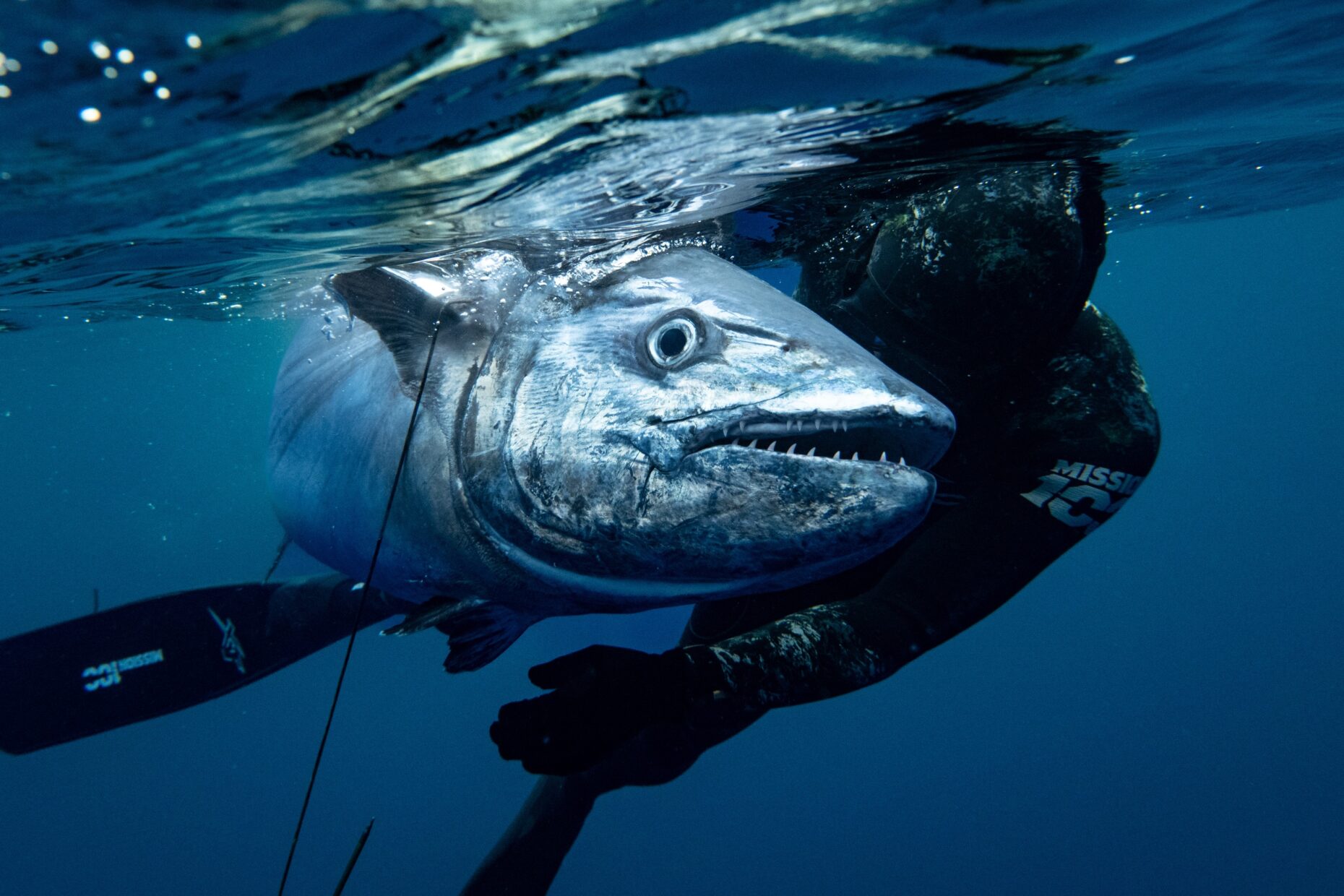
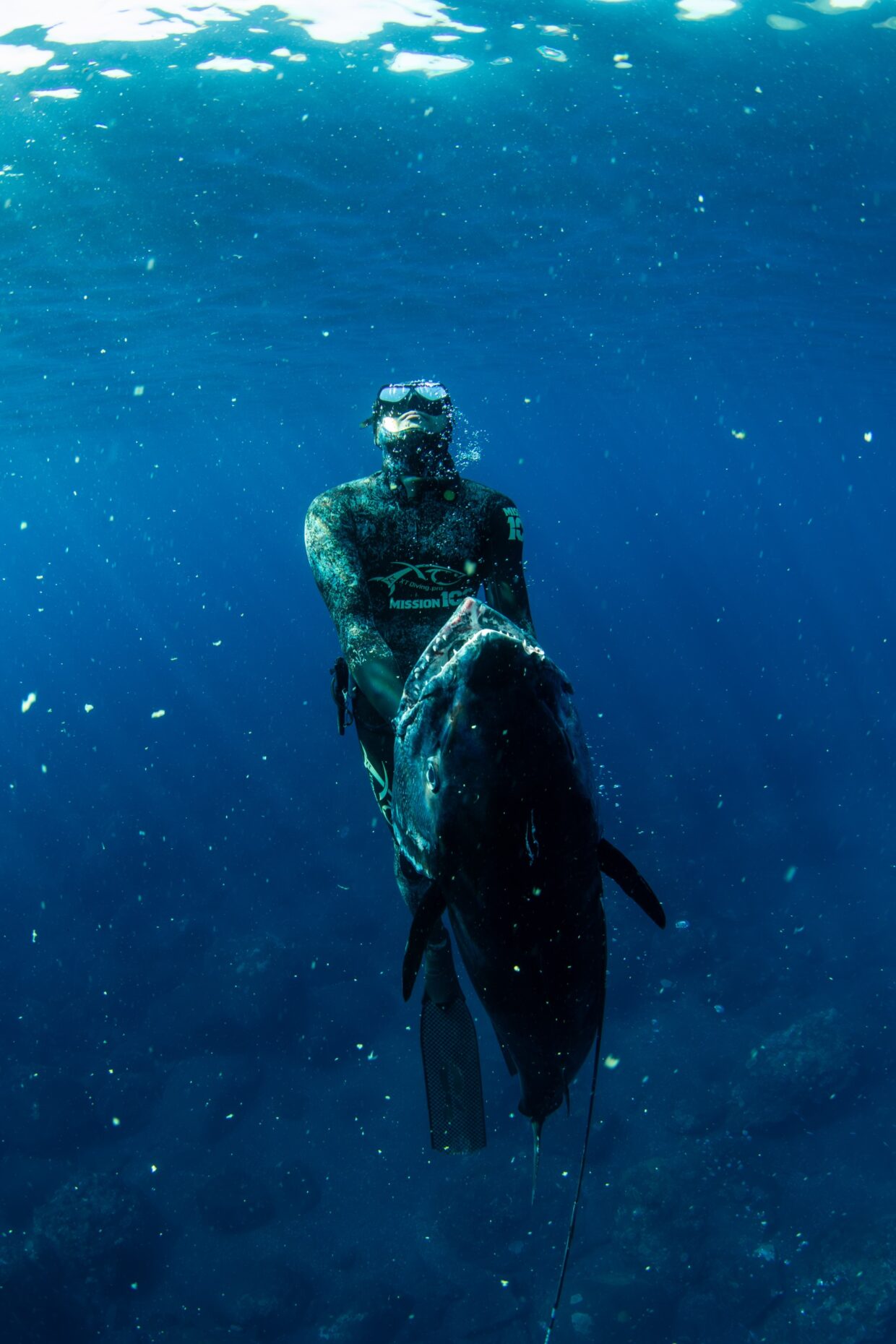
Kohei Kosaka is a spearfisher who dives deep into the ocean without using air tanks or other equipment, and catches giant fish with just a spear. He encountered free diving and spearfishing after enrolling in the skin diving club at Tokyo University of Marine Science and Technology, and was quickly captivated by its allure. In 2025, he achieved his biggest goal: to catch a dogtooth tuna weighing over 100 kg. He is currently working with his friends to create a documentary film chronicling his 11-year challenge.Mission 100While working tirelessly to get the film screened, they are also moving towards a new goal.
Kosaka grew up in Chofu City, Tokyo, a place far from the sea. His interest in the ocean was sparked by his family.

"My maternal grandfather, who was a Kyokushin Karate master, was well-versed in a wide range of fields, including Oriental medicine, folklore, and living creatures, and he told me many stories about the sea. That's how I think I became interested in marine life, especially jellyfish. On the other hand, my father was seriously into keeping saltwater fish, and he would tell me things like, 'The number of peppermint angelfish that live in the Cook Islands has decreased because fewer people are collecting them through tech diving,' or 'Asfur angelfish live in the Red Sea near Egypt.' So, instead of just swimming in the sea, I suddenly encountered the oceans of the world. And from the very beginning, I had this interest in 'What kind of world is unfolding underwater?'"
As a child, he loved all kinds of animals, and he spent his days running around searching for them.
"On my days off, I would go tide pooling with my parents and bring home crabs and sea anemones that we caught there. And then there were aquariums. First, there was the jellyfish section on the top floor of the old Enoshima Aquarium. I became fascinated with a type of sea urchin called the sand dollar, and my parents would take me to the Kasai Rinkai Aquarium almost every weekend. When I was little, I wasn't very interested in fish, and even when my parents took me stream fishing, I would turn over rocks and look at insects. The larvae of the flat mayfly are like jewels. I would bring those home too, but they die quickly unless the current is fast and there is enough oxygen."
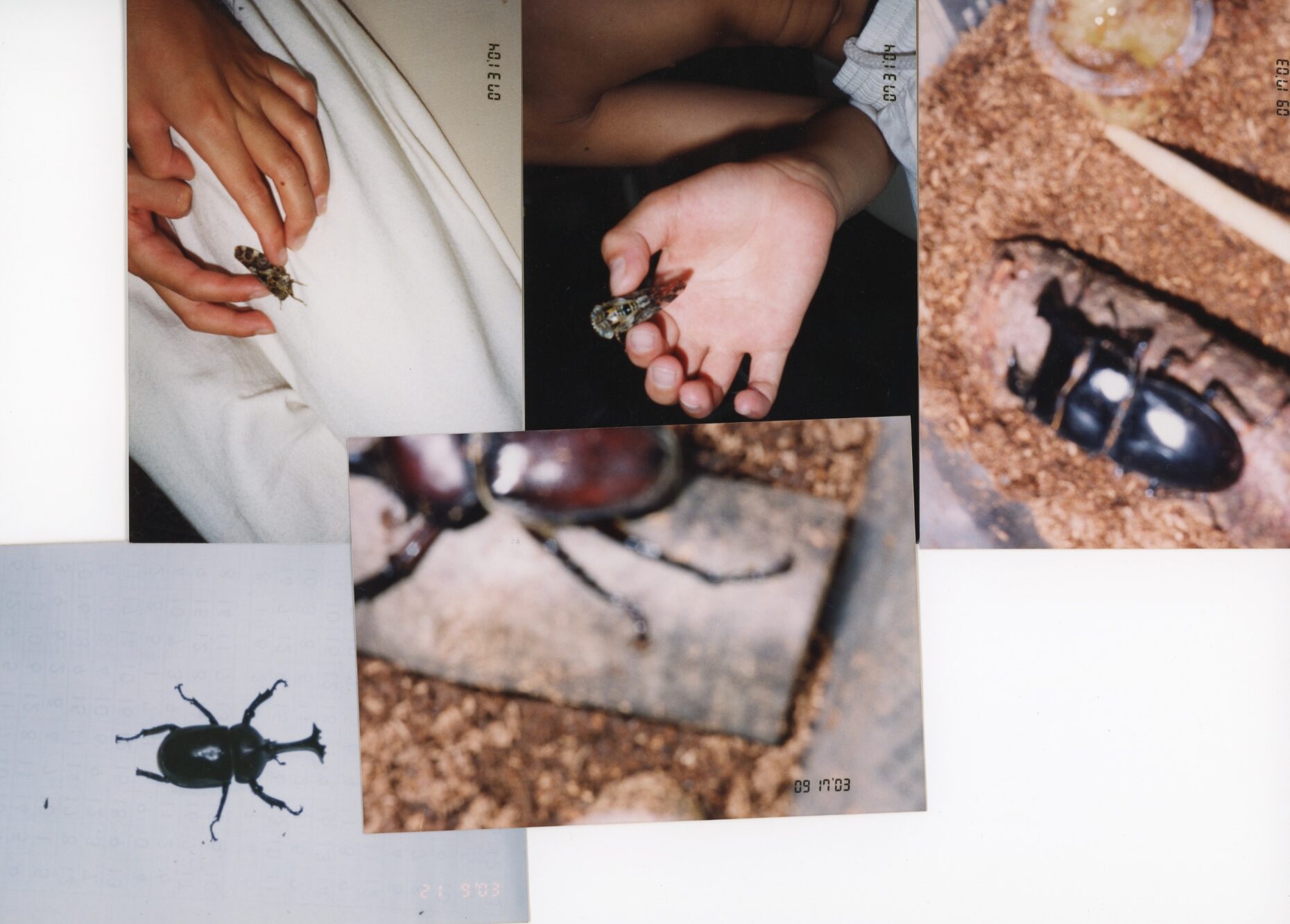
She says that the experience of having to "let go" of many animals she kept as pets during her elementary school years remains a vivid memory for her.
"I used to keep grasshoppers as pets, and since they're carnivorous, I'd catch baby swallowtail butterflies and grasshoppers every day and feed them to them by hand. I'd watch them gobble them up and think, 'Oh, they're eating.' But gradually, I came to realize that I preferred observing living things in nature rather than recreating nature at home. I kept them because I liked them, but if I couldn't take care of them properly, they'd die. If I left the carcasses as they were, mold would grow on them, and the larvae of parasitic flies would come out of their bodies, making them smell terrible. Looking back now, I think I was probably thinking about life and death around that time, realizing, 'This is what happens when you die,' and 'I killed it.'"
After dedicating my middle and high school years to cycling, I've returned to my elementary school dream.
When Kosaka entered a university-affiliated junior and senior high school, his interest in living creatures temporarily shifted away. "There weren't any kids around me who liked living things like in elementary school, and even though there were aquariums in the science lab, I wasn't interested in them." It was around this time that he became hooked on road cycling, and until his second year of high school, he lived a life completely immersed in cycling.
"When I was in sixth grade, my friends and I were talking about how we could reach Okutama if we rode our bikes upstream along the Tama River, and when we tried it, we actually did it. I was so impressed that I could go so far even though I was just an elementary school student, so I got a hybrid bike as a gift for entering junior high school. With that, I was able to ride long distances, but the older men in tight-fitting clothes that I saw at my destinations were definitely faster than me. So, I asked my parents to add a little extra to the New Year's money I had saved up, and I bought a road bike, and then I joined a corporate team that I found out about through an advertisement in a cycling magazine."
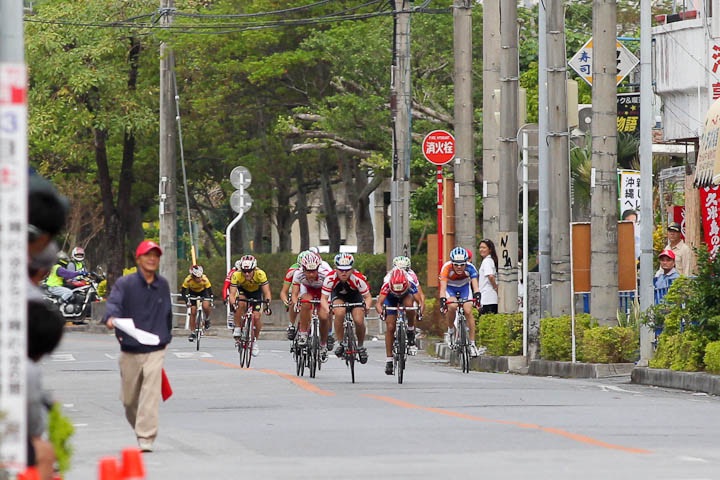
He joined the team, but the training was far more grueling than he had imagined, as it was described as "the most athletic team in the Tama area." In a team composed entirely of adults, he wasn't given any special treatment just because he was a middle school student. He was left behind on mountain trails, suffered from hunger knock (a state of extreme hypoglycemia during exercise) due to lack of refueling, and lost his way home many times. He also fell and ended up with his whole body scraped. "Even so, I wanted to get stronger, so every day after school I would draw lines on a printed map, put it in my pocket, and go for a run." However, those days came to an end after about four years.
"At first, I would get stomach aches during practice, but gradually, just looking at a bicycle would make my stomach hurt. I think the team's culture, where if you didn't perform well at the weekend practice sessions, you were treated as if you didn't exist, also played a role. I also had pride in the fact that I hadn't joined a school club and had jumped into the world of working adults to take up such a tough sport as cycling, so it was difficult. But when I stopped riding my bike for a few days after moving house, the stomach aches disappeared as if by magic. I realized then that I had been ill, and I quit the team."
With bicycles gone from his life, Kosaka felt literally "empty," and spent his days holed up in his room, simply reading the sea encyclopedias and books about marine life that he had read as a child. It was then that his "longing for the sea" was rekindled.
"Actually, when I was in sixth grade, my dream was to become an oceanographer. Even back then, I already had a field I wanted to research. I was particularly fond of deep-sea fish, especially anglerfish. As you can see from the fact that the average depth of the world's oceans is about 3,800 meters, the deep sea is a vast realm. So, I wanted to work at an overseas research institute that had a submersible and see the deep-sea world with my own eyes. Remembering that, I decided to take the entrance exam for Tokyo University of Marine Science and Technology! At the time, I was about 10th from the bottom of my class, but thanks to cycling, I knew that you can change yourself if you push yourself, so studying for the entrance exam wasn't difficult."
Free diving and spearfishing, which I discovered through club activities, changed my life.
Thus, he successfully passed the entrance exam to Tokyo University of Marine Science and Technology. "At Tokyo University of Marine Science and Technology, all the classes were about the sea. Every day was interesting," he says. On the other hand, a major event that would shape the rest of his life also occurred at university: joining the skin diving club "Buddy!".
"A senior who was really tanned approached me, and without really knowing what to expect, I followed him. It turned out to be a club where we spearfished while free diving. Those seniors were just amazing; they all had sparkling eyes and talked about how great the ocean and spearfishing were. I was instantly captivated, and I forgot all about being a terrible swimmer. On the weekend, I took the Keikyu Line from Shinagawa, and then a bus from Misakiguchi to Aburatsubo Bay, just as they invited me."
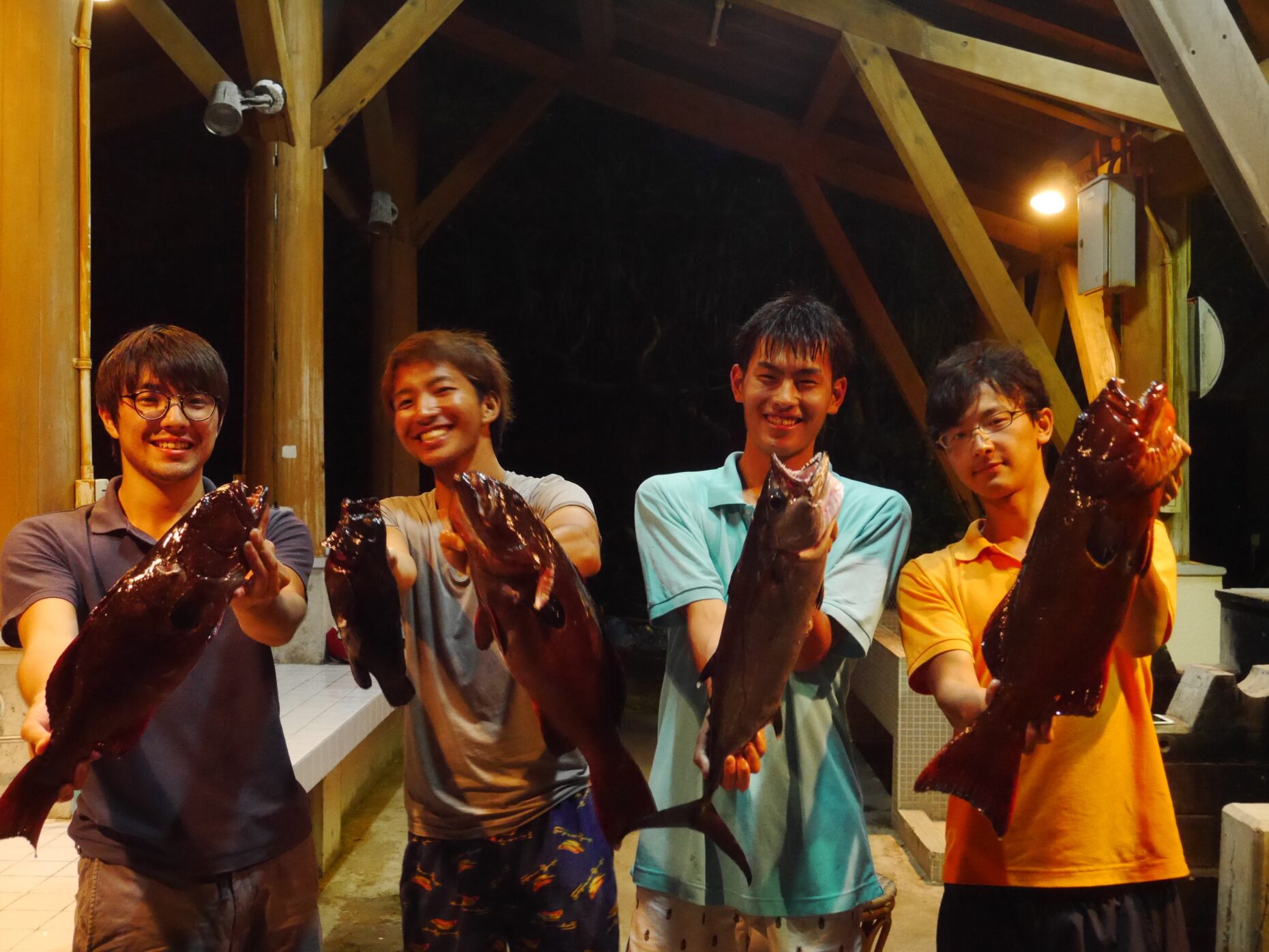
At first, he says, "I was wearing a wetsuit, and I had fins and a snorkel, so I should have been able to swim, but just going to a place where my feet couldn't touch the bottom made me breathless and it was tough. Catching fish was out of the question." He says that he gradually got used to diving by going to the sea every weekend. Instead of buying ready-made equipment, they started by making their own spears. It is a rule that first-year students process golf shafts and ski poles collected by previous members to make their own spears.
"Making my own spear helped me understand its structure, which was great. I took it and made my spear-spear debut in July. The first thing I speared was a porcupinefish, followed by a spotted pufferfish. I thought, 'Oh, I've got one,' but the next moment, seeing it thrashing around, I panicked and thought, 'What should I do?' From the very beginning, I felt that I had just taken the life of this fish."
The first time I caught a big one was around the autumn of that year.
"My friend and I speared a flounder over 80cm long in water about 5 meters deep. The moment we speared it, the flounder thrashed about with incredible force, bending the spear. It was so strong that I was intimidated for a moment, but before I knew it, I was serious about it. I realized how weak humans are in the ocean, and for the first time, I understood that it's a world where you lose if you don't face it head-on."
Around that time, I encountered a photograph that would change my life.
"I saw a photo of a dogtooth tuna caught by a customer on the website of a diving shop. When I saw it, I was blown away. I was shocked by the fact that someone had speared such a huge fish, and more than anything, by the tuna's beastly face. When I saw it, I thought, 'I want to catch this fish myself at some point in my life.' Of course, at the time I didn't know how difficult it would be, and I couldn't even imagine the depth of the world beyond that."
Sharpening all my senses to feel the ocean and confront the fish every day.
Throughout his university life, Kosaka became increasingly engrossed in the world of spearfishing. Meanwhile, for his graduation thesis, he was able to pursue his original dream of focusing on deep-sea fish.
"I belonged to the Fisheries Research and Education Agency, a research institution of the Fisheries Agency, which is like an external research lab for Tokyo University of Marine Science and Technology. They have accumulated a huge amount of deep-sea samples and data that students could never collect, but when I heard from my professor that 'the big-eyed John Dory is untouched,' I raised my hand and said, 'I want to do it!' I knew that the big-eyed John Dory is a deep-sea fish that is also sold as dried fish, and that it is a fish that lives an extremely long time. If my research was correct, there are individuals that are about 150 years old. However, when they are juveniles, they probably grow up in shallow waters. We don't really know the truth because we only have specimens that came out of the stomachs of bonito... There are so many things we don't know about the ocean. So, in the paper, I could only say, 'The big-eyed John Dory is long-lived. Also, looking at the trends in catch data, the difference between males and females is changing, and looking at the body length composition, they are getting smaller, and signs of overfishing are beginning to appear. A framework will be needed regarding fishing,' but anyway, it was interesting."
During his university years, he interned at a fisheries trading company and the North Pacific Fisheries Commission (an international organization aimed at the sustainable use of fishery resources and the protection of marine ecosystems in the high seas of the North Pacific), but ultimately, "I wasn't able to catch any dogtooth tuna while I was a student, so I wanted to focus on spearfishing for a while," and after graduation, he neither got a job nor went on to graduate school.
"Even so, I think aiming for Tokyo University of Marine Science and Technology was one of the best choices of my life. Not only was I able to learn a lot about the ocean, but if I hadn't gone to Tokyo University of Marine Science and Technology, I wouldn't have been able to take up spearfishing or meet such special friends."

The year after graduation, he began training in freediving to gain the lung capacity needed to catch dogtooth tuna. Now, he can freedive to a depth of 68 meters, hold his breath for 7 minutes, and has a lung capacity of 8.6 liters (Note: The average for men in their 20s is 4-4.5 liters). Spending about 250 days a year in the sea, in 2019 he caught an 18.3 kg black grouper, setting a new world record for spearfishing, the first by a Japanese person. In 2020, he successfully speared an 84 cm, 63 kg dogtooth tuna, and in 2021, he caught an 86.1 kg dogtooth tuna. And in 2025, he finally caught a 105.5 kg dogtooth tuna.
"When I speared the 105.5kg tuna, my perspective on spearfishing completely changed. It was like... I was dancing with the tuna. I can't dance, but I know it wouldn't work if I was just pushing and pulling all the time. It felt like I was adjusting to its movements in a rhythm, and it was adjusting to mine. That's the kind of feeling I got."

"I believe that free diving and facing fish with just a spear is fairer to the fish because it carries a greater risk of losing one's life compared to using a speargun," says Kosaka. When he recently received the 30th Naomi Uemura Adventure Award, he was recognized for the purity and originality of his adventure, which involves "deliberately confronting the vastness of nature in a dangerous and irrational way, and engaging in a life-or-death struggle." Every time he dives into the sea, he is reminded of how important it is to have the sensitivity to perceive nature.
"When you listen to stories from fishermen of the past, you hear so many amazing tales. Like, 'My grandfather could tell where the Spanish mackerel were just by the smell of the wind.' When we're diving, we sometimes see Spanish mackerel appearing in areas with slightly unpleasant currents, but the fishermen could tell just by the smell without even diving. Isn't that incredible? I also catch fish by feeling the atmosphere of the sea, the types of fish, the currents and the feel of the water, and predicting things like, 'Ah, there's probably a yellowtail of over 20 kilograms coming from over there,' but that kind of intuition is being lost in modern city life. We get bored in such a short amount of time that we get annoyed by 10-second ads on YouTube. That's why I try not to look at social media too much, and when I'm in Tokyo, I try not to take out my smartphone while traveling on the train."
When asked what he thinks about when he dives into the ocean, he replied, "It's hard to put into words, but I think about things like the currents and the topography, like 'maybe I should go that way,' or if I see a good rock, 'maybe I'll find a grouper if I dive there.'"
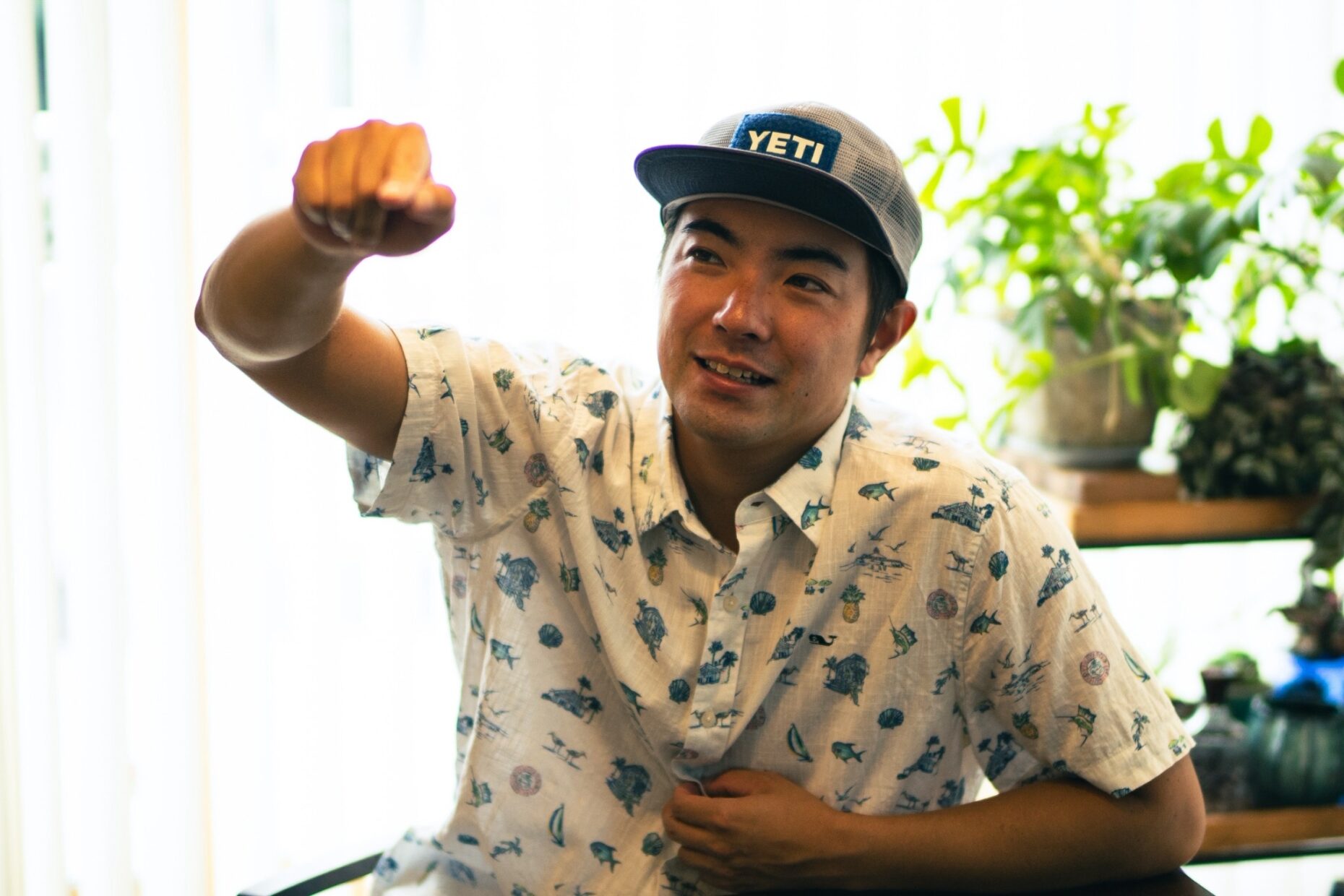
"When the water temperature rises in early spring, there's a phenomenon called 'spring turbidity,' where phytoplankton proliferate and hit your face, making you think, 'Ah, it's spring.' And when there's a red tide or when corals are spawning, you think, 'It smells awful!' Also, the ocean is full of sounds. When a school of dogtooth tuna gets startled and scatters, it sounds like a firecracker going off right next to your ear. You can also hear the fish communicating with each other by rattling their swim bladders. So, it feels like you're using all your senses while diving."
When I asked him about the meaning of the sea, he replied, "The sea is just there."
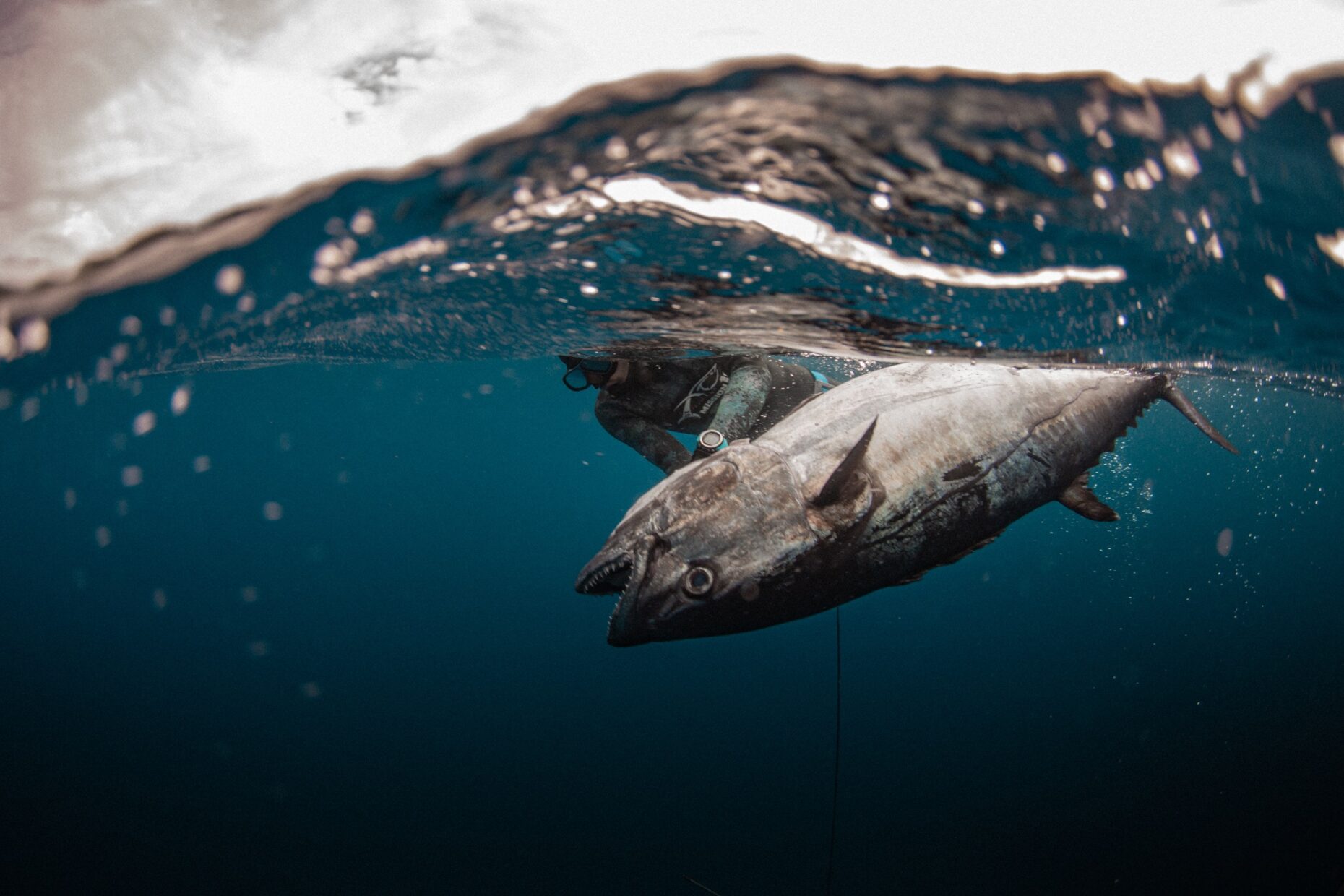
"No matter what humans think, the ocean is just there, and it will continue to be there. For example, I had a bad season this year. Last year I caught a dogtooth tuna weighing over 100 kg, but this year the typhoons came quite early, so I didn't have any chances even in the same place. When I think about my lifespan as a hunter, it's frustrating and makes me anxious. But that's nothing more than my own ego, isn't it?"
Regarding human-caused marine pollution, she says, "Sometimes I think it's not something that can be judged as simply good or bad. Nevertheless, it's very important to have a sense of awe and respect for the ocean and nature."
"The consequences of altering the natural landscape to suit human convenience are unpredictable, and the interactions between living things in the natural environment are far more complex than humans realize. That's why I want to cherish each individual's feelings towards the ocean. Thanks to my family and friends, I grew to love nature and become interested in the ocean. Aquariums, museums, and encyclopedias were also very important to me. So, I think we should create opportunities in various ways for people to connect with and become interested in the ocean."
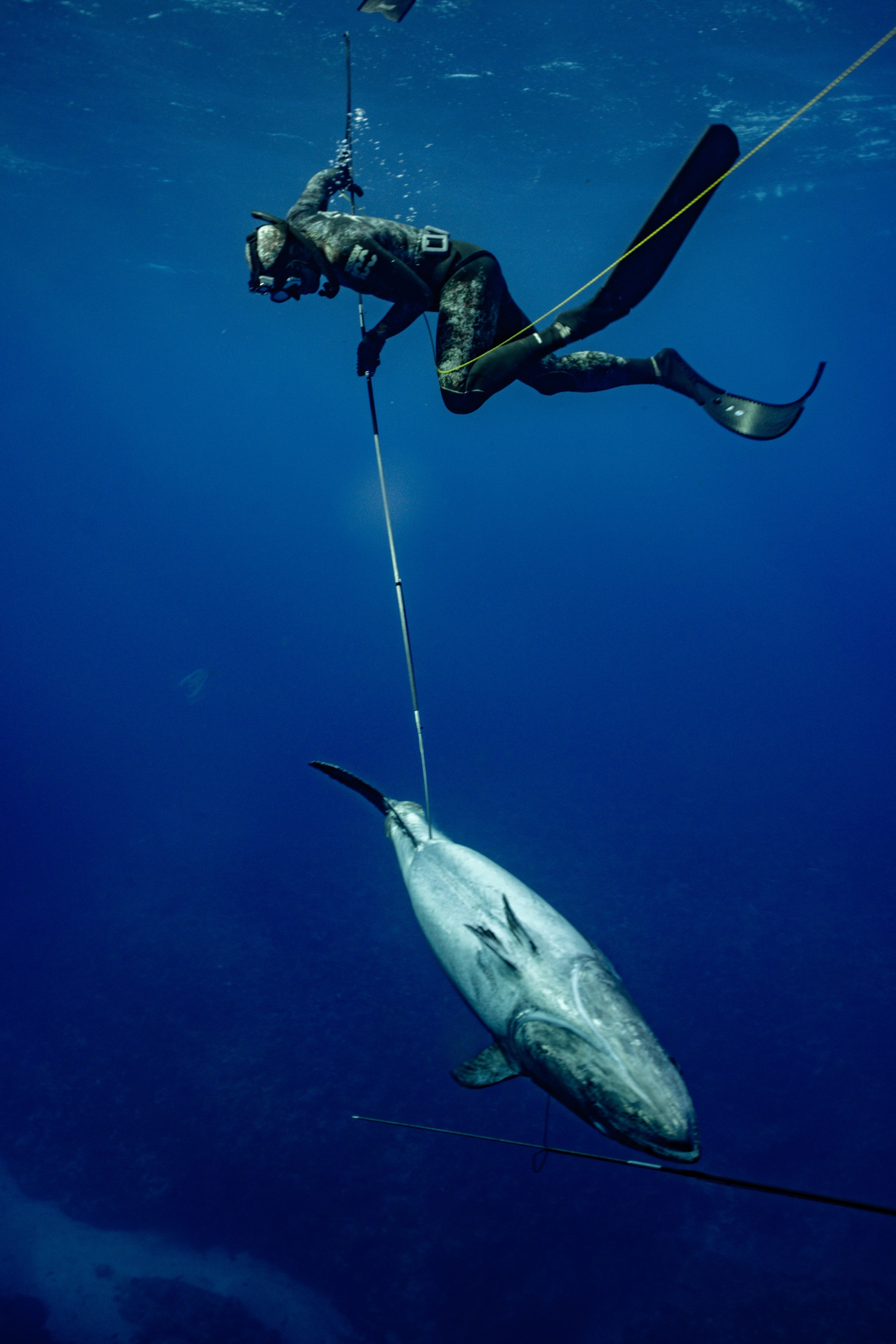
The film "Mission 100," scheduled for release in 2027, is also expected to be one of the catalysts for this trend, as it is hoped to gain wider recognition.
"I don't have any desire to 'let people know more about me,' and I don't actively post underwater footage, fishing, or spearfishing on my personal social media. However, I did want to leave a trace of my life connected to the sea, so I decided to make a film with videographers and photographers. I would be happy if everyone could catch a glimpse of the underwater world."
Since the project began in 2020, we have conducted expeditions and in-depth filming for more than two months each year, and have finally reached the point where completion is imminent. Currently, we are aiming for a full-scale international release of the film and are undertaking our second crowdfunding campaign to further refine the work.
When asked about his future goals as a spearfisherman, he smiled and said, "The world's oceans are vast, so I want to dive in many more different oceans and catch big fish." What kind of oceans lie before him now?

Kunpei Kosaka
Born in Akita Prefecture in 1995 and raised in Tokyo, he graduated from Tokyo University of Marine Science and Technology in 2019 and became the first Japanese person to set a world record in spearfishing (a black grouper, 18.3 kg). Since then, he has set six world records, including a 184 cm, 63 kg dogtooth tuna in 2020 and an 86.1 kg dogtooth tuna in 2021. In May 2025, he caught a dogtooth tuna measuring 198 cm in length and weighing 105.5 kg, achieving his biggest goal of "catching a dogtooth tuna weighing over 100 kg." In 2026, he received the 30th Naomi Uemura Adventure Award.
HP: kunpeikosaka.com
IG: @extreme_polespearing
Mission 100:https://mission100film.com
A Japanese spearfisherman, free-diving and armed only with a spear, takes on the world's most challenging waters. A life-threatening 10 years brought to life in a film.
2nd CrowdfundingCurrently underway.