This exhibition is a record of curator Yoshiko Nagai's time in Brazil, exploring festivals born from the worship of the sea goddess "Iemanjá" and the actual prayers of the local people.
Why do people entrust their hopes and prayers to the sea? We explore the relationship between humans and the sea, and its meaning.
Why do people entrust their hopes and prayers to the sea? We explore the relationship between humans and the sea, and its meaning.



A prayer to the sea became a festival.
February 2, 2026, midsummer in Brazil. From around 4 a.m., people dressed in white gather on the beach of Salvador, a city in the northeast, and offer flowers to the sea. The beach, still dark before sunrise, is illuminated by bright spotlights, presumably set up for this occasion, and the sidewalk, usually sparsely populated with runners and walkers, is packed with people from one end to the other, like a large concert venue. Several drums are set up on the sand, thundering with intertwined rhythms towards the sea. Dozens of fishing boats float at the water's edge, trying to pick up people holding bouquets one after another.
The festival to pray to Iemanjá, the goddess of the sea and one of the deities of Candomblé, a religion that symbolizes Afro-Brazilian culture, is about to begin again this year.
In the 1920s, there was a period when no fish could be caught at all in the fishing village of Rio Vermelho in Salvador. Troubled, the local fishermen loaded flowers onto their boats and offered them to the sea, pleading with Iemanjá, the mother of all fish and goddess of the sea, for help. They begged her to restore the bounty of the ocean. Since then, the fishermen have offered flowers to the sea every year.
The heartfelt yet beautiful prayer resonated with people, and the Iemanjá festival is now celebrated throughout Brazil. Also known as "Dois de Fevereiro" in Portuguese, after the day the festival takes place, it has become a major celebration, with people gathering on the Rio Vermelho coast from cities other than Salvador.
The people's prayers became a festival. What do the people living in that land hope for from the sea, and what message are they trying to convey?

Candomblé, a religion that reflects on Africa and its ancestors
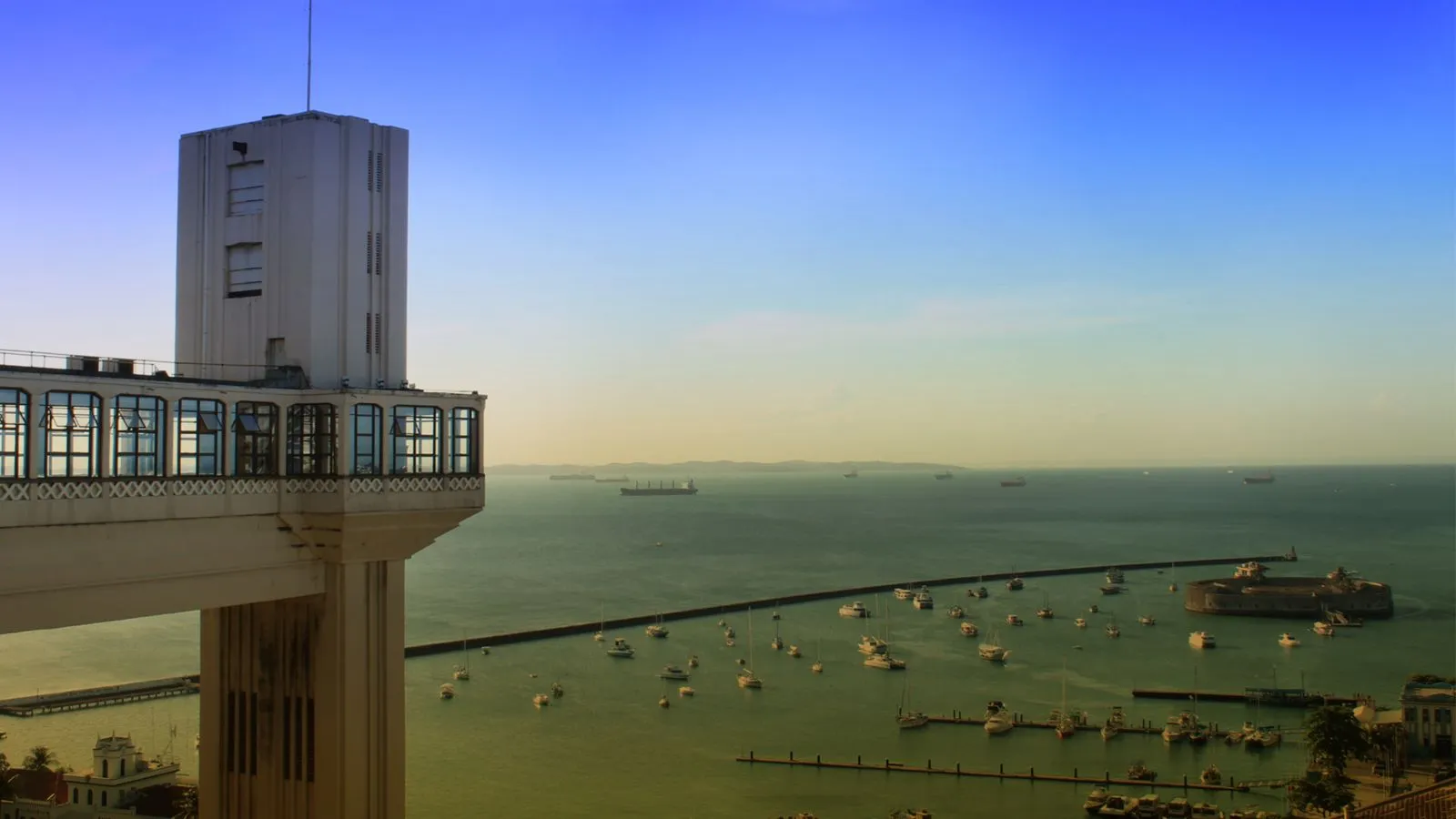
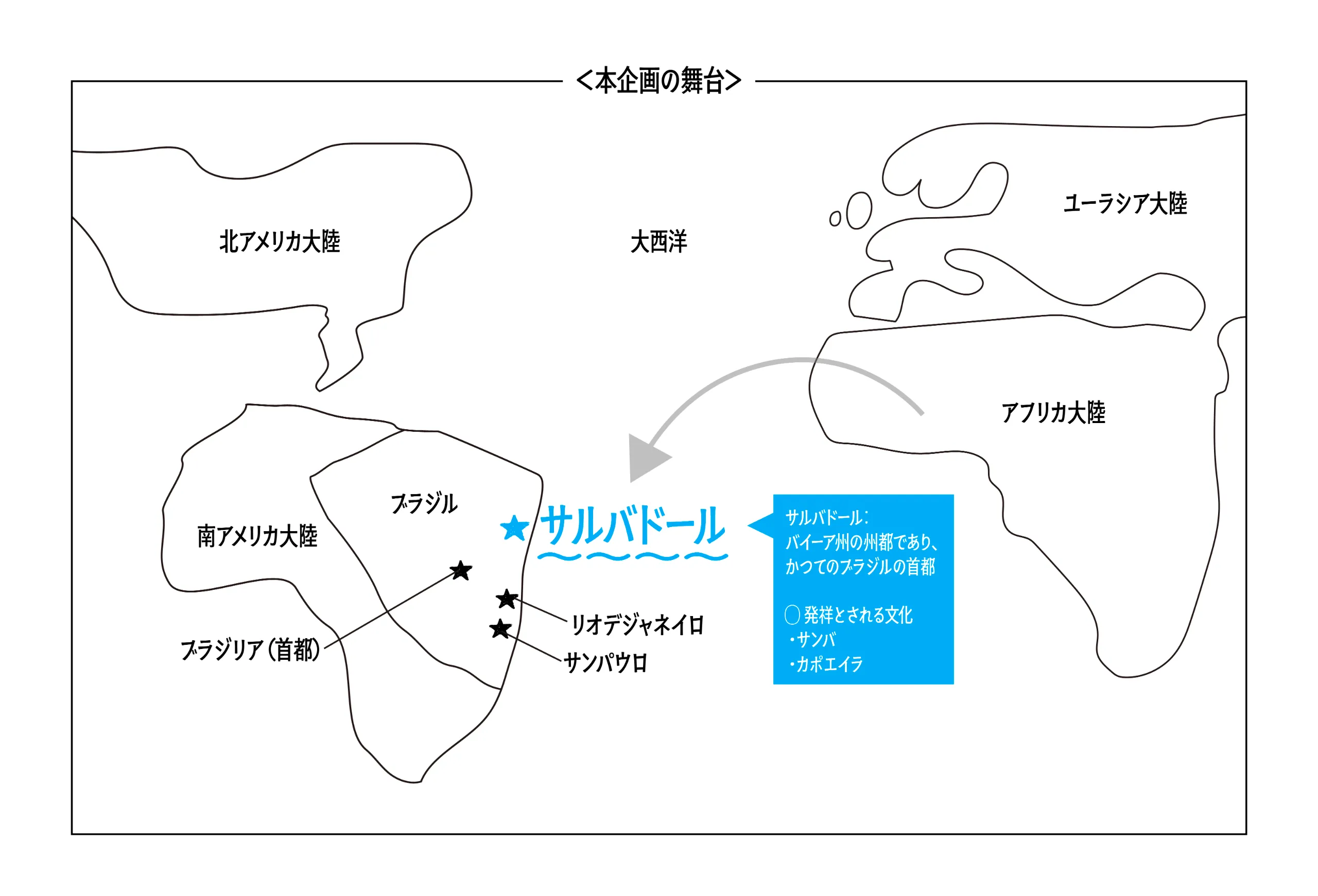
Salvador is a city of many hills. Even going to the neighborhood requires climbing and descending slopes, which can be tiring. Moreover, the roads are winding, so there are always buildings and roads in front of you, making it difficult to take in the scenery. However, as you walk up the slopes, the crowded scenery suddenly clears, and you can peek at the sea and sky through the trees and houses. No matter how far you walk, you are always close to the sea. The Atlantic Ocean is in front of you, and beyond that lies Africa.
In Brazil, where the climate and landscape vary greatly from south to north, Salvador in the state of Bahia is said to be the city with the largest African population. Founded by the Portuguese in 1549 during the colonial era, the city flourished as a port city and a hub for the sugar trade to Europe during the 16th and 17th centuries. This prosperity was largely due to the presence of people brought as slaves from various parts of Africa to operate sugarcane fields and sugar plantations.
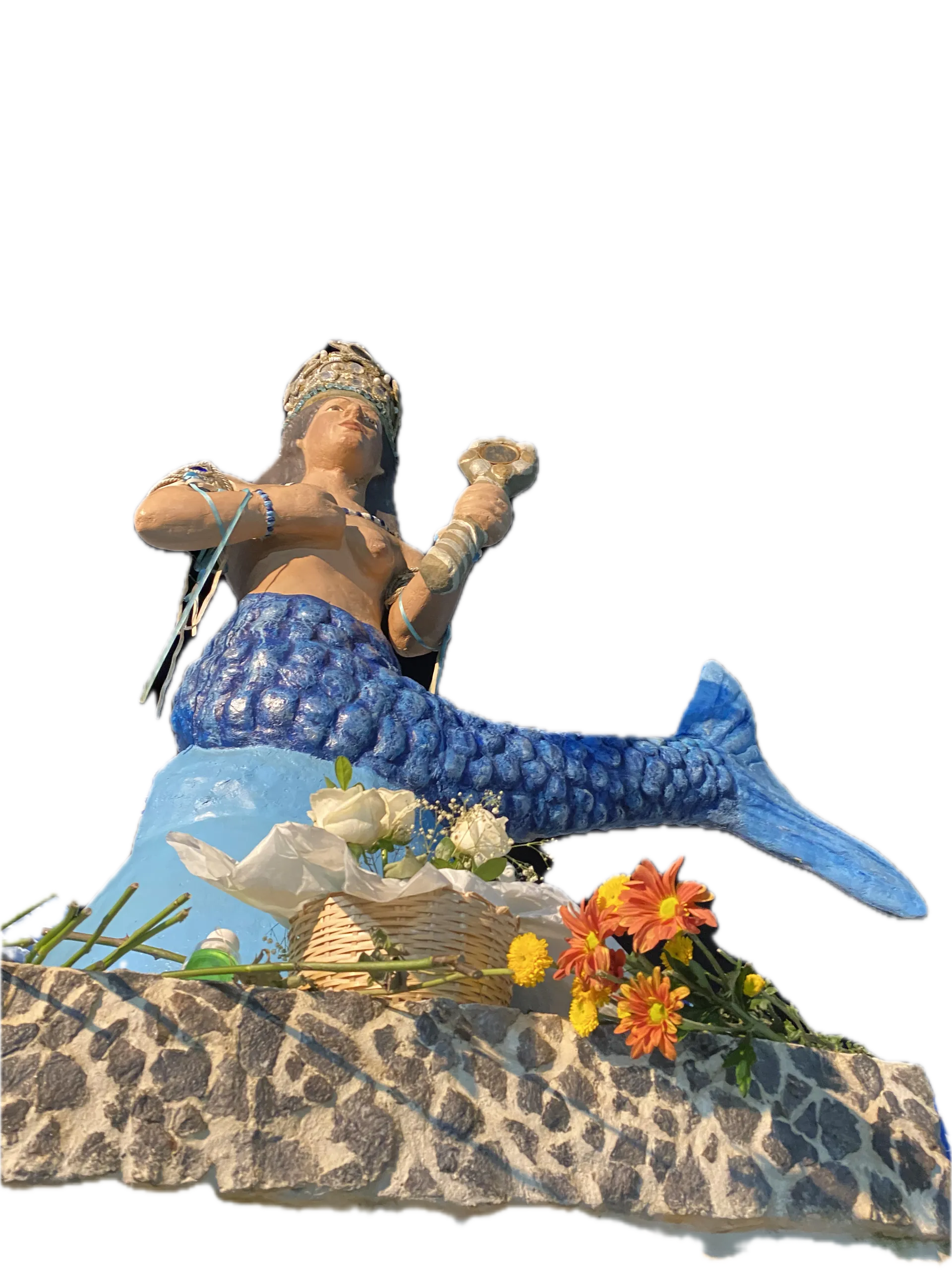
Candomblé is a religion that people of African descent who were forced to migrate to Brazil have cultivated in their own way, remembering their ancestors across the sea and striving to live together in Brazil. It has a strong connection to nature and features various gods symbolizing fire, iron, water, and other elements. Among them, Iemanjá is said to be the mother of all fish, a mermaid drifting at the bottom of the sea, and the goddess who presides over the ocean.
The words of a fisherman gazing at the continent across the sea
Salvador's coastline is intricate, with numerous inlets forming a complex network of coastlines. These range from white sandy beaches and rugged, dark rocky areas to open stretches of coastline.
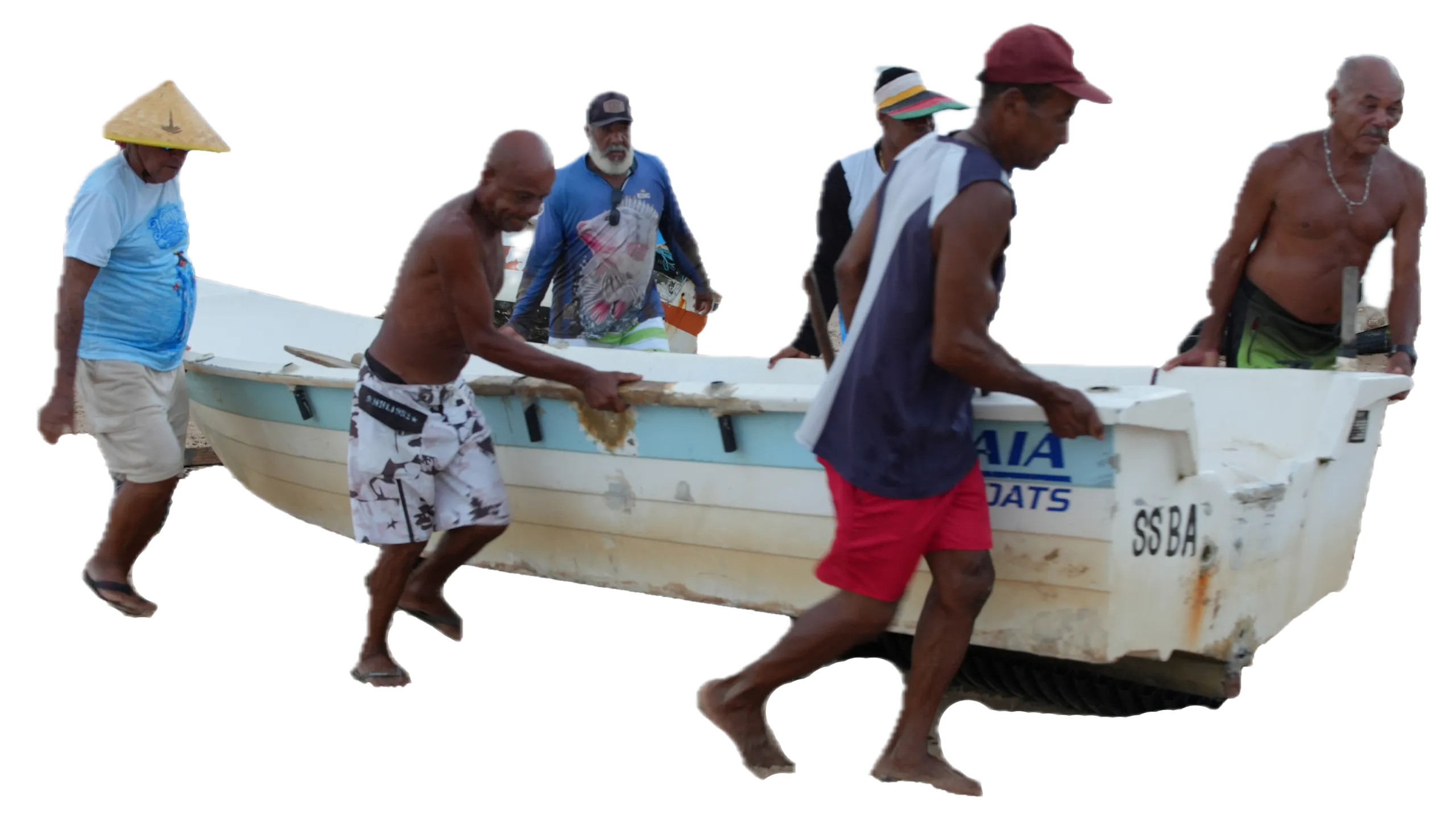
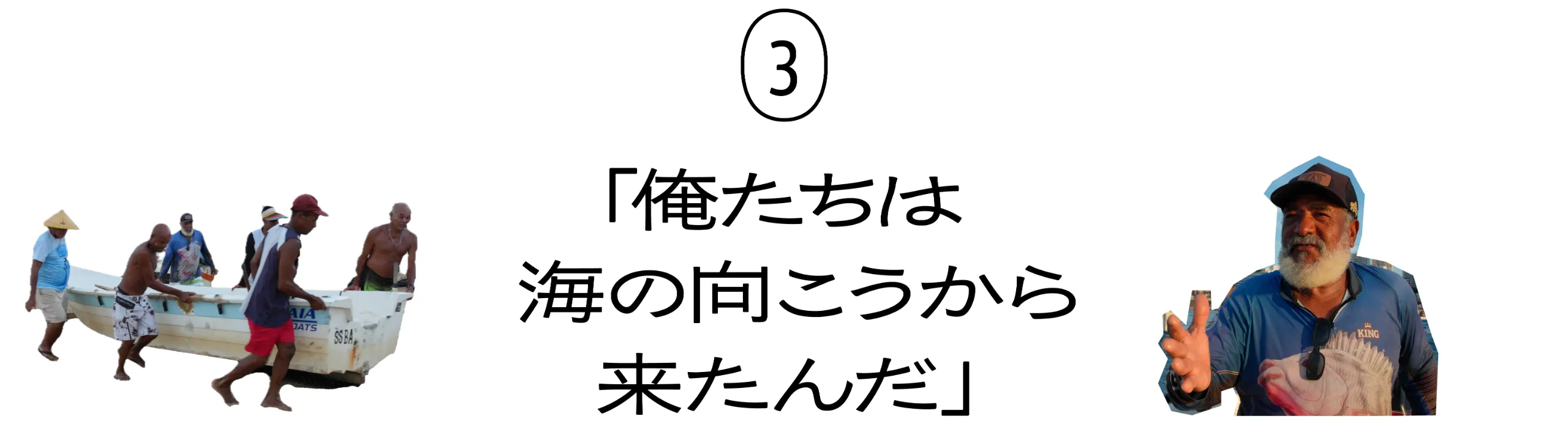
Rio Vermelho is now famous for its beaches bustling with tourists, but it was once a small fishing village. Even today, many brightly painted fishing boats are moored along the coast, and beside them are the fishermen's offices. The fishermen go out to sea early in the morning in their two or three-person boats to fish. First, they catch small fish, which they then use as bait to catch bigger fish.
Albegaria, the elder of the office, is once again busy organizing his fishing gear. He counts the fish leaping from the surface of the water as he gazes out at the sea, and feels the wind blowing through. The wind connects the sea and the land, conveying the conditions of the ocean to those who are about to set out to sea.
"It's the northeast. The wind blowing from the northeast is a good wind. It's good for fishing. And Africa is to the northeast."
Albegaria reads the wind. And, extending his sunburnt arm, he said:
"Listen, we came from over there. You can tell by the color of my skin. The culture of this city also came from Africa."
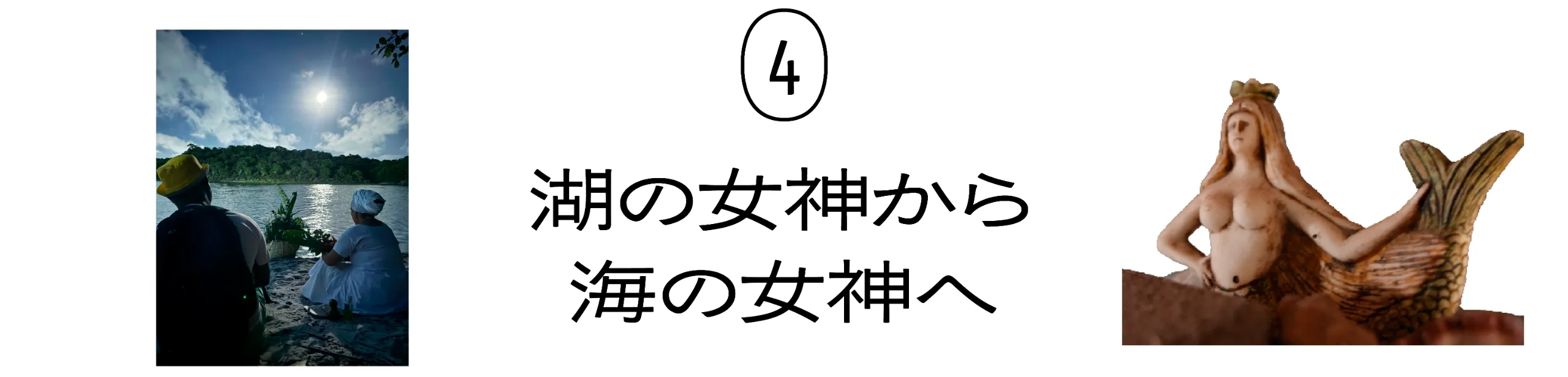
A ceremony in Terreiro, a flower basket heading towards the waterside under the full moon.
Terreiro is both a place for performing rituals and a gathering place for people, serving as a base for Candomblé. The Terreiro presided over by Taata Mutá Imê, one of the Candomblé priests, is located in the woods not far from the old city of Salvador.
The ceremony to pray to Iemanja is a collaborative effort. On that day, about 30 people, from children living in the area to adults who have come from other towns specifically for this occasion, gather early in the morning to divide up the tasks of cleaning, cooking, and preparing flowers and plants. The preparations for the ceremony are extensive. Among the most important is preparing two large baskets, called Balaio, which are decorated with flowers and are so large that even an adult cannot lift them alone. This is because, before offering prayers to Iemanjá, the goddess of the sea, one must also pray to Oxum, the goddess of fresh water. For this reason, two baskets are placed in the hall, and they are beautifully decorated not only with cut flowers, but also with foods that Iemanjá is said to like, such as popcorn and white corn, and fruits commonly found in the market, such as watermelon and papaya. Everything must disappear into the sea. Otherwise, the prayers will not have reached the goddess of the sea.
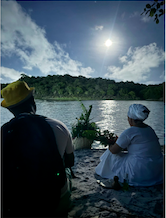
By the time the preparations were finished, the sun had set. First, we offered a flower basket to Lagoa do Abaeté in prayer to Oxum. Then we moved to the nearby coast of Itapuã. The young men carried the large flower basket, filled with people's hopes and dreams, navigating the sheer black cliffs, almost losing their footing. Then, hoping that it would reach Iemanjá, they jumped into the sea, basket and all. The high-pitched sound of metallic bells and the priest's singing echoed in the night sky. Who would have noticed that it was a full moon that night? The moonlight continued to illuminate our path all the while.
Candomblé was banned and suppressed for a long time. It was a community where descendants of Black slaves, who were not immediately accepted into society even after emancipation, gathered to live together beyond blood ties. Perhaps that's why their prayers were not performed during the day, but at night, out of sight of others. As I thought about this and watched the moonlight beautifully illuminating the water's surface, I felt blessed not only by the goddess of the sea, but also by the goddess of fresh water.
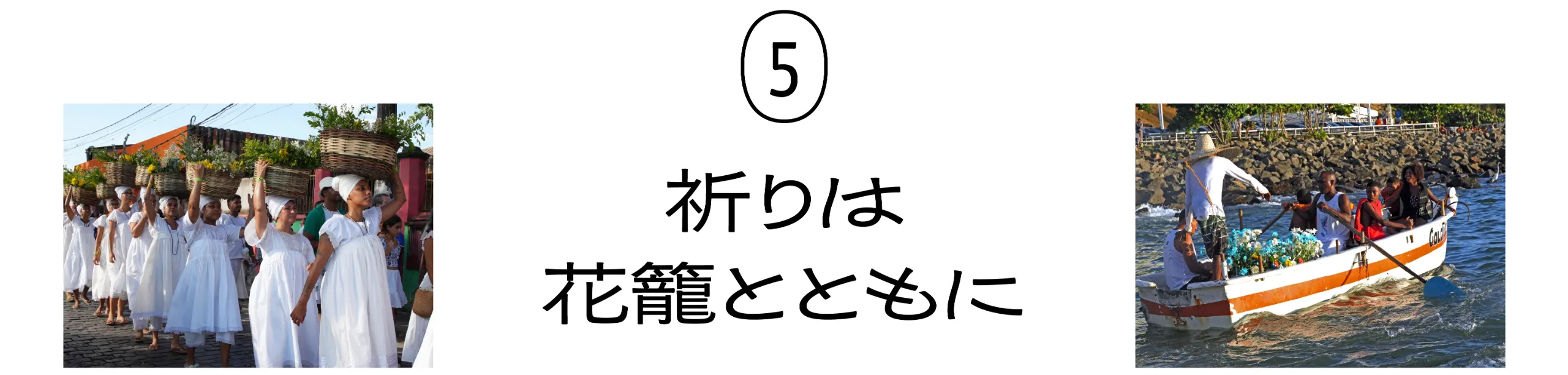
Prayers for Iemanjá from all over Brazil
"The Festival of Iemanjá" or "Dois de Fevereiro." This festival, in which people who believe in Candomblé and others who sympathize with the prayers to Iemanjá lay flowers on the coast, was actually held not only on February 2nd, but in various places throughout the height of summer when the sea is bluer and more sparkling.
For example, in the inland town of Cachoeira in Salvador, women carry many flower baskets towards the great river from which sugar trading ships departed during the colonial era, offering prayers to Iemanjá. The Black slaves who were forced to work in sugarcane production in this area must have known that beyond this great river lay the vast ocean and Africa.
Suddenly, on the beaches of Salvador, the sound of multiple drums can be heard, and people from the Terreiro, dressed in white, arrive with flower baskets. Those relaxing on the beach make way for them and surrender themselves to the undulating rhythm of the drums.
And in the fishermen's quarters of Rio Vermelho, the Iemanjá festival is held, organized by the fishing community. Men carefully lift several flower baskets onto their hoisted saddles, load them onto the boats they normally use for fishing, and take them out to sea where the Iemanjá are believed to live. The fishermen know where the Iemanjá live in the sea.
"O do ya"
Calls for Iemanjá can be heard from all directions. Some people sprinkle perfume on the shoreline, looking reluctant to leave. Others catch the incoming waves with their hands and pour water over their heads.
"O do ya"
Just when I thought the voice had disappeared beyond the sea, it returned to my ears again with the crashing waves.
Iemanjá is answering our prayers from the depths of the distant sea.
About this record

Fieldwork Collaborator: Prof. Rosângela Costa Araújo “Mestra Janja”
Local Contributors: Nzinga Salvador
Contributors: Nzea Kyoto
Photo: Jon Lewis・Yoshiko Nagai・Nzinga Salvador
Video & Visual Design・Web Design Direction:Misako Taoka
Realization: Daiki Kato, Miki Tamura (3710Lab)