"The sea is vast, so big..." The skills and wisdom (= folk tools) nurtured through the long relationship between the sea and people, for obtaining its bounty, and the hopes (= toys) that people have held for a bountiful catch towards the sea.Musashino Art University Museum & Library, Folklore Materials RoomExcavated from the approximately 90,000 folk artifacts held by the institution. Separate exhibition rooms are provided for folk tools and toys, and a series of articles, with commentary by Professor Koji Kato of the university, explores the deep connection between people and the sea that has continued from ancient times to the present.Click here for project details.). For the fifth installment, we will introduce traditional sea tools with the theme of "fishing with string."
The history of fishing andsix things
Fishing is considered a relatively primitive fishing method because it uses simple tools and its success largely depends on the angler's intuition and experience. Archaeologically, although fishing lines decompose and do not easily survive, fishing gear made from bone or deer antlers has been preserved.鉤Since artifacts such as these have been unearthed, its history is quite old. However, "fishingsix thingsAs the saying goes, the history of fishing is鉤• Line • Rod • Bait錘The development of float manufacturing technology was essential. Hooks were forged, and fishing line wassericulture、錘Refining and fishing are deeply intertwined with the history of Japanese technology.
Fishing classifications: Direct skills and indirect skills
Keizo Shibusawa, who conducted in-depth research into the history of fishing techniques before the war, broadly divided fishing into two types: direct skills and indirect skills. Direct skills are fishing methods where the angler's skill in actively targeting the prey is directly at work, such as single-line fishing. In contrast, indirect skills are, for example,longlineLike this, thread and鉤This type of fishing involves waiting for fish to get caught in a pre-made trap. In contrast, direct fishing is an active method where the angler senses signs of a fish being caught, such as the fish pulling on the line, and then reels it in at the appropriate time and with the right amount of force.
Classifying fishing
Fishing can be classified from various perspectives. Based on fishing grounds: sea fishing, offshore fishing, shore fishing, river fishing, and rock fishing (fishing between rocks). Based on catch.鯛fishing,鰹fishing,鮎Fishing. Rod fishing using fishing gear as a standard.錘Fishing, balance fishing,longlineFishing can be categorized based on fishing methods, such as handline fishing, wading (fishing while in the water), fly fishing, and casting. It can also be classified from the perspective of equipment, such as whether or not a hook is used, whether or not a rod is used, and whether or not a sinker is used.
鉤Fishing without using
Did you know that there are types of fishing that don't use hooks or needles, but only thread? For example, in Sendai City, Miyagi Prefecture, dried gobies from Matsushima Bay are used in New Year's soup. These gobies are caught by threading about ten of a type of lugworm onto a string with a sewing needle, and then dropping the string into the sea. Because no hooks are used, the fish are not harmed and are highly valued as auspicious items. There is also a type of river fishing where eels are caught by hooking them when they bite onto a string baited with many earthworms.prayer beadsThis is a type of fishing that doesn't use hooks, sometimes referred to as "fishing."
Fishing using a balance scale
A device called a "tenbin," used to prevent the sinker and line from tangling during casting, is still used today. On the other hand, there is a unique type of fishing that uses indirect techniques, where a line with hooks attached to both ends of a device called a tenbin is lowered down. It is used for small-scale freshwater prawn fishing and for squid fishing by professional fishermen, and the fishing gear and methods for squid fishing using a tenbin in particular have spread widely due to the movement of fishermen, from Sado Island in Niigata Prefecture to the Sea of Japan, across the Tsugaru Strait, and to the Sanriku region in Tohoku.propagationIt is known as a technology that has been developed.
Folk Art Gallery
Fishing hooks and tackle
Keizo Shibusawa, a businessman and folklorist who collected and researched materials related to the lives and livelihoods of people throughout Japan, established a small museum called the "Attic Museum" in the attic of a shed in his backyard, displaying his collection.
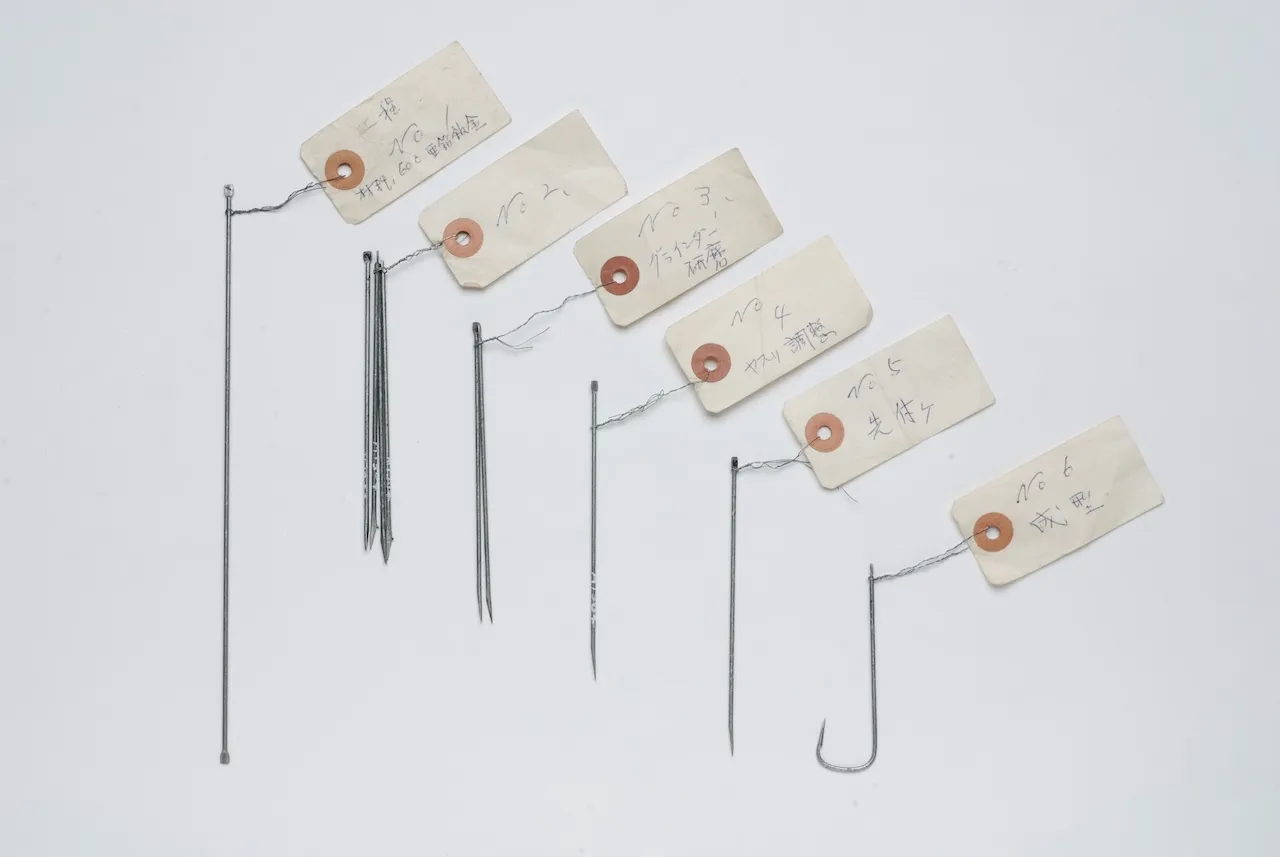
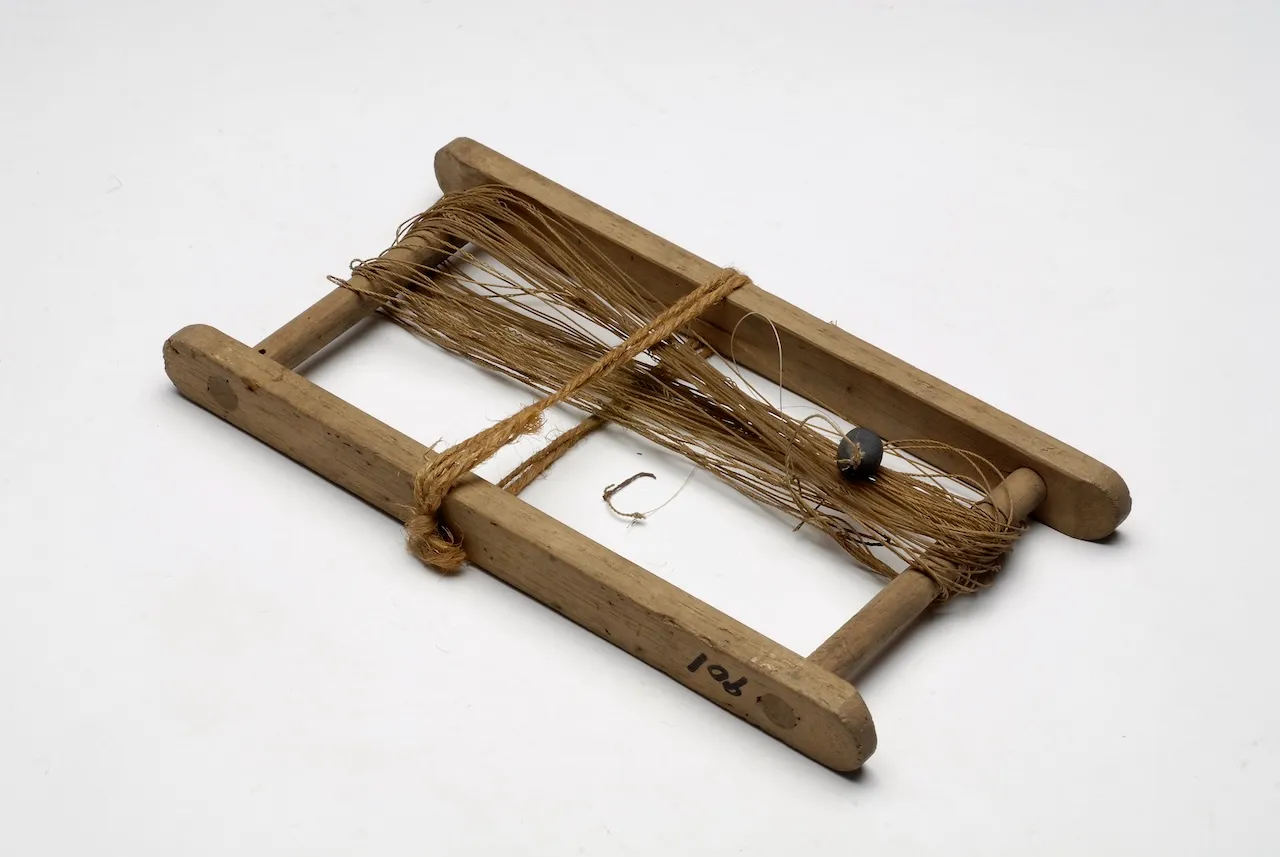
At the pre-war Attic Museum, fishing was one of Keizo Shibusawa's research themes, and he conducted research on fishing hooks in Oki Island in Shimane Prefecture and Hyogo Prefecture, collecting samples of the manufacturing process. Tsuneichi Miyamoto also cooperated in this research, and in his post-war collection of folk implements, he collected information on the fishing hook manufacturing process in his hometown of Suo-Oshima. Fishing rigs consisted of a line with a hook, weight attached, and then wound onto a frame to prevent tangling for easy transport.
Various types of food
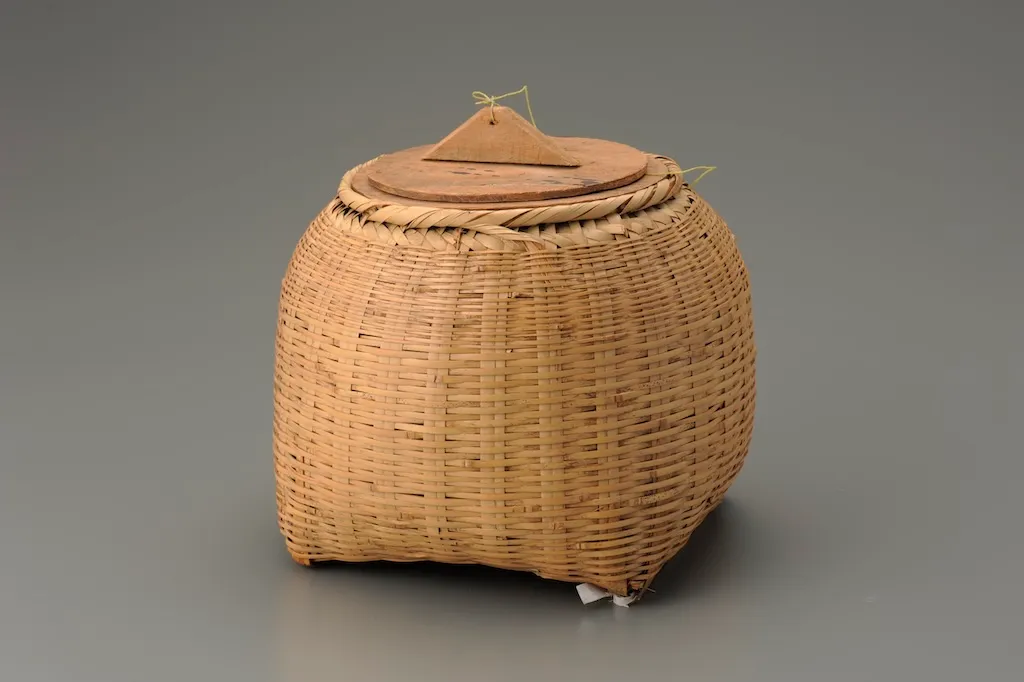
This basket is believed to contain krill or shrimp used as fishing bait. Fishing bait has traditionally included fish such as horse mackerel, sardines, and loaches; shrimp, crabs, and squid; worms such as lugworms, sandworms, and spoon worms; earthworms; and insects. There are also unusual methods, such as using Japanese shallots, which resemble bivalve mollusks that octopuses like, as bait.
Knowing the bite
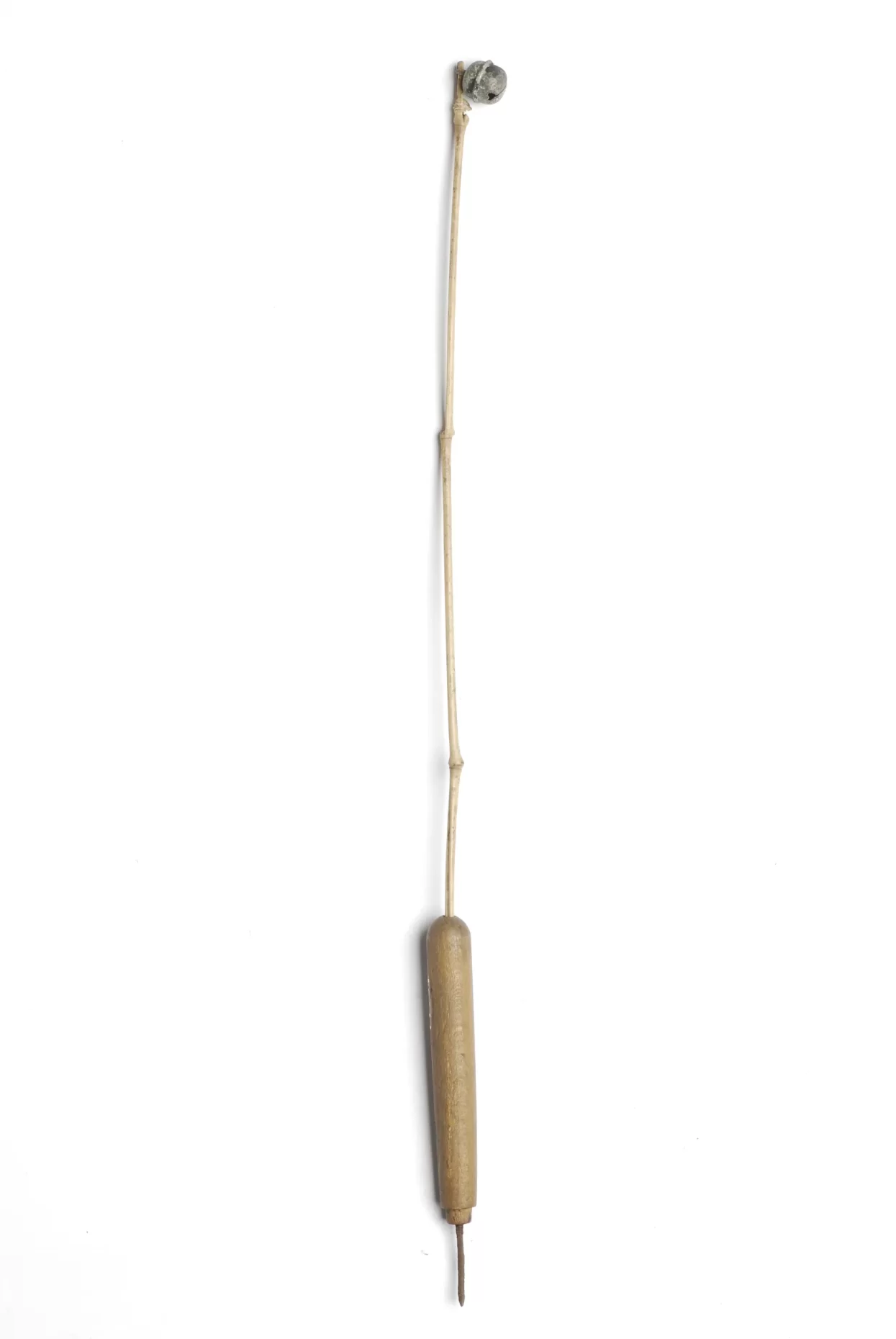
In fishing as a direct skill, anglers confront their prey through the "bite" and "set the hook." A bite, also called a fish strike, is a sign that a fish has touched the bait, manifested as the bending of the rod, the tension of the line, or the movement of the float on the water's surface. In response to this, the angler makes subtle adjustments to set the hook in the fish's mouth, and this adjustment, synchronized with the fish's movement, is called "setting the hook." The bite and the hook set are the essence of fishing and have contributed to the development of fishing as a hobby culture.
An indirect fishing method similar to trap fishing.
In contrast to direct fishing techniques such as pole-and-line fishing, indirect fishing techniques use similar tools such as hooks, lines, and weights, but involve setting the gear where the fish are and then retrieving it later, or drifting the fishing gear and pulling it in with a fishing boat. Many hooks are suspended from a line in the fishing grounds.longlineThis also includes fishing methods that involve setting traps to catch multiple fish at once.Trap fishingIt can also be seen that way.

Planning, supervision, and writing
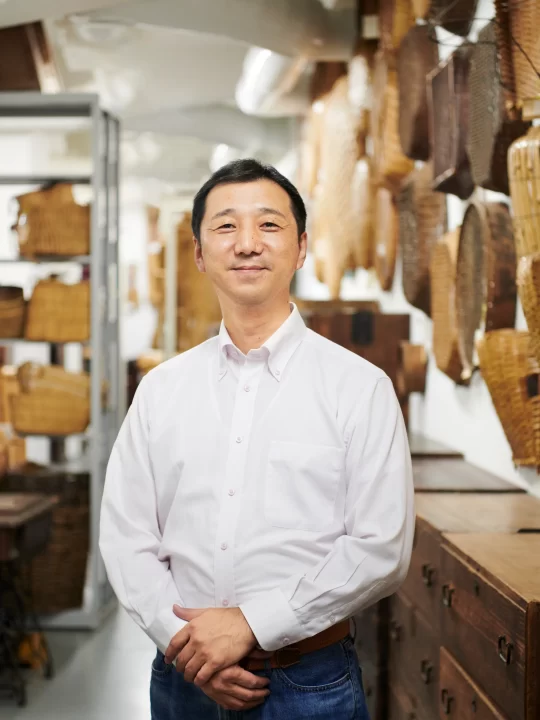
Koji Kato
Professor at Musashino Art University, specializing in folklore (research on folk implements). Holds a PhD in Literature. Previously served as a curator at the Wakayama Prefectural Kii Fudoki-no-Oka Museum and a professor at Tohoku Gakuin University (concurrently serving as a curator at the university museum), before assuming his current position in 2019. His major publications include "Folklore: Facing and Expressing the Past" (Musashino Art Publishing Bureau/2022) and "Folklore: Public Studies: Learning and Practicing for Oneself" (Musashino Art Publishing Bureau/2025).
Exhibition Announcement
An exhibition supervised by Professor Koji Kato, who is overseeing this project, will be held from Monday, June 15th. During the exhibition period, in addition to lectures and talk sessions, there will also be a children's event day called "Minmin Fest!" where you can enjoy various activities related to folk crafts. Please come and visit.
What is this folk implement? — A collection of folk implements left behind by folklorist Tsuneichi Miyamoto at an art university.
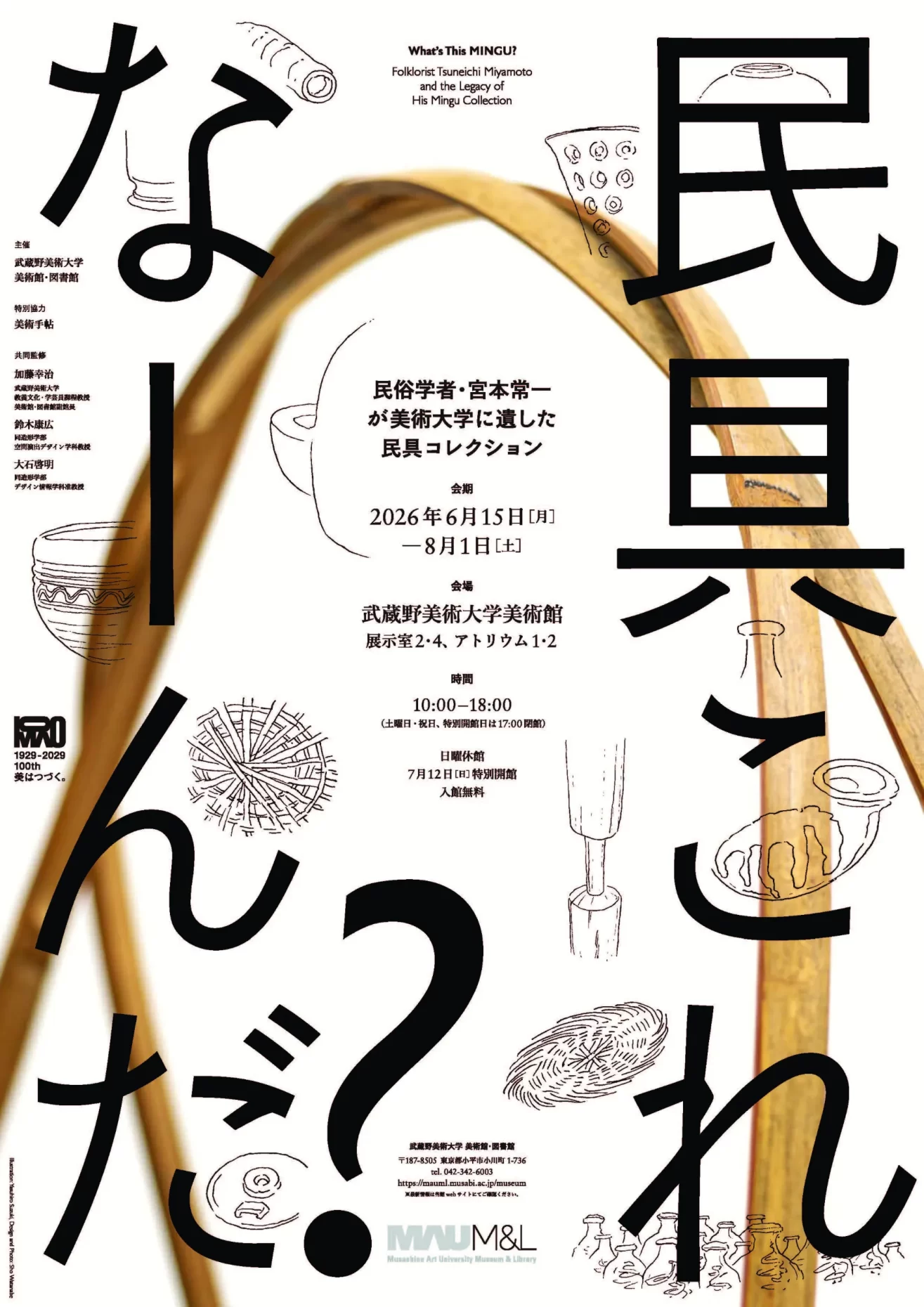
Dates |Monday, June 15, 2026 - Saturday, August 1, 2026
Time|10:00 - 18:00
(Saturdays and public holidays: 10:00-17:00)
Closed days |Sunday
Admission fee |free
Venue |Musashino Art University Museum: Exhibition Rooms 2 & 4, Atrium 1 & 2
Organizer |Musashino Art University Museum & Library
Cooperation |Art Notebook
Supervised by |Koji Kato (Professor, Liberal Arts and Culture, and Curator Training Program, Musashino Art University; Deputy Director, Museum and Library), Yasuhiro Suzuki (Professor, Department of Spatial Design, Faculty of Art and Design, Musashino Art University), Hiroaki Oishi (Associate Professor, Department of Design Information, Faculty of Art and Design, Musashino Art University)
Folk implements, created and used out of the necessities of daily life, are "forms of living." The forms of folk implements reflect the tangible experience of daily life, the skillful use of natural materials, and the imagination that gives shape to the invisible, offering modern people a sense of surprise and discovery akin to encountering a different culture.
The Musashino Art University Museum & Library houses a collection of approximately 90,000 folk artifacts, making it one of the world's largest archives of lifestyle and cultural artifacts held by an art university. This exhibition, based on the verification and reorganization work on the collection's formation that has been underway since 2020, unravels the learning and activities of folklorist Tsuneichi Miyamoto (Professor Emeritus of Musashino Art University) and students at the time, which were outside the curriculum.
Furthermore, based on various experiments in the application of art education in the modern era, we will collaborate with the web version of "Bijutsu Techo" (Art Notebook) to create an exhibition from an art and design perspective. Enjoy a new exhibition experience with participatory exhibits based on observation and interpretation, an unexpected curation of folk implements with diverse backgrounds, and reinterpretations of folk implements through digital technology and spatial expression.