"The sea is vast, so big..." The skills and wisdom (= folk tools) nurtured through the long relationship between the sea and people, for obtaining its bounty, and the hopes (= toys) that people have held for a bountiful catch towards the sea.Musashino Art University Museum & Library, Folklore Materials RoomExcavated from the approximately 90,000 folk artifacts held by the institution. Separate exhibition rooms are provided for folk tools and toys, and a series of articles, with commentary by Professor Koji Kato of the university, explores the deep connection between people and the sea that has continued from ancient times to the present.Click here for project details.). For the second installment, we will introduce sea-themed toys with the theme of "Praying for a Bountiful Catch."
Dealing with uncertainty
Fishermen have various beliefs when it comes to praying for a bountiful catch. Traditionally, these include prayers to the god Ebisu, the belief in boat spirits where the fishing boat itself is considered a spiritual entity, festivals held on beaches and at sea, and Buddhist temples dedicated to Buddhas that have drifted ashore.
In the fishing industry, where success or failure depends on the forces of nature, local tourist events such as safety prayer ceremonies held by fishing cooperatives and fishing companies, sea parades, mochi-throwing ceremonies, and sales of the first catch of the season are still popular today. Furthermore, casual and personal prayers, such as those involving amulets and superstitions, can also be considered a form of faith that lives on in modern times.
Fishermen have faced the sea, a force beyond human comprehension, and have made their living by accepting its uncertainty. They have continued to pray that they may somehow receive blessings from the capricious nature of the sea.
Fishing and prayers for a bountiful catch involve earnest desires and strict taboos regarding what should and shouldn't be done. What actions will please and displease the entity that brings abundant harvests and blessings? How can blessings continue to be bestowed periodically? Through prayers for a bountiful catch and incantations, we can understand the mindset of fishermen.
Faith in the sea and nature
Prayers for a bountiful catch are an act of giving meaning and order to the unpredictable and dangerous natural environment of the sea. What is obtained from the sea is not merely a commodity, but is imbued with spiritual power in the sea and its creatures, and is further interpreted as being brought forth by deities such as Ebisu, the god of the sea, and the dragon god. Being aware of transcendent beings that influence fishing successes and changing weather and environmental conditions led to understanding and accepting the meaning behind the uncertainty itself, even though the uncertainty itself could not be changed.
Things that connect us through prayerSharing prayers
The prayer for a bountiful catch has the meaning of offering sacrifices to ancestors and gods and expressing gratitude through the hope of success in fishing. These festivals and rituals were not performed individually, but by the community or group of people who worked together. The prayer for a bountiful catch also served the roles of ensuring safe voyages by avoiding storms and accidents, confirming community unity, and deepening the sense of coexistence with nature. This led to the development of annual events in which groups of people visited shrines and temples, and temples and shrines that can be called sacred places for fishermen have developed throughout Japan.
Prayers for a bountiful catch were not merely silent prayers, but were practiced through concrete "objects" such as ritual tools, religious implements, and toys. The worship of the same objects and understanding the meaning of the motifs served as a reaffirmation of community norms and solidarity, and functioned as a mechanism for adjusting the relationship between nature and humanity. Banners, flags, and fishing flags are prime examples, featuring comical depictions of auspicious and lucky motifs.
Vibrant colors and approachable designs
Everyday folk implements are basically made from natural materials, resulting in simple and subdued colors of brown tones from straw, wood, and earth, or plant dyes. In contrast, the clothing, ritual objects, and lucky charms used in prayers for a bountiful catch are strikingly colorful and vibrant. Strong reds, blues, and yellows are used boldly, and black is also an important color that gives form to the motifs. These strong colors also have the meaning of warding off evil spirits and pleasing the gods. Lucky charms such as kites, lucky bamboo branches, lucky winnowing baskets, and rakes, as well as gifts such as clay figurines and clay bells, are also vividly colored to express abundance and celebratory nature for a bountiful catch.
Toy Gallery
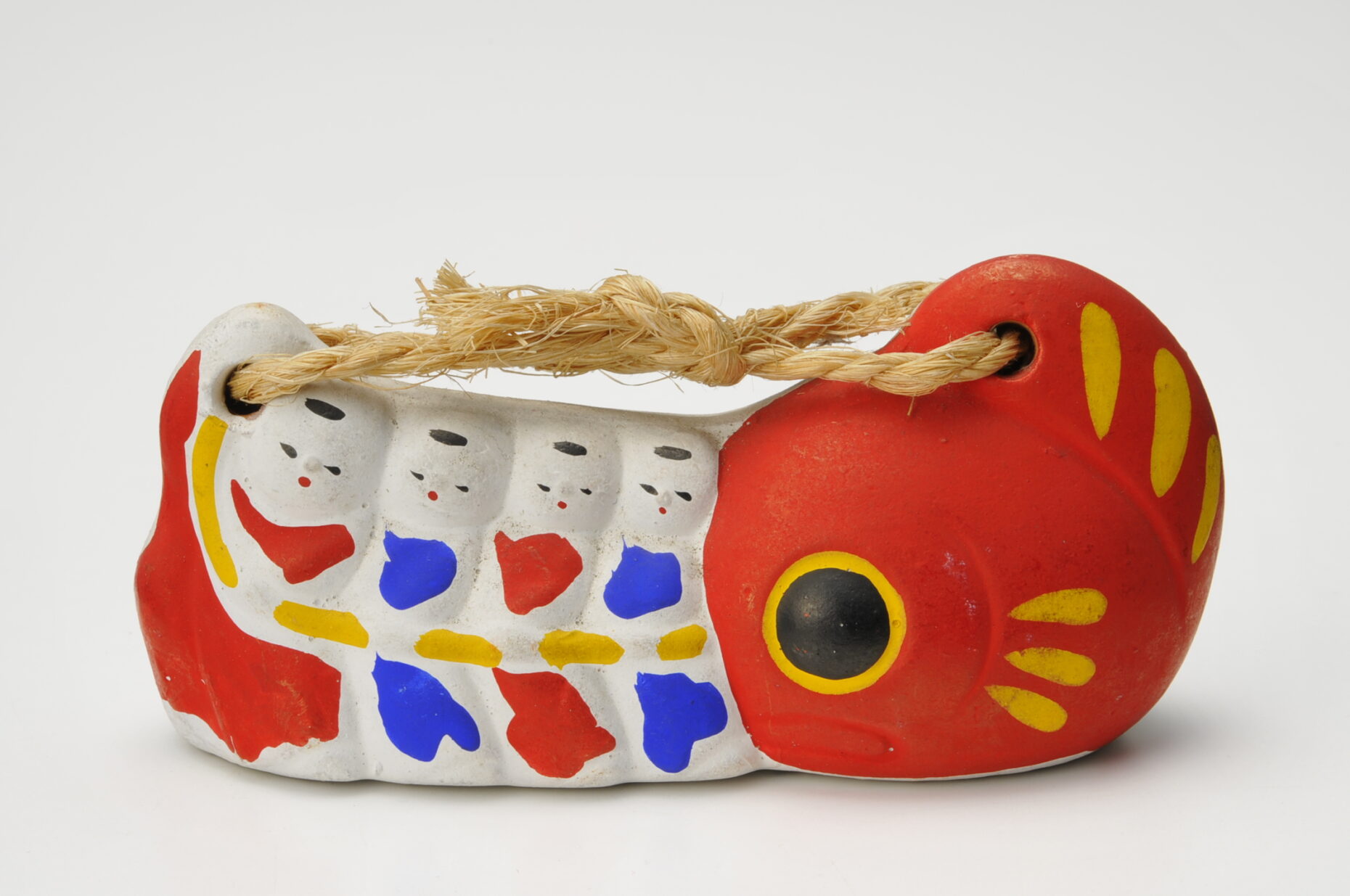
A lucky clay bell that brings a bountiful catch.
Earthenware bells, with their dry, unglazed sound, have been used as magical tools to ward off evil and protect against demons. Because earthenware bells are made by shaping and firing clay, they can be freely designed. During the Edo period, they were given out as souvenirs at shrines and temples throughout the country, and earthenware bells originating from the history, myths, and legends of each region became local specialties.

The large fishing bell bestowed at Kotohira Shrine in Kagawa Prefecture, widely revered by fishermen, features a motif of a boy holding a sea bream. Another famous local toy known as a large fishing bell is the Dan-no-ura Large Fishing Clay Bell from Akama Shrine (Shimonoseki City, Yamaguchi Prefecture). In this bell, boys are lined up like a dragnet, pulling in sea bream. The continuous imagery itself suggests the continuity of a bountiful catch.
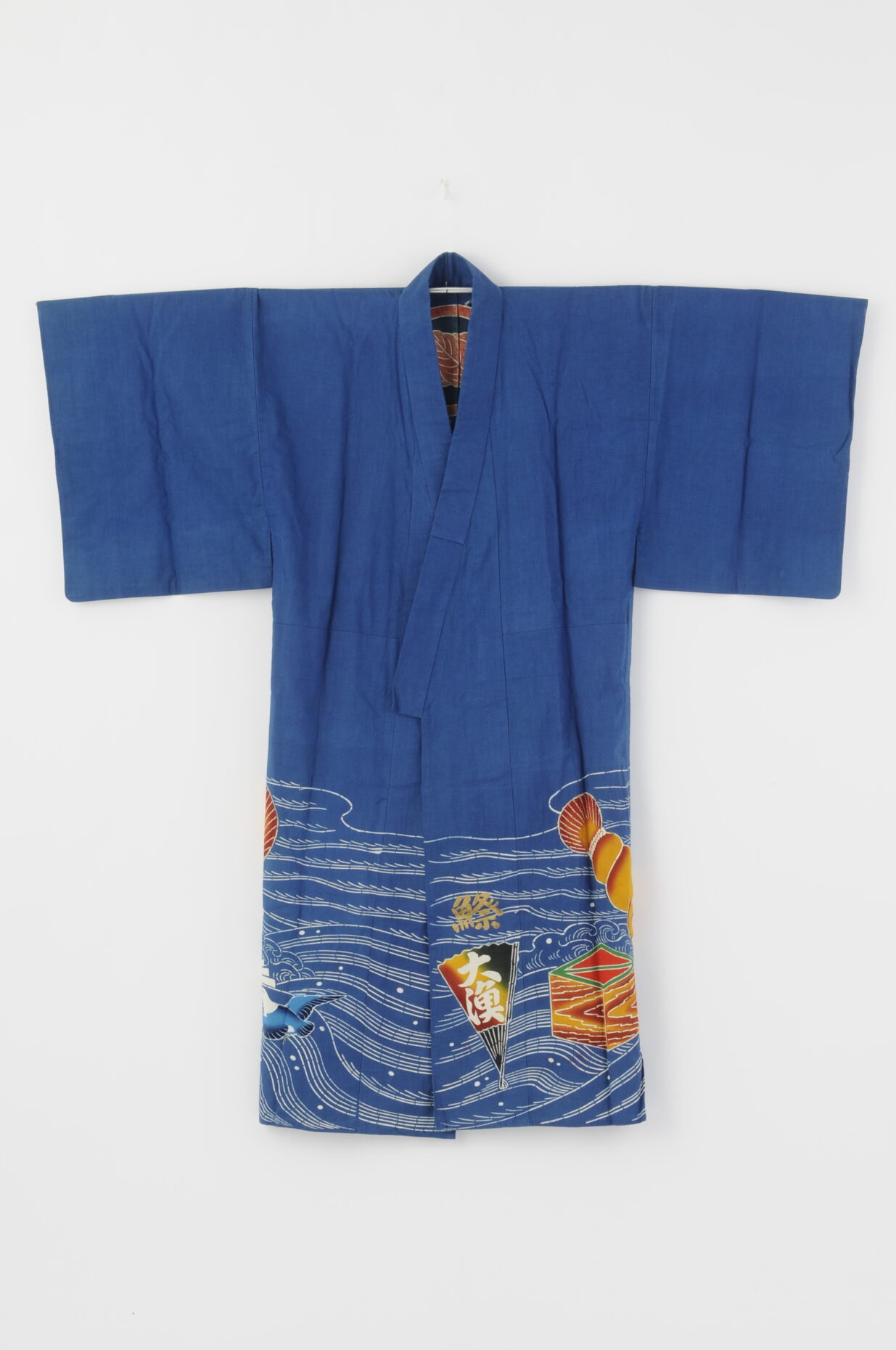
Sharing the joy of a bountiful catch with friends.
Maiwaigi are celebratory happi coats, mainly worn in the Boso Peninsula and Sanriku coastal regions, and are given as gifts by fishing owners to their boatmen and fishermen to celebrate a bountiful catch. The indigo-dyed fabric represents the sky and sea, and is adorned with auspicious motifs such as cranes, turtles, pine, bamboo, plum blossoms, and gods of fortune.
Maiwai is both the name of a garment and the name of a feast held to celebrate a bountiful catch. Along the Sanriku coast of the Tohoku region, the celebratory garments for a good catch are called kanban, and their designs reflect regional characteristics.
A sacred site that attracts the faith of fishermen
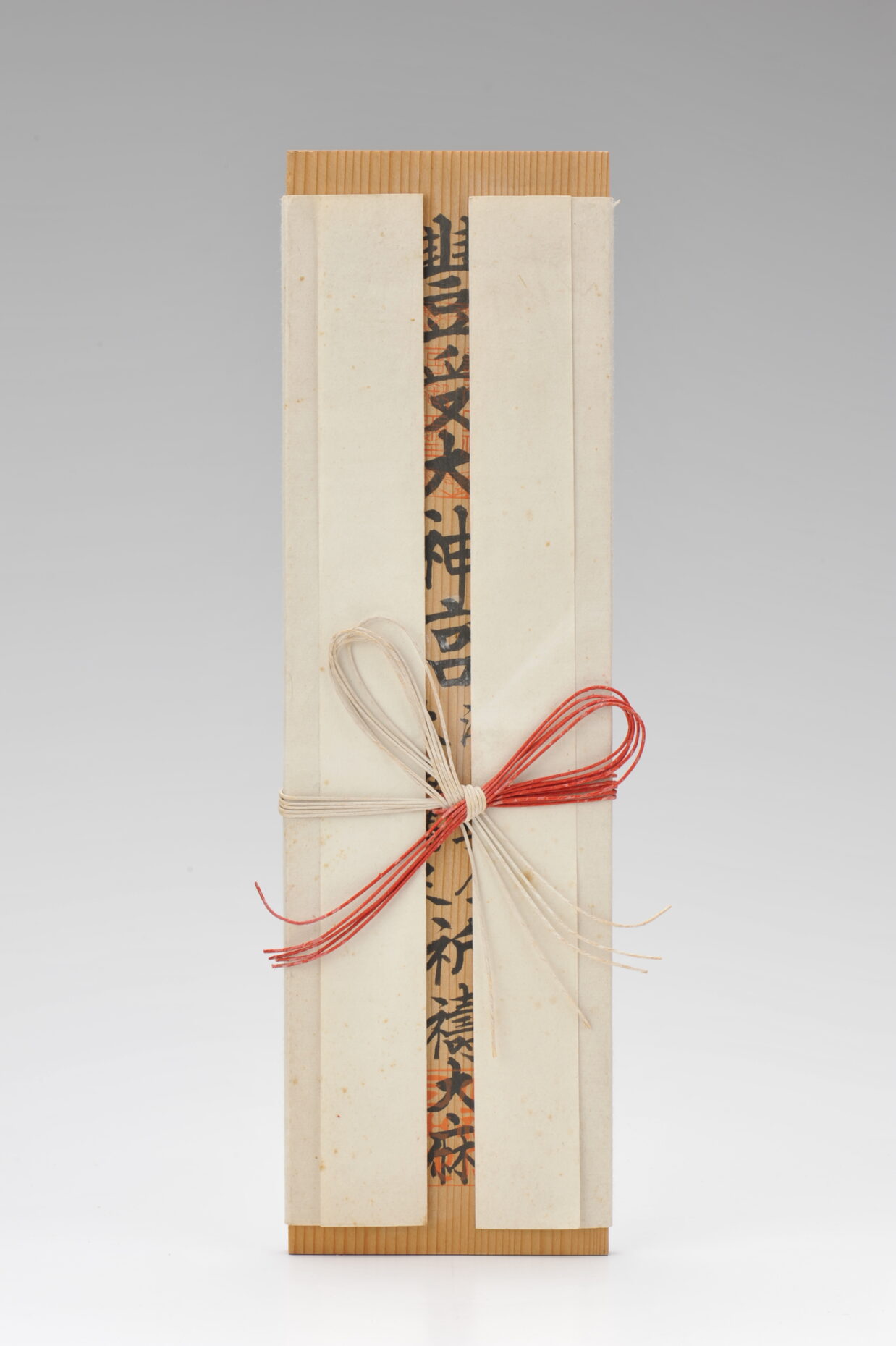
Throughout Japan, there are numerous shrines and temples that have garnered widespread devotion from fishermen. Among them are Sumiyoshi Taisha in Osaka Prefecture, Kotohira Shrine in Kagawa Prefecture, Mishima Taisha in Shizuoka Prefecture, Nishinomiya Shrine in Hyogo Prefecture, Kinkasan in Miyagi Prefecture, Oyamazumi Shrine in Ehime Prefecture, and Zenpoji Temple in Yamagata Prefecture. Fishermen would visit these shrines individually or in groups, or send young men on their behalf as part of life rituals, to receive amulets, which they would then enshrine on their household altars or to the spirits of their boats, praying for a bountiful catch.
A prayer raised high into the heavens
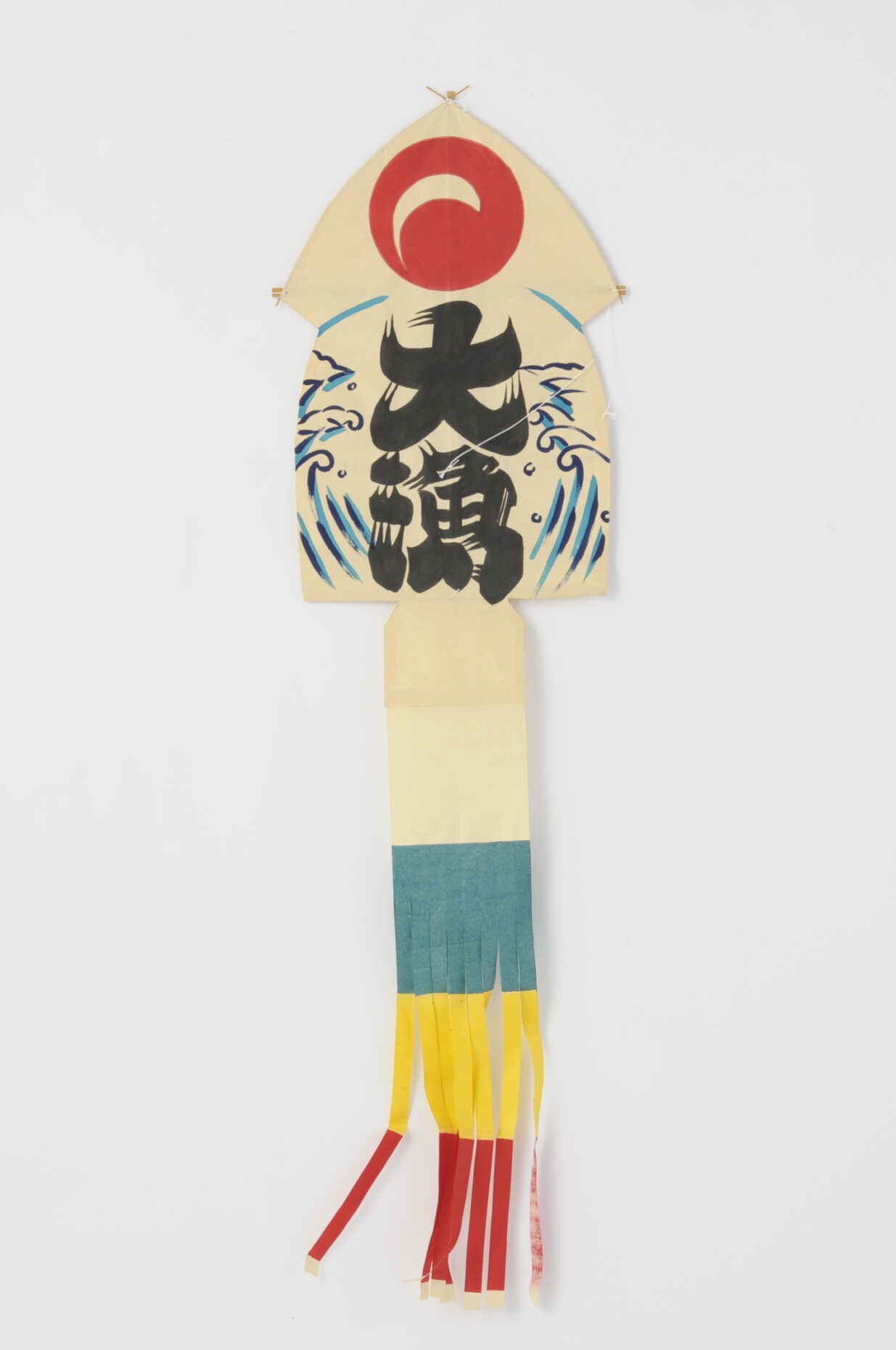
Kites are believed to have originated in China, but in Japan they were introduced as a form of competition and play, becoming intertwined with folk beliefs. Flying a kite itself is considered auspicious and has a ceremonial aspect. Their designs are incredibly diverse, with some kites symbolizing prayers for children's growth, business prosperity, or a bountiful harvest.
Hakodate's Ikanobori kite is a symbol of wishing for a bountiful catch. Many regions use the word "ika" (squid) in the name of their kites, and this kite is literally shaped like a squid, a representative seafood product of Hakodate Port.
Planning, supervision, and writing
Koji Kato
Professor at Musashino Art University, specializing in folklore (research on folk implements). Holds a PhD in Literature. Previously served as a curator at the Wakayama Prefectural Kii Fudoki-no-Oka Museum and a professor at Tohoku Gakuin University (concurrently serving as a curator at the university museum), before assuming his current position in 2019. His major publications include "Folklore: Facing and Expressing the Past" (Musashino Art Publishing Bureau/2022) and "Folklore: Public Studies: Learning and Practicing for Oneself" (Musashino Art Publishing Bureau/2025).