"The sea is vast, so big..." The skills and wisdom (= folk tools) nurtured through the long relationship between the sea and people, for obtaining its bounty, and the hopes (= toys) that people have held for a bountiful catch towards the sea.Musashino Art University Museum & Library, Folklore Materials RoomExcavated from the approximately 90,000 folk artifacts held by the institution. Separate exhibition rooms are provided for folk tools and toys, and a series of articles, with commentary by Professor Koji Kato of the university, explores the deep connection between people and the sea that has continued from ancient times to the present.Click here for project details.). For this memorable first episode, we will introduce traditional sea tools with the theme of "gathering from the shore."
Beach and rocky shore topography and wildlife
When considering the relationship between the sea and people in the Japanese archipelago, beaches and rocky shores are the places closest to where people live. In areas where the coastline has been continuously washed by waves over many years, exposing rocks and cliffs, various small creatures such as shellfish, seaweed, crabs, and fish use the gaps between the rocks as hiding places. Also, in places where pebbles and sand that have flowed from rivers into the sea have accumulated to form sandy beaches and sand spits, or in places where tidal flats appear with the ebb and flow of the tide, creatures that make their homes in the sand can be found.
In coastal settlements such as beaches and bays, people have traditionally made a living by gathering resources from the seashore for their daily meals or by manufacturing and selling processed goods. Gathering resources from beaches and rocky shores is carried out on a small scale, by individuals or families. Therefore, it requires individual skills and experience, as well as a keen perception of nature, such as the weather, wind, and seasonal changes, putting each person's abilities to the test.
A profession of pride and joy
Gathering ingredients for dinner or for preservation and personal consumption is often done without professional involvement. Consequently, the tools used are typically repurposed baskets and farming implements used for everyday farming and gathering in the mountains, mostly simple items found in the barn of any household.
What is obtained in this way is often shared with neighbors. This is a manifestation of the norm of not monopolizing the bounty of the sea as a shared resource, but in reality, the person who obtained it is also proud of having gathered more than others. In folklore studies, these small activities that precede the development of a livelihood, which act as a lubricant or a source of tension in the community, are called "minor livelihoods" and are considered an important element of the community.
The day when shellfish are harvested and the season opens is called "kuchiake" or "kaikou," and it was a yearly event, sometimes a day off for the village or even a school holiday. The work on this day was more of a fun event than work, and in many regions, people of all ages, from children to the elderly, would participate and go into the sea. Furthermore, the first harvest of the season was highly valued, and everyone eating this bounty was thought to be a way of receiving the power of nature and leading to health and happiness.
Specialized work on the coast
In areas with exceptionally rich coastal environments, marine resources such as sea urchins, turban shells, seaweed like wakame and funori, reef fish that hide in the rocks, shrimp, and octopus are used sustainably. While technically individual, these activities are carried out collectively as coastal fishing, with rules established for their sustainable utilization. In livelihood research, this system of protecting and sharing resources is called a commons. It has specialized as seasonal labor for maintaining one's livelihood, and the ama (female divers) are a prime example.
Folk Art Gallery
A versatile basket that can be used for anything.
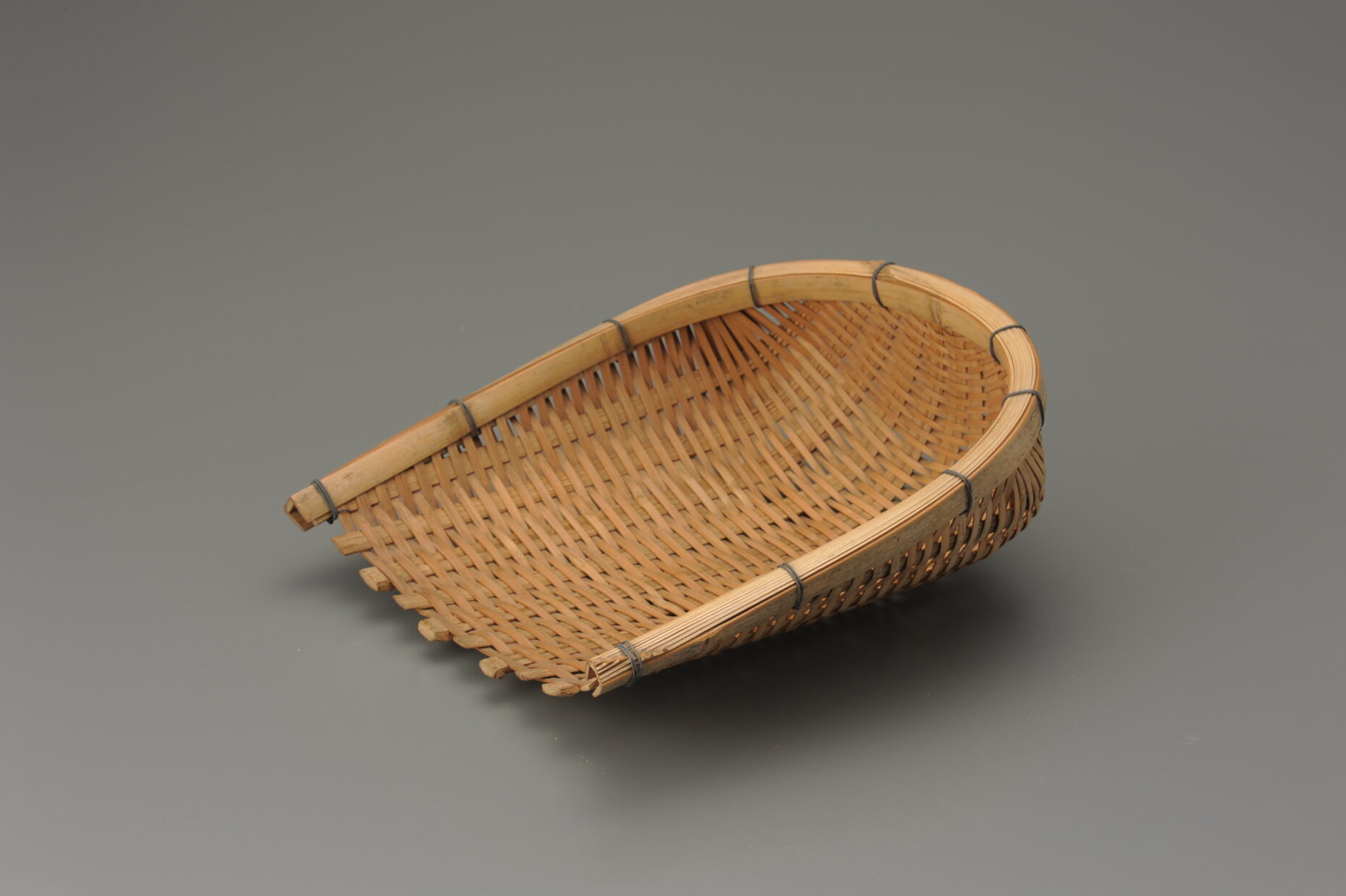
There are two bamboo baskets collected in Kaseda (Minamisatsuma City, Kagoshima Prefecture), home to the Fukiage Beach in Kagoshima Prefecture, known as the longest sandy beach in Japan. One is called a "chatsumitego," meaning "tea picking basket," but according to the data at the time of collection, it was a bamboo basket used for picking tea leaves, weeding, collecting items from the shore, and in the autumn for harvesting chestnuts and persimmons. It is a folk tool that allows us to imagine a life of semi-farming and semi-fishing, where one goes to the shore, fields, and mountains with nothing but the body of oneself.
The "hamatego," or hand baskets used on the beach, collected in the same area are said to be used for clam digging. The "hamatego" seems to convey the joy of going clam digging.
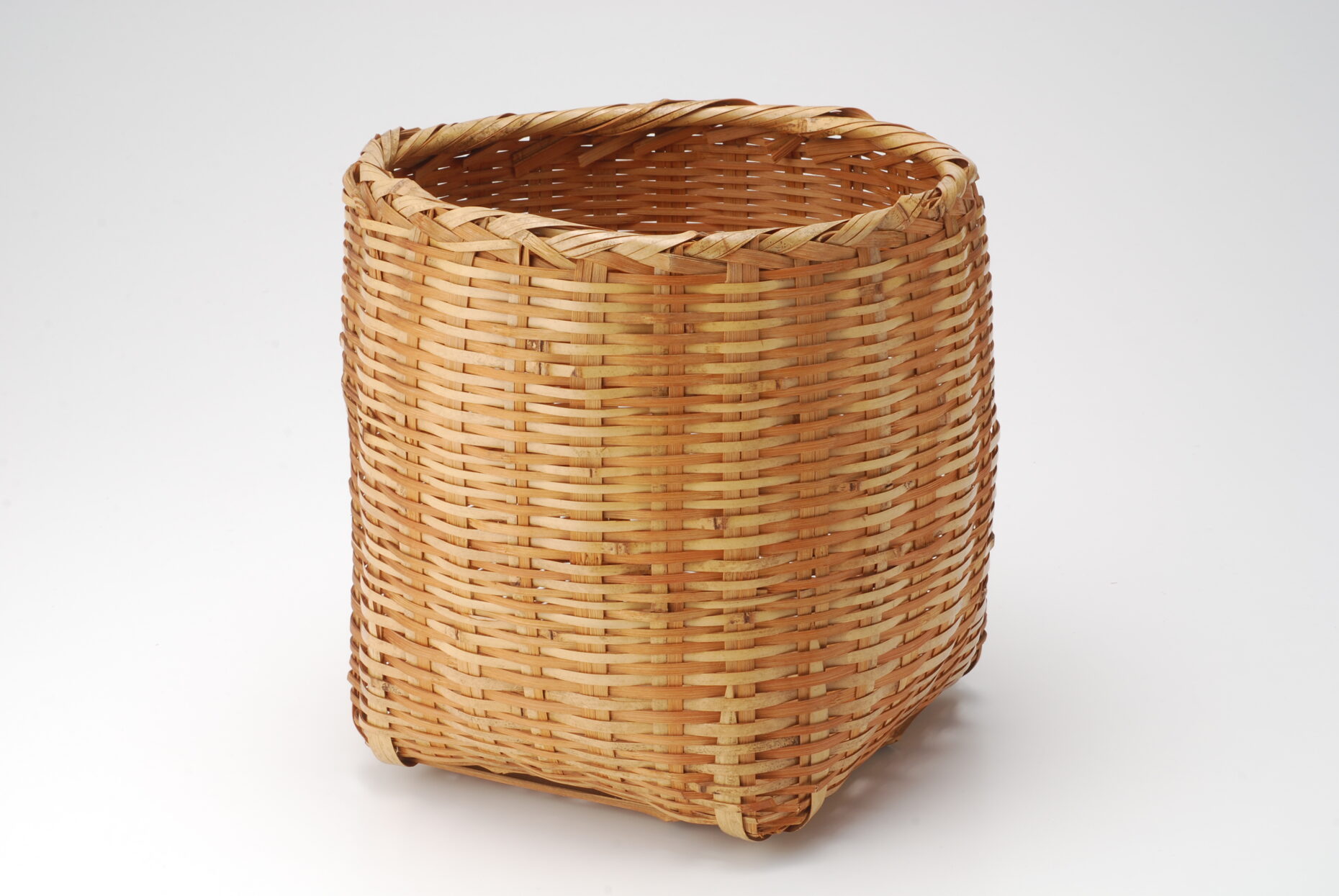

Hand basket (Hamatego) Kaseda City, Kagoshima Prefecture M0002485
Are farming tools used on the rocky shore?
The noritori soke in Susa Bay (Hagi City, Yamaguchi Prefecture), which faces the Sea of Japan, is a type of winnowing basket (called soke or soki in this region) used to collect rock seaweed. Normally used for sorting and transporting threshed grain, this single-spouted winnowing basket seems to be just right for draining the water from rock seaweed as well.
Folk tools that are an extension of the hand
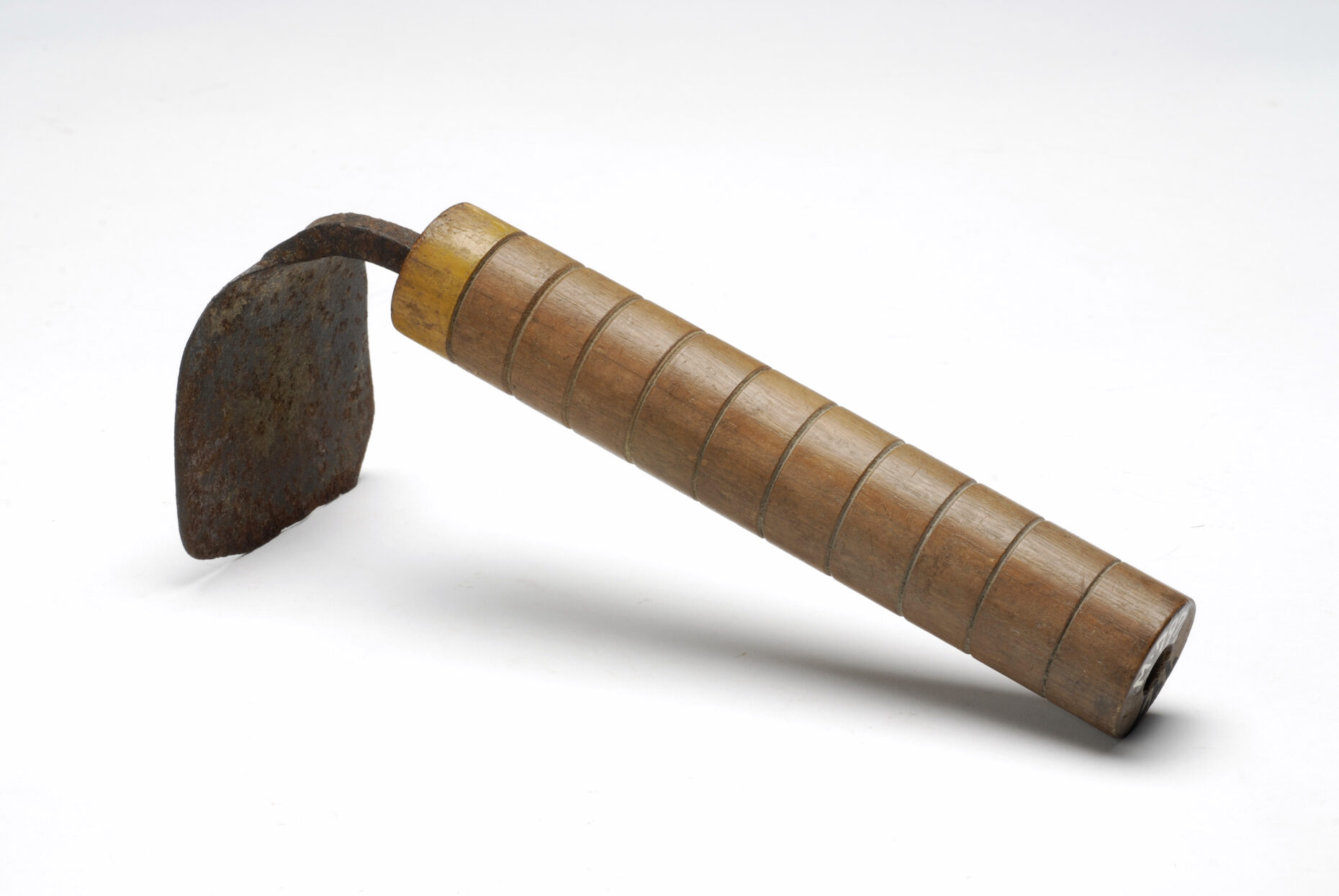
This hand hoe, used to scrape up oysters, was collected in Mihara City, Hiroshima Prefecture. Although most of the area has now been reclaimed, the sight of people clam digging on the calm sandy beaches of the Seto Inland Sea was once a familiar scene. It can be described as a simple folk tool that feels like an extension of one's hand.
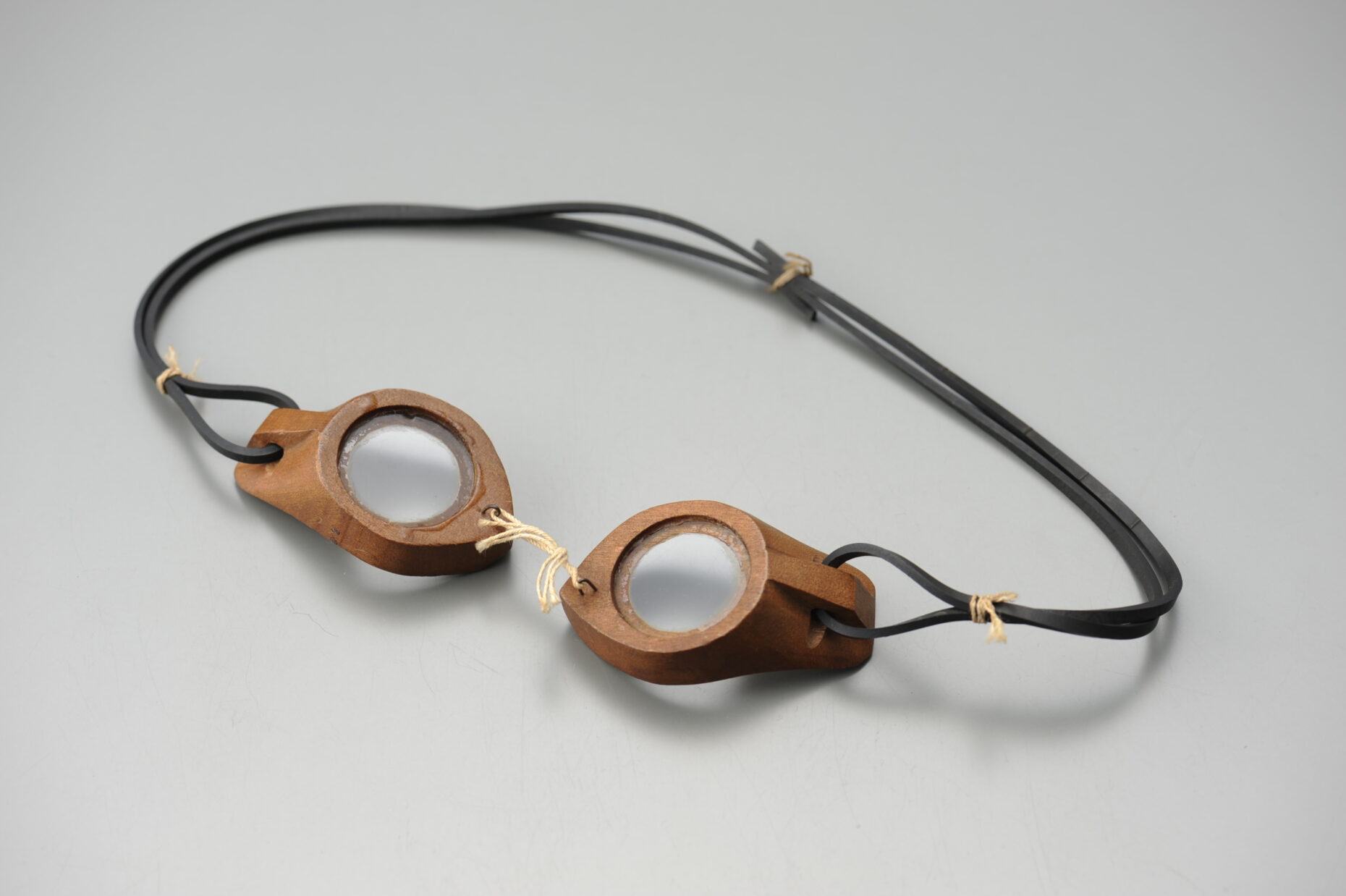
The underwater goggles collected on Izenajima Island in Okinawa Prefecture are made from the evergreen shrub called Kusatobira, which grows in clusters in Japan south of Tanegashima Island. While underwater goggles with glass are not ancient, they can be considered folk tools that utilize materials unique to the southern regions and are rooted in the local climate.
Planning, supervision, and writing
Koji Kato
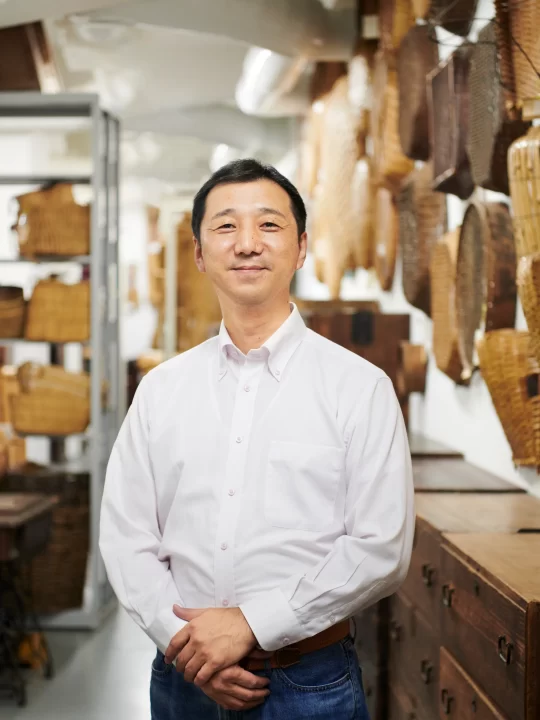
Professor at Musashino Art University, specializing in folklore (research on folk implements). Holds a PhD in Literature. Previously served as a curator at the Wakayama Prefectural Kii Fudoki-no-Oka Museum and a professor at Tohoku Gakuin University (concurrently serving as a curator at the university museum), before assuming his current position in 2019. His major publications include "Folklore: Facing and Expressing the Past" (Musashino Art Publishing Bureau/2022) and "Folklore: Public Studies: Learning and Practicing for Oneself" (Musashino Art Publishing Bureau/2025).