"The sea is vast, so big..." The skills and wisdom (= folk tools) nurtured through the long relationship between the sea and people, for obtaining its bounty, and the hopes (= toys) that people have held for a bountiful catch towards the sea.Musashino Art University Museum & Library, Folklore Materials RoomExcavated from the approximately 90,000 folk artifacts held by the institution. Separate exhibition rooms are provided for folk tools and toys, and a series of articles, with commentary by Professor Koji Kato of the university, explores the deep connection between people and the sea that has continued from ancient times to the present.Click here for project details.). The third installment will focus on "fishing with nets" and introduce traditional sea tools.

Variations in materials and techniques for net fishing
Tracing the history of fishing nets through physical objects is difficult. This is because nets are made from soft organic materials such as straw and plant fibers, and they deteriorate easily when exposed to saltwater, making it difficult to preserve them physically. Net fishing methods include casting nets, where weights are attached to the net and thrown directly into schools of fish by hand, and setting nets in fish migration or escape routes, such as standing nets. On the other hand, some net fishing methods, such as dragnet fishing, which is conducted by groups, and purse seine fishing, which is conducted by fleets of boats, require a high level of organizational skill. Net fishing has been practiced in a variety of locations, from rivers, ponds, and lakes near settlements to beaches and offshore areas.
Understand their ecology and outsmart them.
The material of the net is important because if the prey being caught senses it, they will escape. One might think that using materials as close to nature as possible would make it less conspicuous, but the brightly colored synthetic fiber fishing nets of today are actually a visual trick that makes them difficult to see underwater. The challenge is to reduce the net's presence while simultaneously setting it up in a way that does not alarm the fish. When interviewing fishermen, they often speak from the fish's perspective, suggesting things like which currents the fish tend to pass through. Understanding the ecology of fish, thinking about how you would act if you were a fish, and then anticipating what's happening behind the scenes is the essence of net fishing.
Waiting net fishermen
Net fishing involves setting traps, such as fixed nets and gillnets, leaving them for a while, and then retrieving them to catch the fish. As mentioned earlier, folk knowledge about fish ecology and migration routes is essential, but after that, it's simply a matter of setting the traps and waiting. Some types of waiting net fishing involve setting and retrieving the traps in the middle of the night or early in the morning. While the success of these methods is partly a matter of luck, this type of fishing, which doesn't catch all the fish at once, but rather traps some while allowing others to escape, is attracting attention as a sustainable fishery in modern fisheries resource management.
Going to the fishing grounds for net fishing
In the past, finding schools of fish relied on human eyes. Fishermen would keep a close eye on Iromiyama, a lookout post on a hill overlooking fish schools. Once they spotted a school, they would shout, light smoke signals, use flags or foghorns to alert the villagers, and then row out in their boats to surround the school with nets. The role of finding the fish varied depending on the village's rules, such as taking turns or rotating duties, but those who played the important role of finding schools of fish were given a large share of the catch. In modern times, with the advent of powered boats to fish offshore, fishermen have come to use technology such as fish finders, in addition to their knowledge and experience of reading bird movements and currents, to locate schools of fish in the open ocean.
Folk Art Gallery
Mend the net and prepare for the next challenge.
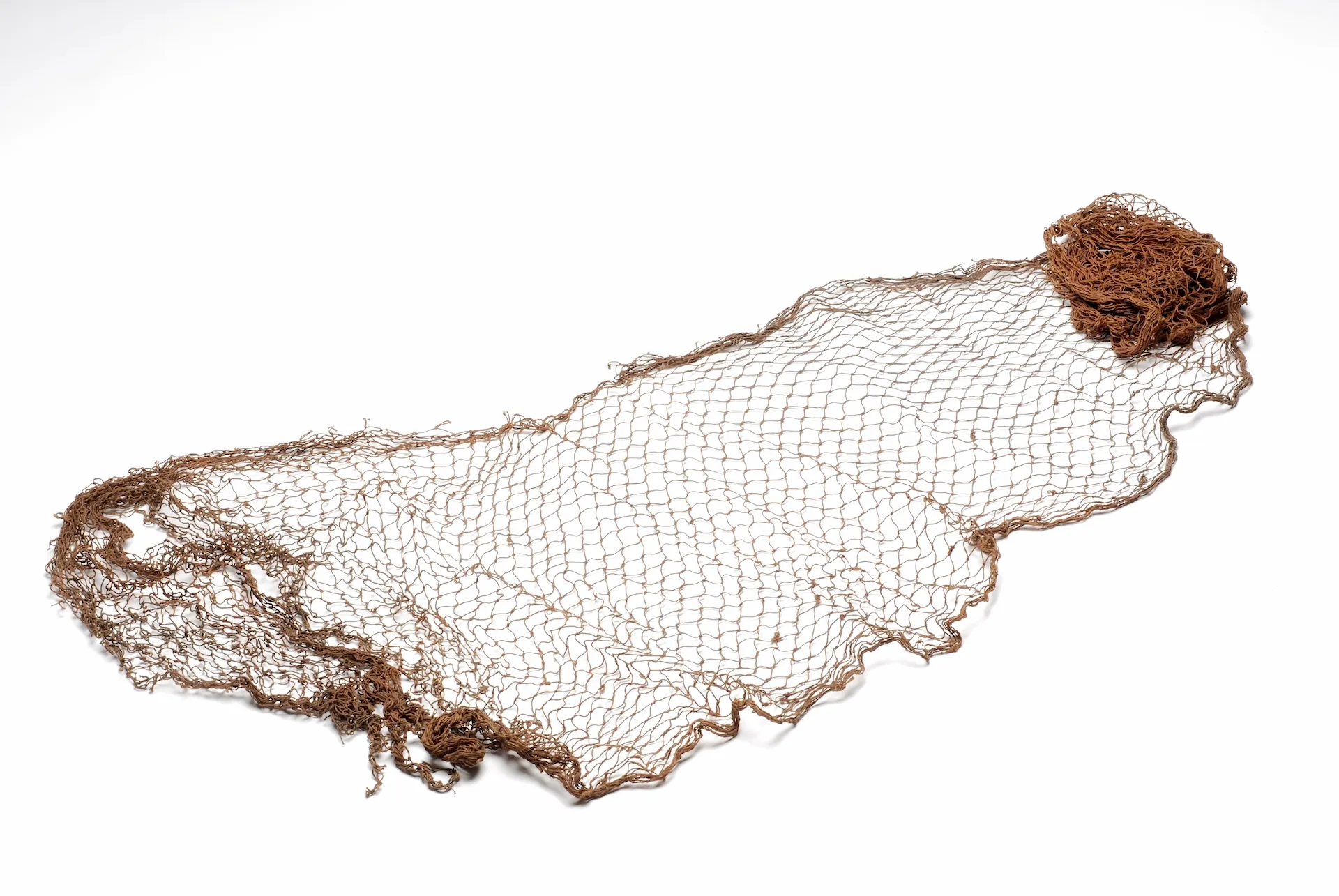
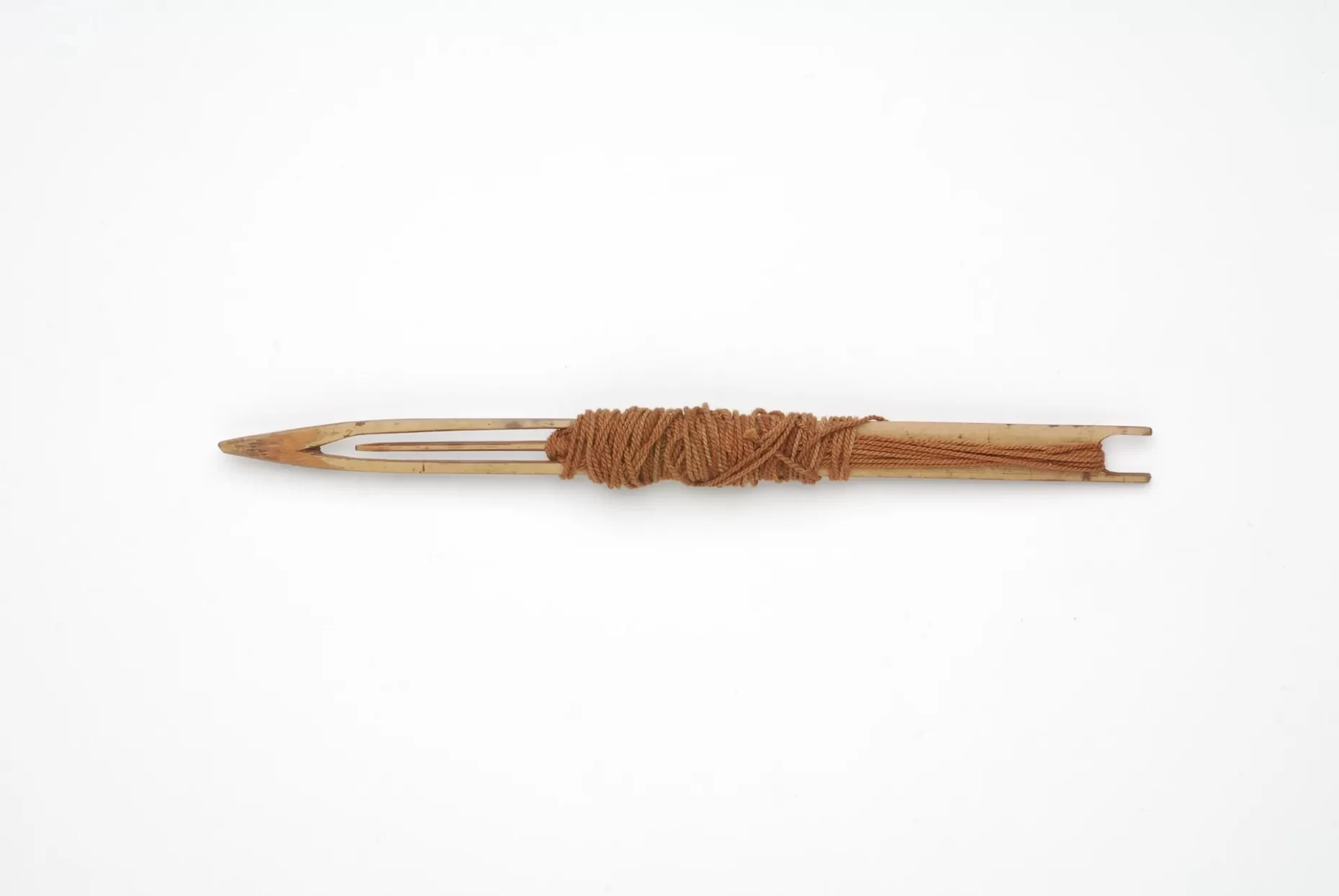
Net fishing required significant financial resources and organizational skills. In addition to factors that depended on nature, such as the movement of fish schools, the net owner's management skills greatly influenced the success of the operation. The larger the net, the more investment in equipment was required. The net was also an asset. Repairing fishing nets was a manual process using needles called netting needles or knotting needles to mend torn meshes with repair thread. Tears in the net or detached weights and floats give fish an escape route, so checking each mesh of the net is extremely important. Thorough preparation, including having the tools properly set up, is a crucial element in net fishing.
Floats and weights
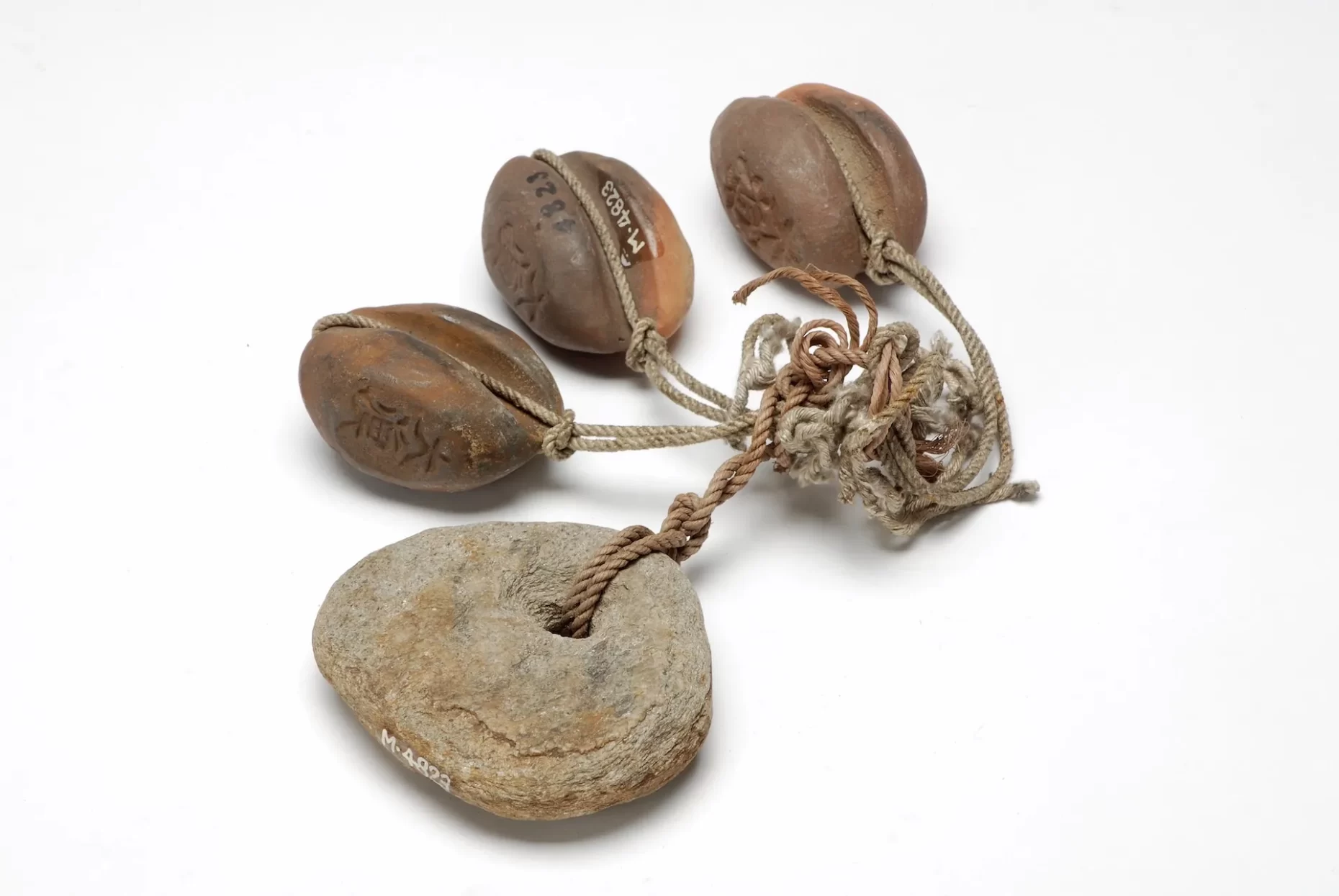
Floats have long been made from light, buoyant woods such as paulownia. The floats are attached to the ropes that stretch across the end of the net, creating a continuous chain. To lay the net underwater, weights called sinkers (or rocks) must be attached to the opposite side of the floats. In the past, stones were used, but since it is not easy to find stones of the same shape, standardized weights made of ceramics, such as Seto ware, became widely used. Sinkers not only sink the net, but in trawl fishing, such as with the Gochi-ami net, the sinkers hit rocks on the seabed when the net is towed, making noise and startling the fish.

A float inhabited by the spirit of the net
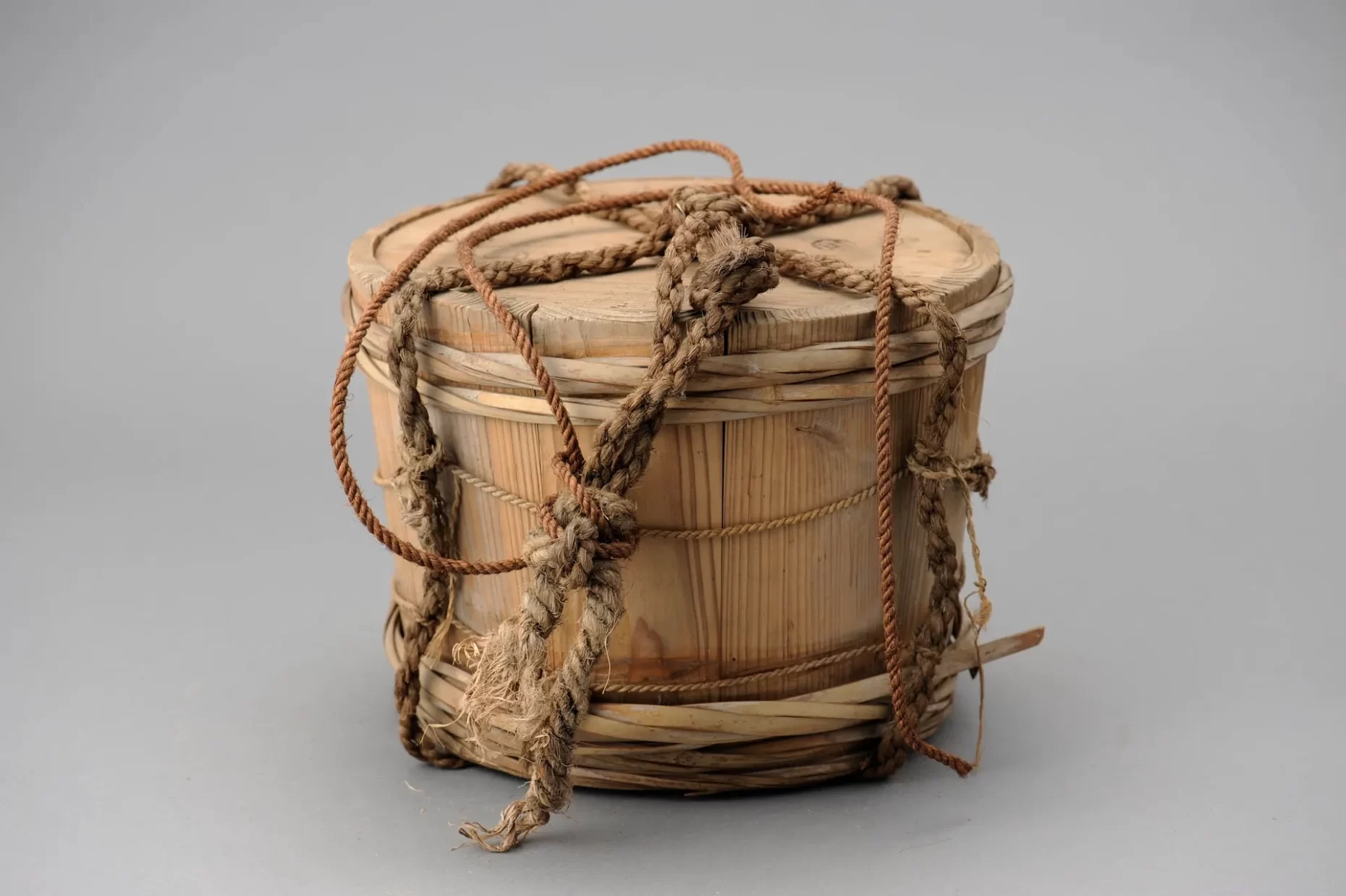
In dragnet fishing, schools of fish are driven into a section called a bag net, and the floats attached to this bag net, which becomes heavy with the accumulated fish, needed to have strong buoyancy. Wooden barrels were sometimes used in this section, and it was believed that a part of the barrel housed the spirit of the net, so it was treated with great care. In the Kii Channel and the Hidaka region of Wakayama Prefecture, there is a custom of putting two dice inside the barrel to pray for a bountiful catch.
The aesthetics of nets
The sight of fishing nets drying in the sun symbolizes the sorrow and emotion felt towards fishing villages, which experience extreme ups and downs. The simple, rhythmic, and beautiful continuous pattern was widely popular during the Edo period and was favored for use in ceramics, komon (small patterned fabrics), and tenugui (hand towels). The net pattern is more than just a design; it symbolizes a bountiful catch and a complete success, and is considered an auspicious motif, as well as a charm to ward off evil spirits. This sensibility of finding such beauty in simple fishing gear is carried on in modern crafts and products.

Planning, supervision, and writing
Koji Kato
Professor at Musashino Art University, specializing in folklore (research on folk implements). Holds a PhD in Literature. Previously served as a curator at the Wakayama Prefectural Kii Fudoki-no-Oka Museum and a professor at Tohoku Gakuin University (concurrently serving as a curator at the university museum), before assuming his current position in 2019. His major publications include "Folklore: Facing and Expressing the Past" (Musashino Art Publishing Bureau/2022) and "Folklore: Public Studies: Learning and Practicing for Oneself" (Musashino Art Publishing Bureau/2025).