Shunichi Suga Laboratory's exploration of the ocean: Blue Waves and Surface

Editor/Writer: Kumiko Sato

In 2025, Minato Lab and Associate Professor Shunichi Suga of the Department of Integrated Design at Tama Art University jointly conducted a marine exploration program. This article follows the year-long course as students explore how their yearning for the sea is translated into design.

table of contents
Phase 1: Understanding the System: April-May 2025
Phase 2: Transforming knowledge and facts into manipulable elements: June-August 2025
Phase 3: Creating an experience using the transformed elements: August-October 2025
Phase 4: Implementing the Experience: October 2025 - January 2026

Question: I have a longing for the sea. What approaches are possible to come to love the sea?
Implementation method: To be implemented every Monday during the 3rd and 4th periods from May 2025 to March 2026 (basic plan)

Phase 1
Understanding the mechanism
April-May 2025

Minato Lab and the Department of Integrated Design at Tama Art University collaborated with three teams led by Professor Tsuneo Nagasaki, Lecturer Yu Aramaki, and Associate Professor Shunichi Suga to implement a program in 2025.
Associate Professor Suga is known as a cognitive design expert, known for his design approach to human behavior and will, including the 5-minute NHK E-TV program "2355/0655" and his book "The Practice of Observation" (NUMABOOKS). Associate Professor Suga has been assigned to work on the Minato Lab's challenge, "What approaches are possible to foster a longing for the sea and to make people love the sea?", using one class session per week throughout the year.

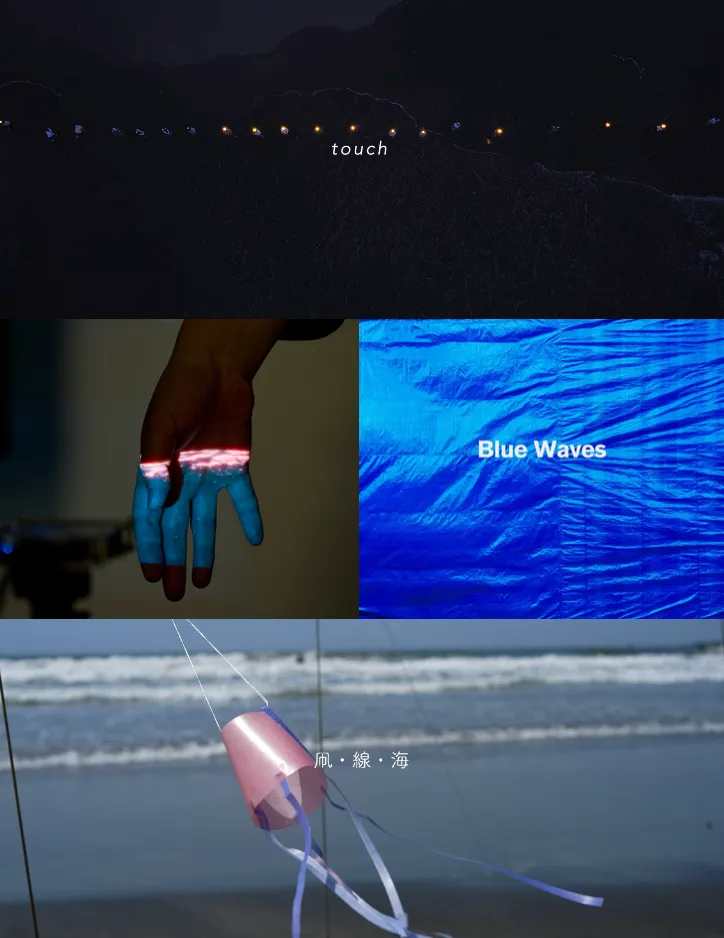
"We decided to start with the theme of whether there is anything we can experience through our bodies, such as the mechanisms that support the ocean, like waves," says Associate Professor Suga. They chose this broad direction to clarify the difference in approach between the Nagasaki seminar's work "Touch," which focuses on the behavior of the ocean, and the Aramaki seminar, which tries to make the constituent elements of the ocean tangible.

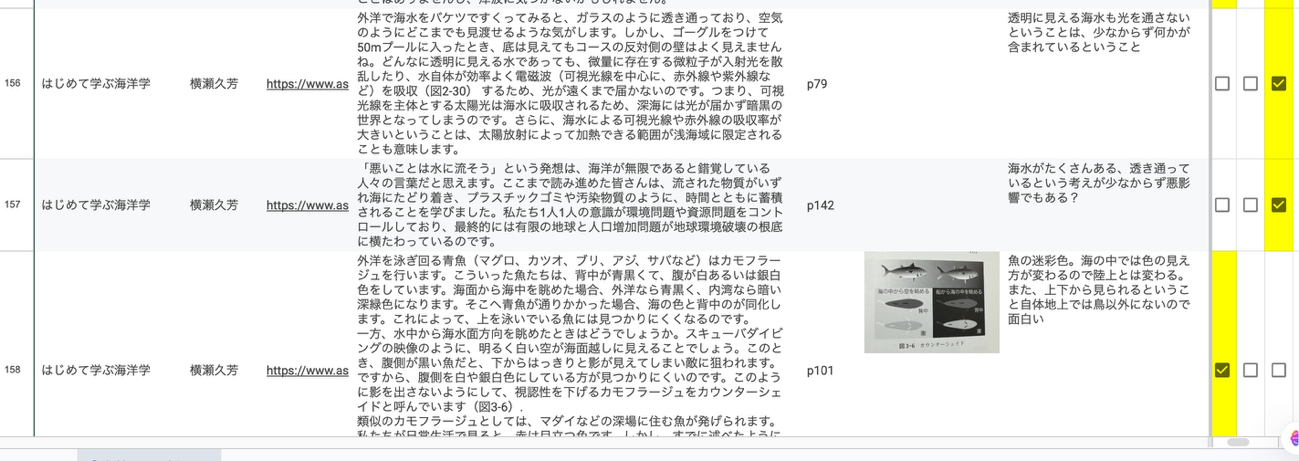
"New things don't progress in a straight line. First, to understand the mechanism, we started by reading literature related to the sea and learning about the sea itself. Each seminar student shared excerpts of parts that interested them from the literature, and then everyone checked (with a yellow marker) the parts they agreed with. In total, we ended up with 156 reference books."

Furthermore, we all went to the sea and then shared our opinions on what we found relatable or interesting about the "sea," writing them down on a board.

The ocean is interesting because it's on a different scale than usual.
The five elements are mud, sound, wind, waves, and smell.
・Isn't it practically the same as not having access to the sea at all in the shallow areas?
Waves are the fingertips of the sea
- Water vibrations become air vibrations
Land is filled with air as a medium, and the sea is filled with water as a medium.
etc…

Various perspectives on the ocean were expressed and outputted. Furthermore, participants attempted to express their thoughts at a higher level of abstraction, such as "The ocean is ____," and then categorized them on a board.

"The sea is a recording device."
"The ocean is a collective entity."
"The ocean is filled with vibrations."
etc…

After exchanging various opinions, the initial research for the project took place over approximately two months.

Excerpt from the research sheet of the Shunichi Suga Seminar's Marine Education Project.

Phase 2
Transforming knowledge and facts into manipulable elements.
June-August 2025

To see what would happen if they could turn the research they conducted from books and by actually observing the ocean into elements they could manipulate, they divided into three teams: "Becoming the Ocean," "Creating the Ocean," and "The Ocean Exists," and actually tried various approaches.

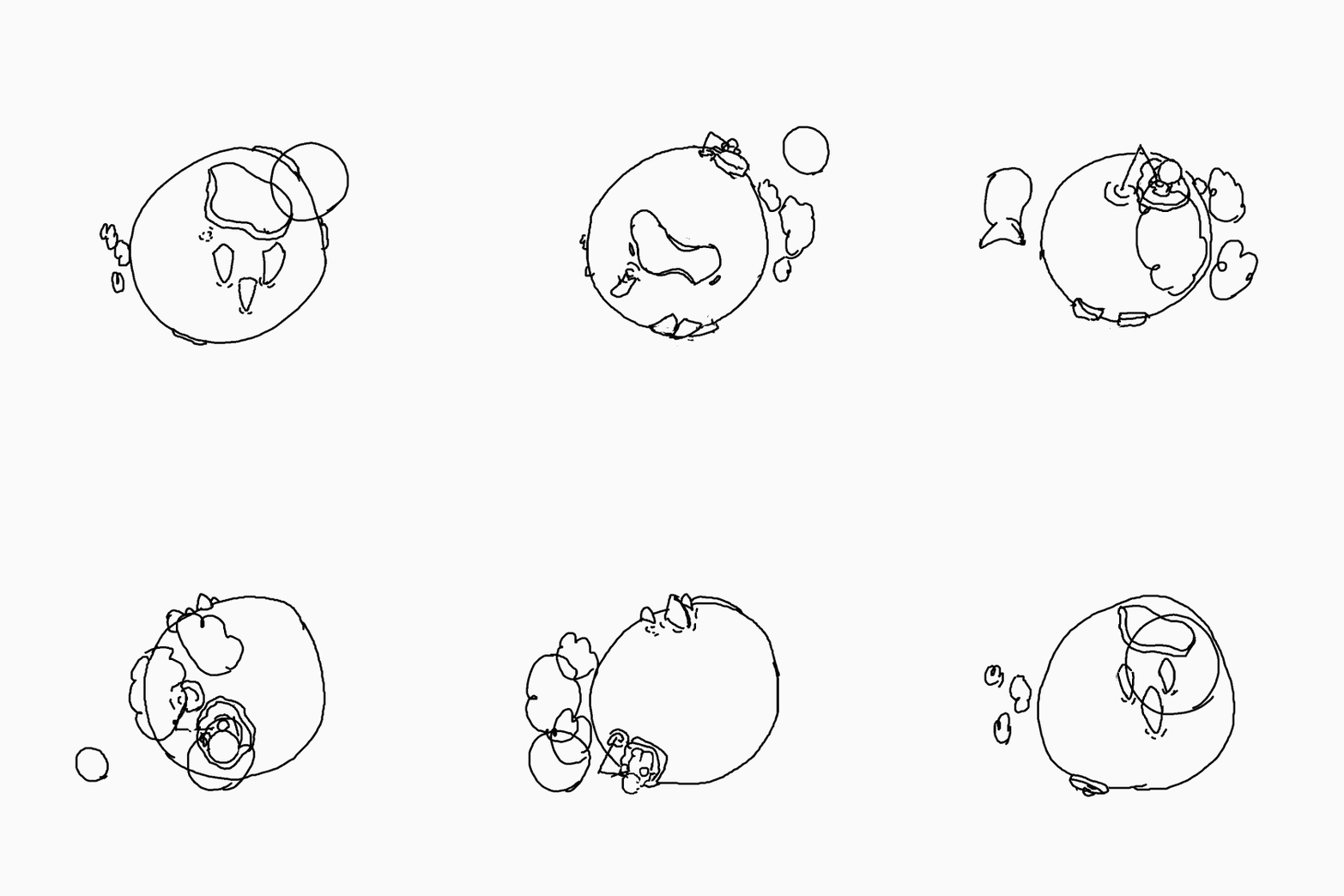
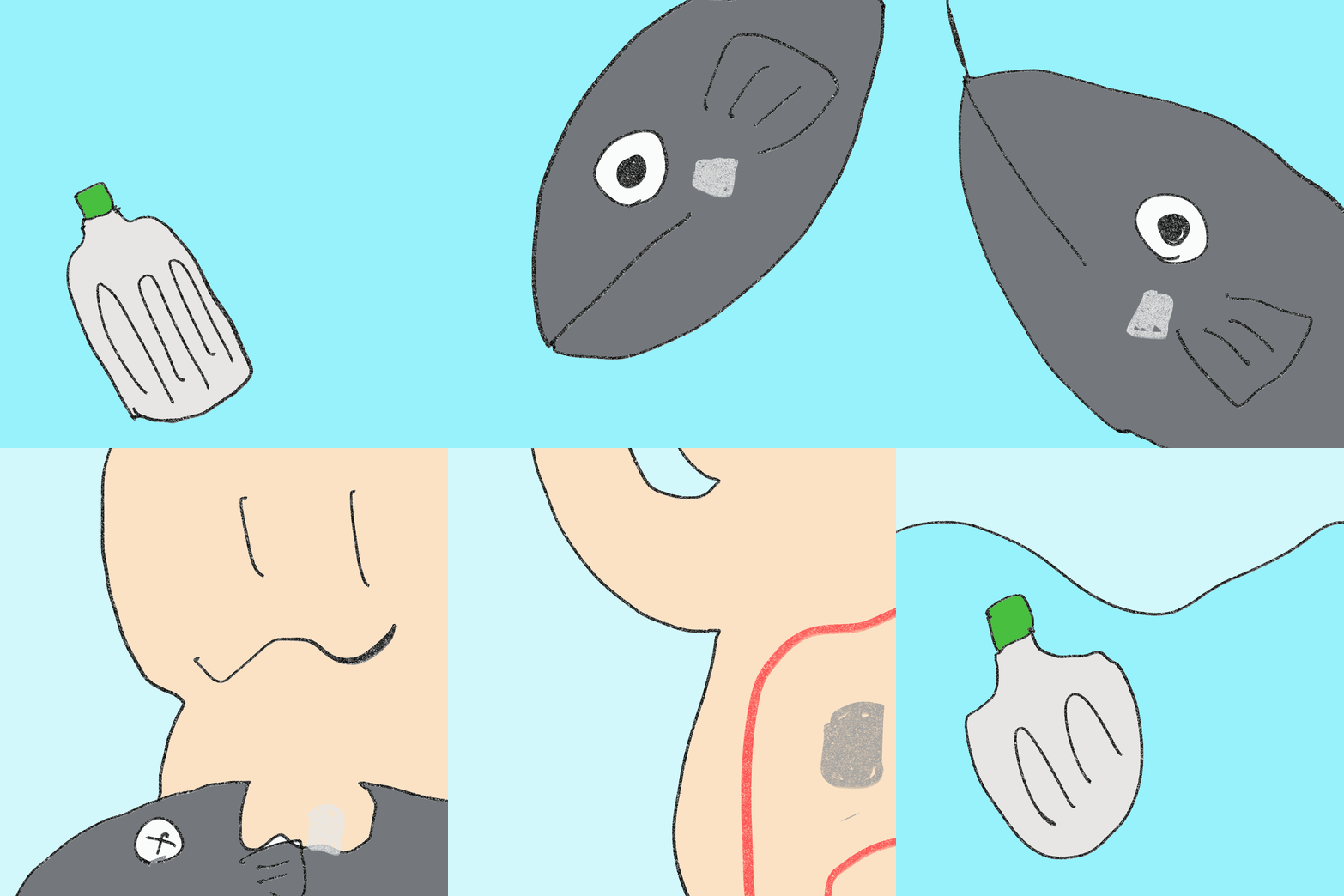
"We tried visualizing fluids (*1), and we did all sorts of things that made the people around us wonder what on earth we were doing. For example, we collected things in a 7:3 ratio because the ratio of sea to land is 7:3, or we ate small fish that live in the same area and tried to create a sea inside our stomachs, or we randomly sorted and arranged sand, or we recreated the fact that it gets darker as the water gets deeper by using a box on our heads as stairs (*2)... We also tried to recreate the motion of waves by making circular motions together (*3). We looked at convection, and so on... We did all sorts of trial and error every week."

*1 Visualization of fluids: Feeling the wind with lily-of-the-valley tape
*2 The phenomenon of darkness increasing with water depth is recreated by wearing a box over one's head and using stairs.
*3 Recreating the ocean with circular motion: It becomes the ocean

Alongside the regular assignments given as part of the coursework, various experiments were conducted to learn about the ocean. Associate Professor Suga's basic principle is, "You won't know until you try." He tried to implement as many ideas as possible, even those that came to mind on the spot, and repeated the experiments many times in an attempt to gain insights. He put many ideas into practice without deciding on a final objective or output.

Phase 3
The transformed elements are used to create an experience.
August to October 2025

(*4) Creating and playing the card game "Sea Cards"
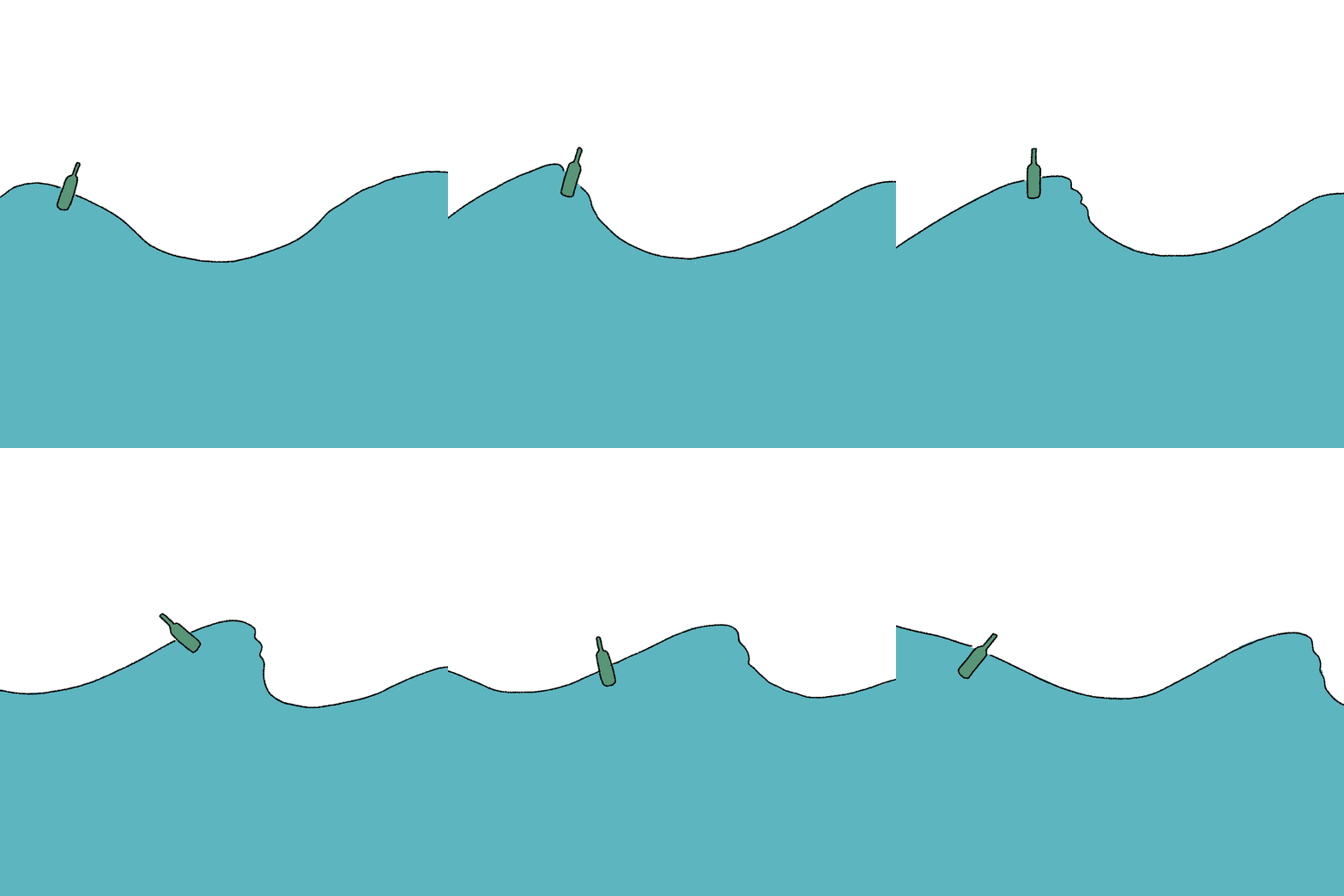
(*5) Prototype animation with the theme of circulation

Phase 4
Implement the experience
October to January 2025

As October arrived, exploration continued with the aim of creating a more implementable version of the work, which had been decided upon in two directions. The blue tarpaulin underwent repeated experiments, changing materials, sizes, and locations to verify its properties. Meanwhile, the animation team continued their trials, searching for more appropriate ways to present the work, even as they faced the limitations of their expressive methods.

Six people holding a blue tarp and creating waves by moving it up and down.

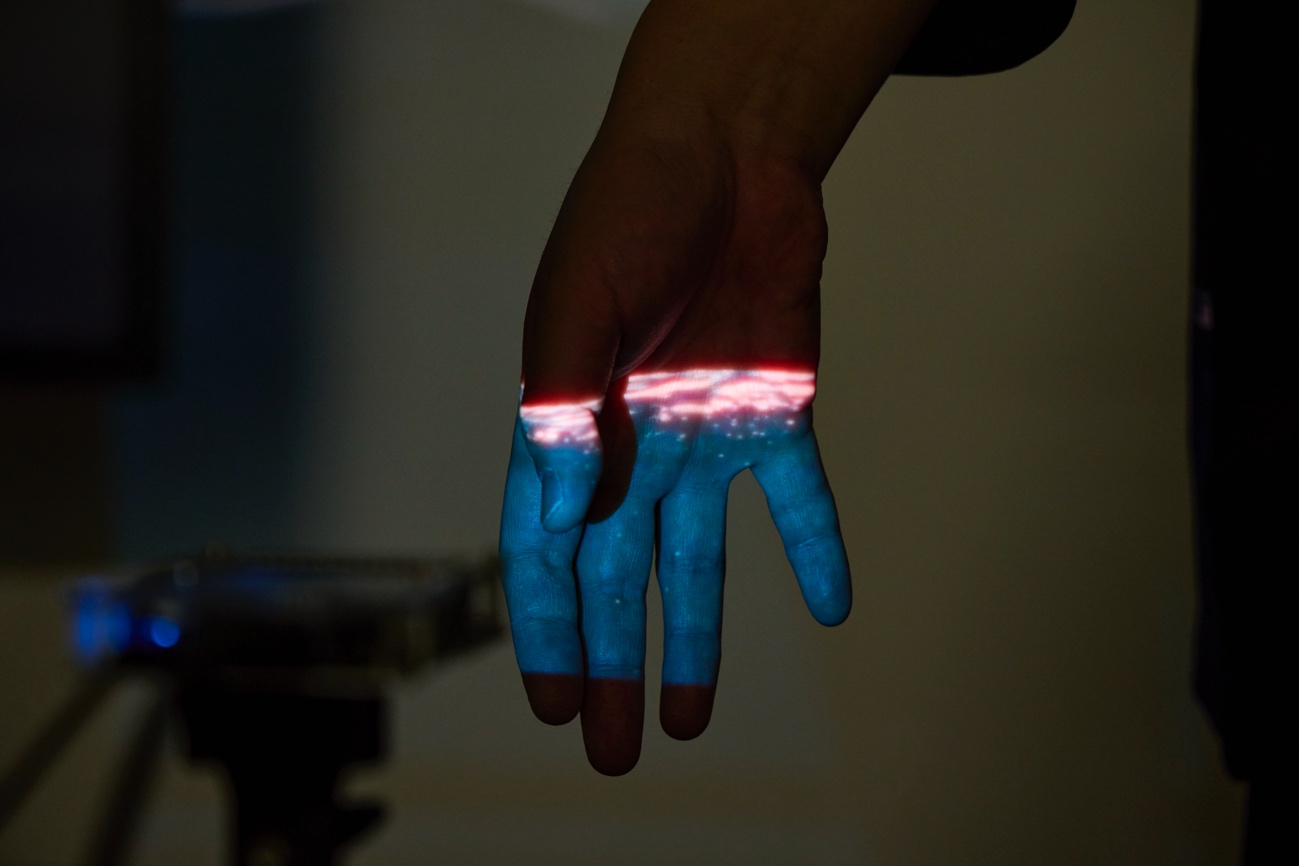
In the final stages, the focus began to shift to the specific design of "how to create the experience." The first thing they tackled was the "format of the experience." For example, an idea was proposed to use a laser projector to project images onto the palm of the hand, creating the experience of "having the ocean in your hand." In this way, thinking about the mechanism itself that allows viewers to directly participate was conceived as the format for creating an ocean experience.

A laser projector is used to project the surface of the sea onto one's hand.

summary

"If you only manage to do something that looks somewhat good, you won't reach your original goal," says Associate Professor Suga. For the project, the focus is on creating something that moves people's hearts rather than achieving aesthetic perfection. The idea for the projector came about when Associate Professor Suga acquired many inexpensive, readily available projectors and initially lent them to his students.

"People tend to think it's okay to use things haphazardly when they have a lot of them. That's actually an important element of trial and error. Try everything, and test things out thoroughly. It's very simple (laughs), but it's an important process for gaining confidence in the final product," says Associate Professor Suga.

This project, conducted in collaboration with 3710Lab, demonstrated that the process itself—exploring new forms of experience through trial and error—is of significant value, rather than seeking clear answers to the vast and ambiguous subject of the ocean. Starting with research, and repeatedly going through analysis, experimentation, divergence, and convergence, the emphasis was not on creating a "finished product," but on creating a "mechanism that generates insights."

Rather than recreating the ocean itself, this approach, which uses familiar materials and physical experiences to evoke or arouse interest in the sea, demonstrates the importance of a thoughtful process in addressing questions without definitive answers and highlights the value of "awareness triggers" in experience design, while simultaneously inspiring a universal longing for the ocean.

"I was particular about using materials that are easily available anywhere. Since it's a highly reproducible work, I'd like to consider developing it as a participatory project in the future," said Associate Professor Suga. Minato Lab also wants to consider making workshops and other events based on the project.

Photo: Kazuhiro Shiraishi

Shunichi Suge
Born in Tokyo in 1980. Graduated from Keio University Graduate School of Policy and Media Studies. Associate Professor in the Department of Integrated Design at Tama Art University. Specializes in designing the realms of behavior and will by designing cognitive cues, and in recent years has been exploring guided experiences using eye movements, the generation of movement images by tracing static images, and the design of constraints that bring out human creativity. Major works include ID video for NHK E-TV's "2355/0655", concept research for the 21_21 DESIGN SIGHT exhibition "Unit Exhibition", and exhibition director for the "Athlete Exhibition" and "Rules? Exhibition" at the same venue. Publications include "Difference" (co-authored, Bijutsu Shuppan), "Behavioral Economics Manga: Hentekonomics" (co-authored, Magazine House), "Practice of Observation" (NUMABOOKS), and "Rules? Book" (co-authored, Film Art Inc.). His major exhibitions include "Aichi Triennale 2019" (Aichi Prefectural Museum of Art, 2019), "The Principle of Directionality" (SOBO, Tokyo, 2017), "The Right Way Can Only Be Imagine" (Design Gallery 1953, Tokyo, 2019), and "Designing the Gaze" (Tokyo Midtown Design Hub TUB, Tokyo, 2023).
HP:syunichisuge.com
IG: SUGE
X: Shunichi Suga/SUGE Syunichi