The future of Kesennuma
In the wake of the Great East Japan Earthquake, Kesennuma, a town that has been working on marine education with an eye on future sustainability, garnered attention as an educational initiative that walked hand in hand with the recovery slogan, "Living with the Sea." However, it eventually faced the question of "What should we do, and how should we do it?" How did they confront this question, and how did they connect it to the next steps?
Through interviews with children who have received marine education and teachers and staff in Kesennuma City who have accumulated practical experience, this book looks back on 13 years of marine education in Kesennuma.
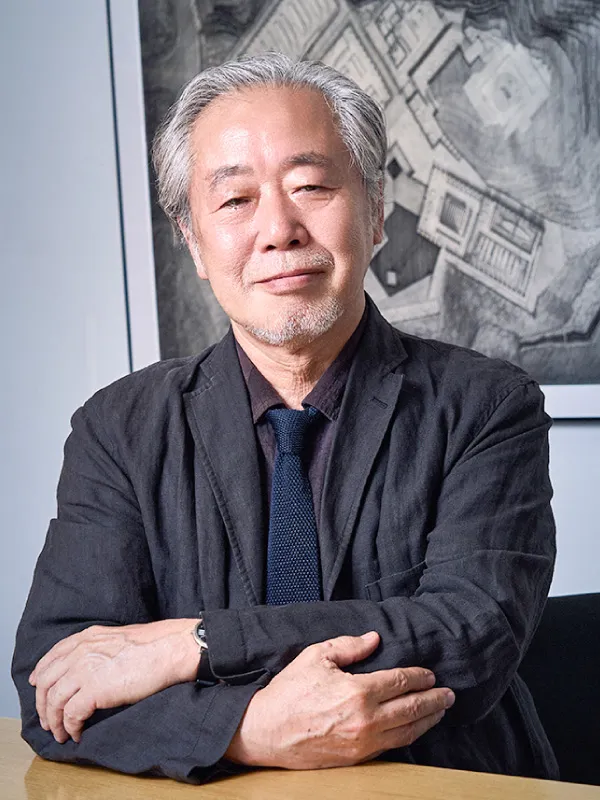
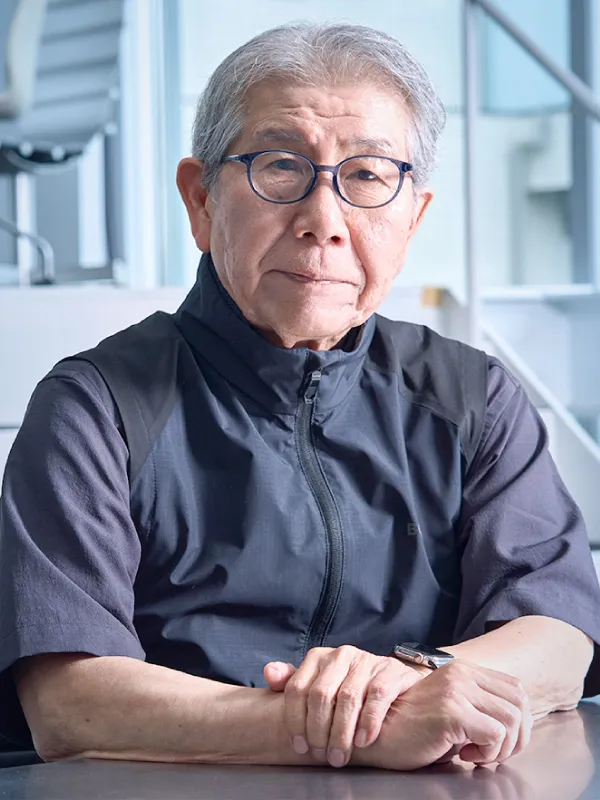
Those appearing in the interview (common to both parts)
(Teachers)
Ryo Asano (Chief Operations Officer (Operations Supervisor), Kesennuma City/Miyagi University of Education Collaboration Center)
Hirofumi Onodera (Principal of Shikaori Elementary School)
Ayami Kameya (Teacher at Menose Elementary School)
Misako Sakurai (Principal of Hashikami Junior High School)
Yumiko Sato (Principal of Menose Elementary School)
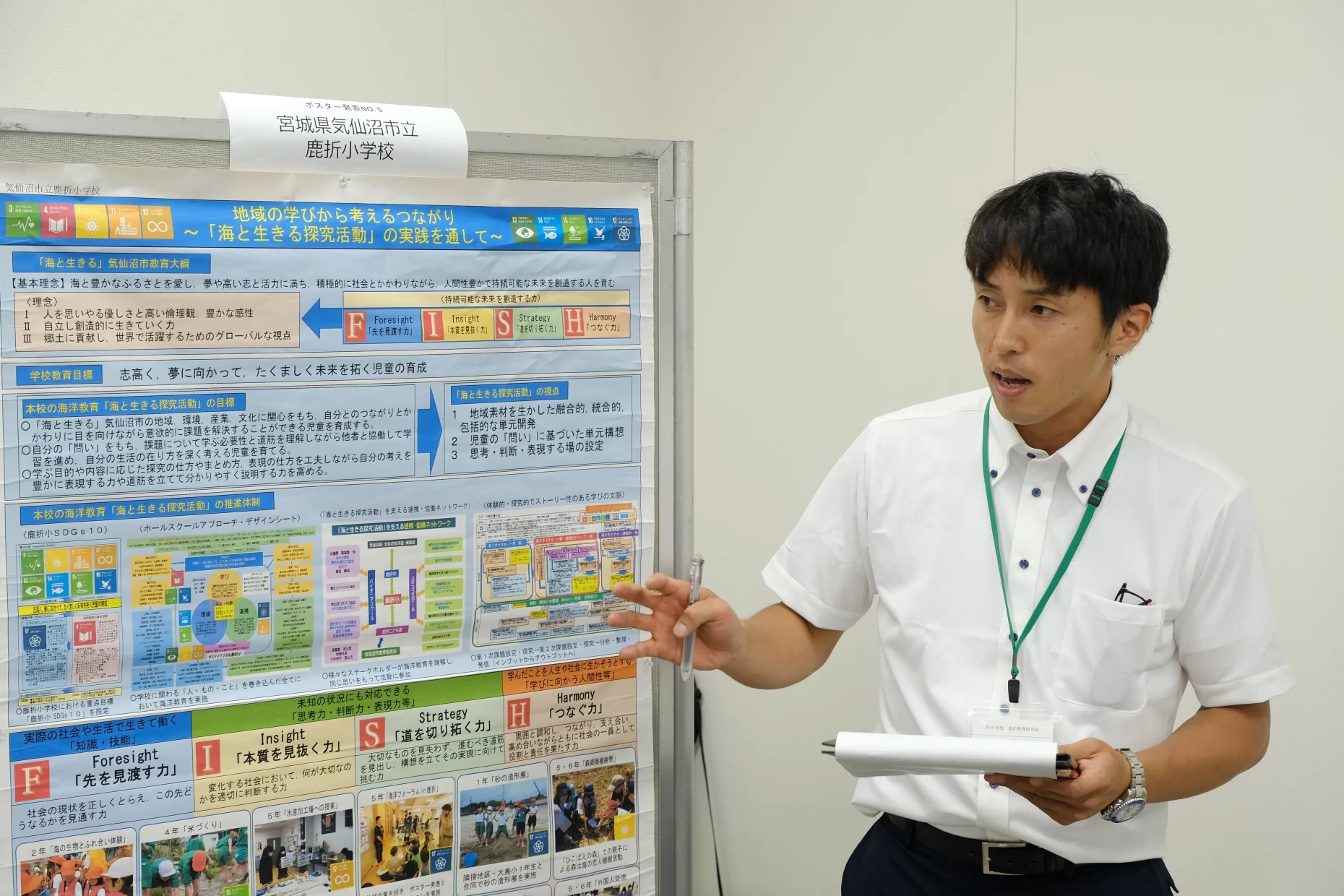
Kota Chida (Teacher at Shikaori Elementary School)
(To all high school students)
Shiina Onodera (3rd year student at Kesennuma High School)
Natsuki Kuranaga (3rd year student at Kesennuma Koyo High School)
Akari Suhara (3rd year student at Kesennuma Koyo High School)
Shohei Nakamura (3rd year student at Kesennuma High School)
Aoi Hatakeyama (3rd year student at Kesennuma High School)
Matsuoka Neika (3rd year student at Kesennuma High School)
Kazuyoshi Murakami (3rd year student at Kesennuma Koyo High School)
*Names are listed in alphabetical order. All elementary schools are Kesennuma City schools, and all high schools are Miyagi Prefecture schools. Affiliations and positions are as of February 2026.
Returning to "Living with the Sea"
The teachers continuously grappled with the question, "What is marine education?" through their lessons. What supported them in this endeavor?
One reason is the simple fact that there is a sea there. Not only are there economic benefits from the bounty of food, including seafood, and maritime trade, but there are also blessings that come from the fact that Kesennuma itself is "connected to the sea," which creates and supports the place. Everything depends on the sea.
Kuranaga and Suhara from Kesennuma Koyo High School shared their thoughts.
Kuranaga: "I want to be able to always feel close to the sea. I hope that the environment where we can go and play anytime will remain."
Suhara: "I myself have been surrounded by the sea since I was very young, and I have many memories made by the sea. Even if the form is different, I think that people who will come to the sea in the future, and people who have come before, probably have similar memories, so I hope that it will continue for a long time to come."
For Ms. Sakurai, who was born and raised in another part of the prefecture and came to Kesennuma as a teacher, the sea of Kesennuma and the people who are involved with the sea hold a special significance.
Sakurai: "I really had a longing for the sea. I was so happy when I found out I could go, and I was assigned to Oshima Island in Kesennuma. The children really experience the sea, which is an indispensable part of their daily lives. I felt that they were naturally coexisting with the sea."

The people of Kesennuma, young and old, have always had a deep connection with the sea in a very natural way. In deepening and implementing marine education, which is invaluable to Kesennuma, we are once again confronted head-on with this fact and the question of how we will interact with the sea in the future. This meant confronting Kesennuma's identity as "living with the sea."
Kameya: "In a 5th-grade integrated studies class, the children discussed the theme, 'The phrase "living with the sea" was coined because of the earthquake,' and in the 6th-grade presentations, there were tons of comments written by the children about this phrase. Faced with the power of this phrase, 'living with the sea,' I realized that it would be fun for everyone to discuss this one phrase, saying things like, 'Is it like this, or is it like that?'"
For adults, "living with the sea" was a phrase that pointed to a place they could return to, a place that remained unshaken even after the earthquake. And children superimpose that meaning onto it as a phrase that represents a place of beginnings. This is a convergence born from education, an activity that encompasses the time axis of past, present, and future.
Matsuoka: "We had a conversation like, 'Even though we say we live with the sea, aren't we actually being kept alive by the sea?' That was really fun."
Drawing on past experiences and using the present situation as a theme, the project explores what it means to "live with the sea" in the future. What Kesennuma needed in marine education became clear through the interactions between local teachers and children.
The sea, people, and thoughts
As the direction of marine education becomes clearer, a reassessment of educational practices also arises. Mr. Sato, the principal of Menose Elementary School, recalls his time at the school when marine education was first started.
Sato: "I've always intended to 'learn through the sea,' rather than 'learn about the sea.' I hope that the thoughts and feelings of the people who live by the sea will be useful in my own life and the lives of my children in the future, and I explore the goodness of their thoughts and what they do."

This is a form of marine education that focuses on learning "through the sea," rather than learning "about the sea."
Sato: "The fishermen work with the thought, 'I hope these oysters grow well,' and three years later, when they see how big the oysters have become, they think, 'That was worth it.' I made sure to structure the lessons in a way that would allow students to experience that feeling. They were damaged by the earthquake, but I wanted to convey what kind of feelings led them to recovery. The fact that they said, 'But we're not angry with the sea,' is what really makes Kesennuma feel like."
Chida also reflects on how his own approach to marine education has changed.
Chida: "My role as an instructor in marine education was also something we worked on together, figuring out how to create it with the children. I repeatedly told them, 'It's not just about learning about the sea,' and 'Not everyone is going to become a fisherman in the future.'"
Recalling events from eight years ago, he shared a memorable anecdote.
"When Shiina Onodera gave a presentation, she spoke about the shortage of people willing to become fishermen. Someone in the audience asked her, 'Do you want to become a fisherman?' She couldn't answer right away and struggled to figure out how to express her feelings. Over the next year, she grappled with the challenges of the shortage of fishermen and the allure of the fishing industry. At that time, her dream was to become a novelist, so we decided, 'Let's write a novel set in Kesennuma, featuring the people of Kesennuma who are involved in various jobs related to the sea and who have big dreams.'"
At that moment, I thought, "Ah, this is what marine education aims for, connecting it to the child's way of life." It's not just about learning about the ocean, but also about how to have those kinds of conversations, how to deepen one's understanding of the ocean, and doing those kinds of things together with the child.
When the sole purpose is to teach about the ocean, the presence of the children receiving the education diminishes. However, when the children's future becomes the starting point, the necessary actions for marine education become clear.
The children, too, were not simply viewing the ocean as a place to learn about it, but were thinking about how they could make marine education a meaningful experience for themselves.
Matsuoka: "The ocean wasn't the kind of topic that elementary school students would choose to tackle on their own. At first, it was vague, but then I decided to focus on the theme of 'environment' and delved into it, which was an important process."
Onodera (Shiina): "As a way to get started, I think it's important to begin exploring Kesennuma from something close to home."
Furthermore, the way adults and children learn and move towards the future in their own ways is embraced and supported by the way the community of Kesennuma operates.
Sato: "Kesennuma is a learning field throughout the entire town. When children go to learn at the workplaces of adults, the adults make sure to dedicate time to them. Some groups have visited ice shops during their town walks, and one team even went to the fisheries cooperative and received towels as souvenirs. There is a culture here where everyone works together to raise children."
Kameya: "When I called to thank them later, they said, 'You asked some really profound questions, and it made me think seriously about things.' It was interesting."
The children, too, are certainly feeling the warmth and generosity of the town of Kesennuma.
Hatakeyama: "When I tell people in the community, 'I want to do this,' they all say, 'Okay.' There are hardly any people who say no. I don't know about other regions, but I think there are quite a few people who would say, 'This is too risky, I can't let my children do this.' But I've personally experienced that this isn't the case in Kesennuma."
With a deep connection to the sea, its people, and their aspirations, Kesennuma's marine education has spent 10 years cultivating its foundation.

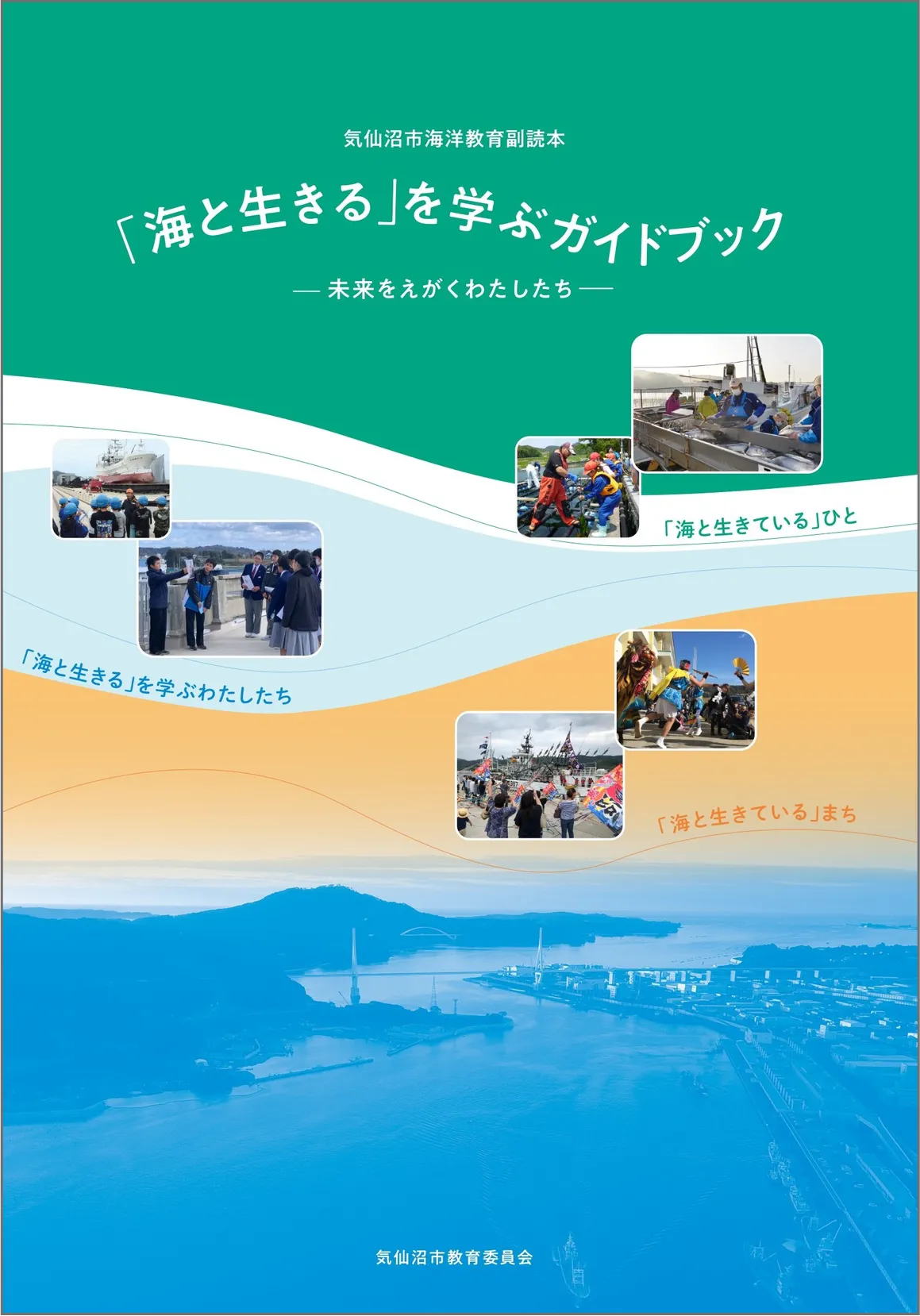
The content of each isKesennuma City Board of Education websiteMore viewable.
Beyond education, as Kesennuma
The three school principals we interviewed will reach mandatory retirement age in March 2026. They shared their thoughts on the future of marine education and their aspirations for Kesennuma.
Sakurai: "While you're in your hometown, I want you to get to know and cherish your community, and even when you go somewhere else, I want you to always have a love for your hometown. Soon, the children will be a generation that doesn't know about the earthquake, but Kesennuma is a place where everyone worked together to overcome the disaster, so I really want them to be proud of that."
Sato: "When you hear stories about fishermen trying to adapt to changes in the ocean by changing the types of fish they farm or introducing new technologies, it makes you realize that they are also trying to adapt to the environment and make a living. That's a lesson to be learned. It's not just about protecting the marine environment; we can also learn from this that there are times when we have to make choices and take action according to the situation at hand. If you confront their thoughts and ways of life, everything becomes a subject for learning."
Onodera (Yutaka): "As a town that grows up by the sea, I hope that children will feel proud to be here, glad to be here, and that it's fun. I don't want it to be a town where time just passes by; I want them to go out into society feeling glad that they came here."
Many people in Kesennuma live with pride in being born and raised there. That's actually quite remarkable. I want to preserve that feeling for future generations. I want people to develop a sense of ownership over Kesennuma, not just as "the town they lived in," but as "my town."

As we reflect on the past, present, and future of marine education in Kesennuma, the significance of a certain kind of "power" that educational activities possess becomes clear. It is a power that, while sometimes coercive and arbitrary, is nonetheless a power to preserve and pass on something that we believe is important.
Hatakeyama: "Marine education is something we probably wouldn't have touched if the school hadn't told us to. Kesennuma has the sea, so I strongly felt that we shouldn't just settle for the idea that 'the sea is beautiful.' Marine education became theきっかけ (trigger/opportunity) for me to fall in love with Kesennuma."
Onodera (Shiina): "It led to personal growth that impacted my life."
Even in regions where the sea is a daily occurrence, it may be difficult to reflect on the connection between people and the ocean, precisely because of that proximity. Yet, these are regions that embrace such things as part of their identity, and they are "going out of their way" to engage in marine education in order to build a better future.
The Great East Japan Earthquake and the days that followed remain as shocking memories. However, the generation now taking a new step forward in Kesennuma has almost no memory of that "normal" experience.
Murakami: "I was sleeping at kindergarten. All I remember is being put in a closet."
Suhara: "I was in daycare, but I only vaguely remember what it was like in the car when my grandfather came to pick me up."
Most of the children currently participating in marine education in elementary and junior high schools belong to the generation born after the earthquake and tsunami.
That's why now might be another opportunity to question the meaning of "living with the sea."
Hatakeyama: "The area has changed quite a bit since then, hasn't it? Seawalls have been built so you can't see the sea anymore, and new buildings have been constructed. But I think the people are what haven't changed. Everyone is kind, they always return your greeting, and there are lots of adults around who will definitely help you if you're in trouble."
Even as the landscape changes, people remain the same. This isn't about any specific individuals, but rather about those who continue to connect with the sea, and the memories associated with it.
Matsuoka: "I want to preserve the memories of having been in Kesennuma and experiencing these things. Of course, it wasn't all sunshine and roses; there were painful times too. But I think the memories we have are valuable precisely because we are a town that was affected by the disaster. We have memories of 'this is what it was like when the earthquake happened,' and now we can share those memories with others. At that moment, we're not just looking at Kesennuma as it is now, but also at Kesennuma from the perspective of the past. So I want to properly preserve the people who have these memories, and the connections between them."
Suhara: "Kesennuma isn't very big, so most of the places I've been to are places I went to with friends. They're all full of memories, so I love them all."
Chida, who was formerly the homeroom teacher of the high school students, reflected on the marine education he had conducted while grappling with questions and concerns, and said, "When I think about where I can check my answers, I think it's in seeing how the high school students have grown."
The words of these young people, who are about to take a step towards a new future, hold the answer.

Realization: 3710Lab