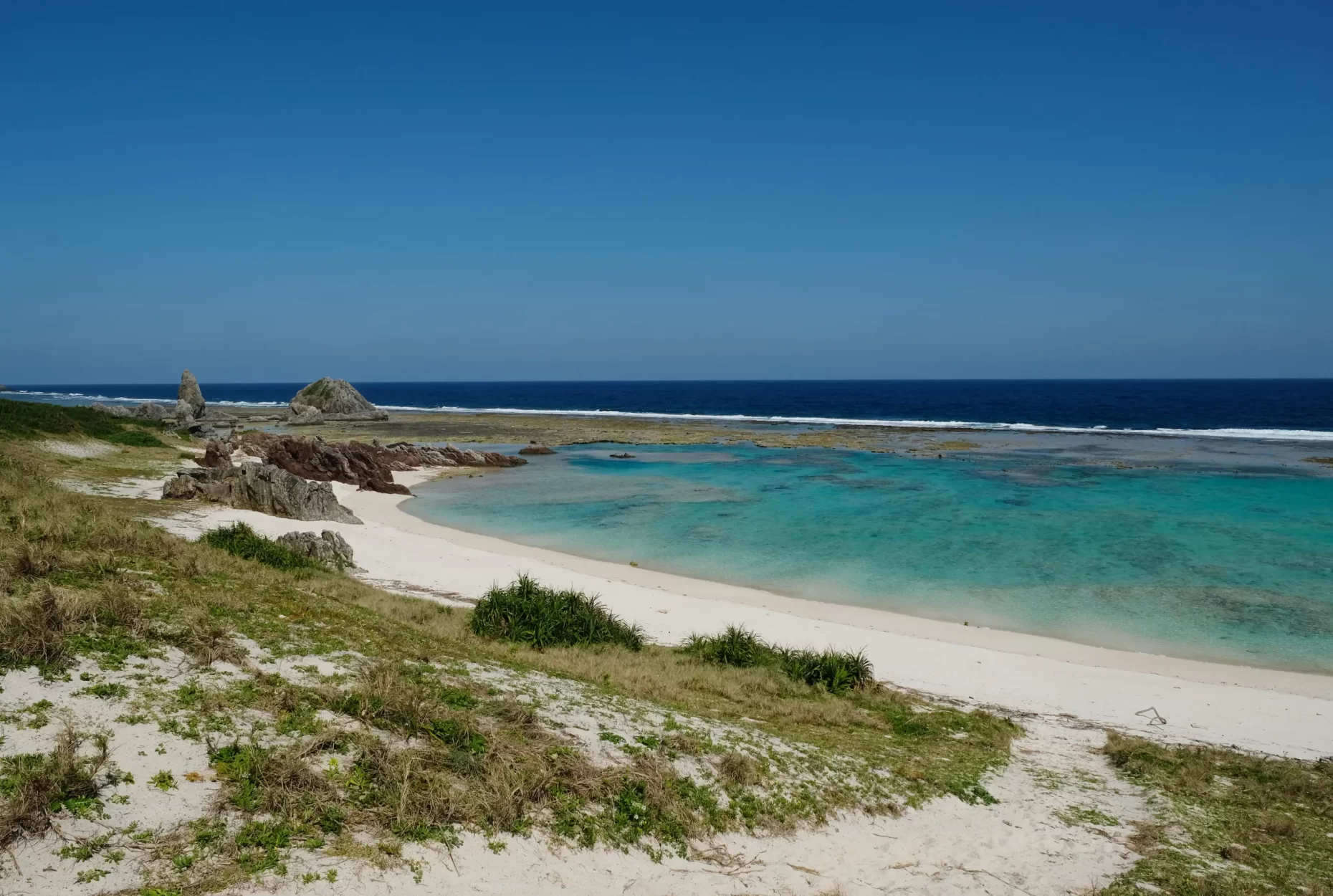
This exhibition explores the Ino (lagoon) through the perspective of photographer Naoshi Tsuda, examining its relationship with the sea and re-examining its meaning.
Tsuda, who travels the world and continuously translates the relationship between humans and nature that has continued uninterrupted since ancient times through his viewfinder, turns his attention to unseen time in order to discover the world that the ancient layers of culture suggest to us. Through tracing the landscape of the "boundary" Inoo on Iheya Island in Okinawa and the activities that take place there, this exhibition aims to update our own worldview as we look at the sea by exploring how humans have perceived nature, given it language, and formed relationships with that environment.
Re-establishing the sea from the boundary
The boundary between land and sea is not as clear as we might think.
The "Ino" on Iheya Island in Okinawa is a place that becomes the sea when the tide comes in, and when the tide goes out, people can walk around and collect fish and shellfish. In this shallow sea surrounded by coral reefs, people have lived in harmony with the natural rhythms of the moon and the tides.
Iheya Island is home to numerous seaside place names known as "Amishi." Each name reflects the unique environment of that location, including water depth, currents, reef shapes, places where marine life gathers, and fishing methods. Naming a place is an act of recognizing it. The diverse range of place names is evidence that people have observed the sea with high resolution and interpreted its differences in their daily lives.
However, with the artificialization of coastlines and the disappearance of sandy beaches, our perception of the sea is gradually becoming simplified. The sea is reduced to a simple distinction of "sea" and land to "land." As a result, isn't our relationship with the sea also becoming uniform? In the lagoon, however, that rich relationship with the sea, which is gradually disappearing, still thrives.
Understanding the lagoon means reclaiming our connection with the ocean, a connection that is gradually being lost.
Exhibition List

Vol. 02 Scheduled for release in September
Vol. 03 Scheduled for release at the end of 2026

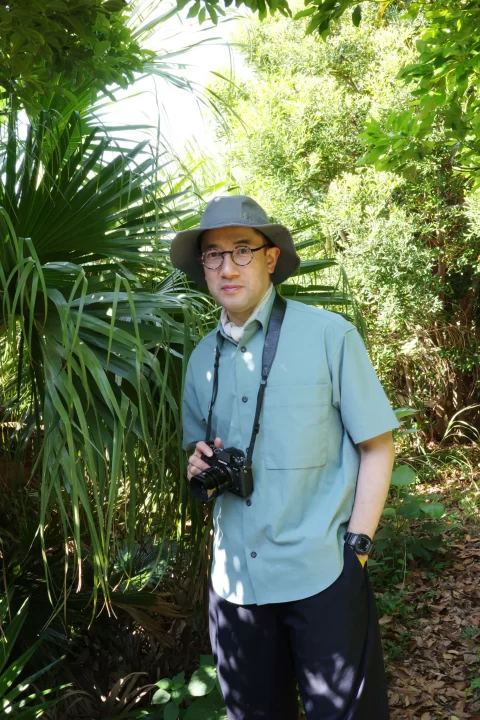
Photographer Nao Tsuda
Born in Kobe in 1976, he is a photographer who travels the world, translating the long-standing relationship between humans and nature through his lens. He turns his attention to unseen time in order to discover the world that the ancient layers of culture suggest to us. He has been exhibiting landscape photographs since 2001. More recently, his activities have expanded beyond the field of contemporary art to include collaborative works with other fields, magazine serializations, lectures, and special classes.
His major series include "SMOKE LINE" (2008), "Storm Last Night" (2010), "Grassland Tears" (2016-), "Elnias Forest" (2018), and "LO" (2026). The results of two collaborative marine education workshops with Minato Lab are..."Many eyes watching the sea / The sea that I can hear"It has been published as a book (Minato Lab Publishing).
Website
https://tsudanao.com/
Video shooting assistance: Yoichi Otomo