"The sea is vast, so big..." The skills and wisdom (= folk tools) nurtured through the long relationship between the sea and people, for obtaining its bounty, and the hopes (= toys) that people have held for a bountiful catch towards the sea.Musashino Art University Museum & Library, Folklore Materials RoomExcavated from the approximately 90,000 folk artifacts held by the institution. Separate exhibition rooms are provided for folk tools and toys, and a series of articles, with commentary by Professor Koji Kato of the university, explores the deep connection between people and the sea that has continued from ancient times to the present.Click here for project details.). For the eighth installment, we will introduce sea-themed toys with the theme of "whale toys."
A sense of reverence for whales
日本人とクジラの歴史は古く、貴重な食糧資源であると同時に、海という広大な自然への畏敬の念や、精神性とも深く関わってきました。古くは、クジラが浜に座礁(ざしょう)するなどして、それを利用するといった偶然性の強いものでした。東北地方にはクジラの恵みに感謝する記念碑などが残っていますが、それらは、海のかなたから恵みがもたらされるエビスとしての信仰の一端を伝えています。江戸時代以降、紀伊半島の太地(たいじ)などで網で絡めて船団で鯨を捕獲する古式捕鯨(こしきほげい)が確立すると、クジラは海に乗り出して獲りにいくものとなっていきました。それはクジラを捕獲する際に、積極的に殺傷することでもあり、その魂の成仏を願ってクジラ供養が行われるようになりました。
The appearance of a whale
海原を悠々と泳ぐクジラの丸みを帯びた姿は、海そのものの雄大さと重ね合わせられ、人智を超えた自然への敬意から大漁祈願、無病息災などを祈願する対象ともなっていきました。都市祭礼で巡行する風流の山車(だし)に、クジラの潮吹きのモチーフがあるのも、そうした自然への畏敬に生活の安寧や健康への祈願が重ねられていったからでしょう。そうした祈りのモチーフとしてのクジラは、郷土玩具の造形の中に色濃く残っています。
The splendor of the whaling ship
Whales were such a valuable resource that it was said, "One whale can enrich seven villages." However, catching whales was a life-threatening job. Many ships with different roles worked together, and local residents who didn't work on the boats also engaged in various land-based tasks related to whales. As a result, folk toys depicting whale boats have become deeply cherished as symbols of regional pride, community unity, and the courage of brave fishermen. Whales came to be more than just a resource; they became symbols of the sea, reflecting the Japanese spirit and aesthetics, and becoming objects to which the prayers of families and communities were entrusted.
International resource management and cultural resource development
Whales were hunted competitively by developed countries in the modern era due to the demand for oil from the Industrial Revolution and the need for fertilizer from the expansion of agriculture. In 1982, the International Whaling Commission (IWC) adopted a moratorium on commercial whaling at its annual meeting, deciding to halt commercial whaling targeting specific species of large cetaceans. In response, Japan proposed a limited lifting of the moratorium while continuing scientific research in the form of research whaling. In 2019, Japan withdrew from the IWC and resumed commercial whaling in Japanese territorial waters and exclusive economic zone, with restrictions on the number of whales that could be caught based on scientific research, and this continues to the present day.
During the era of research whaling, whales were utilized more for tourism than as an industry in whaling base regions. Local culture and history surrounding whales attracted attention, and whale-themed folk toys became widely popular as souvenirs and lucky charms.
Toy Gallery
Magnificent whale ship
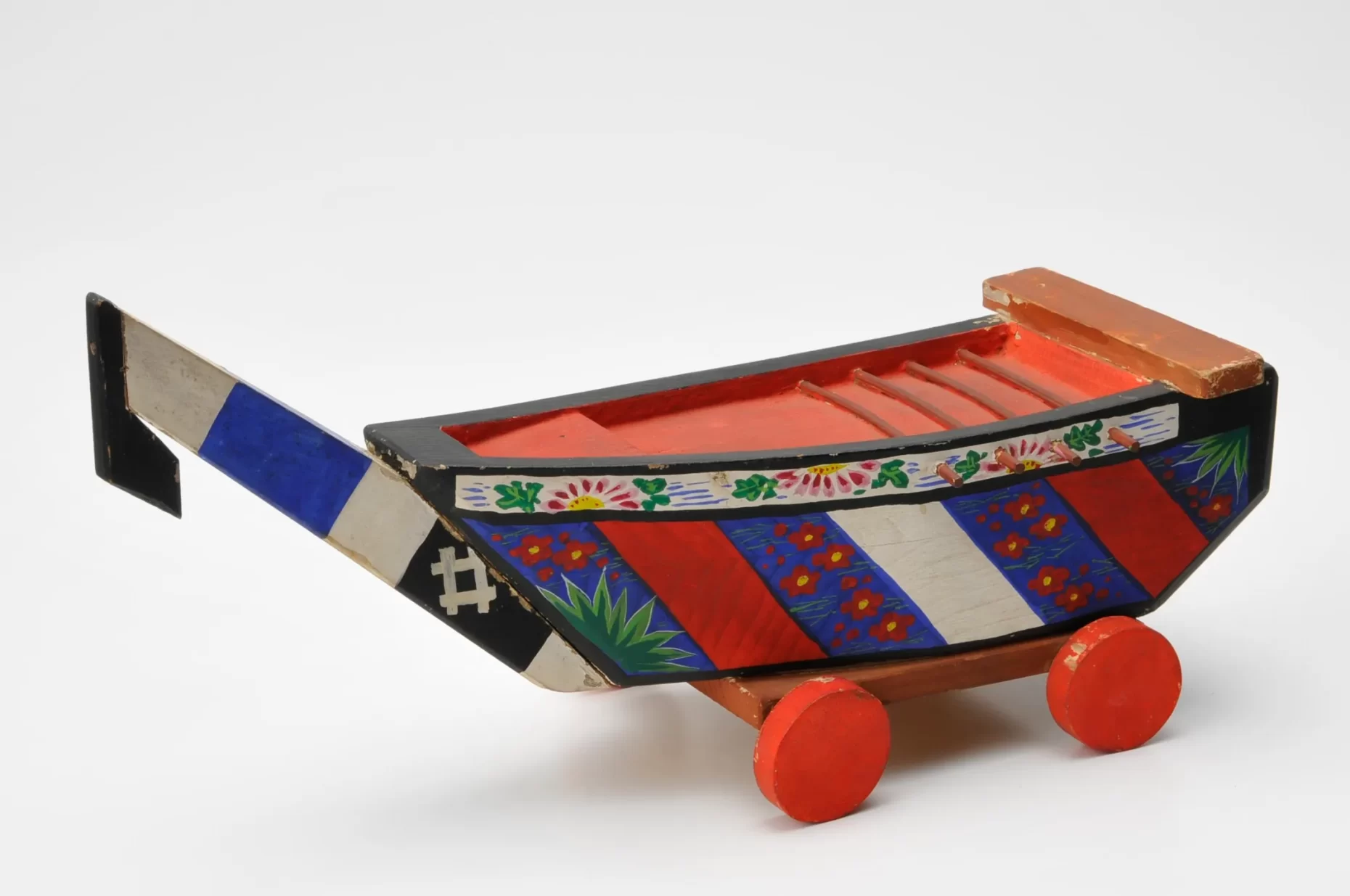
和歌山県の那智勝浦では、古式捕鯨の時代の様子を描いた絵巻物などを参考に、さまざまな種類の鯨船の郷土玩具が製作されています。浮子を運ぶ樽船(たるぶね)、捕獲したクジラを運ぶ持双船(もっそうぶね)、網を運ぶ網船、道具類を運ぶ納屋船などがある中、花形となるのはクジラに自ら飛び乗って急所に銛(もり)を打つ勢子船(せこぶね)です。勢子船には鳳凰(ほうおう)が描かれ、船団の先頭を走るのです。
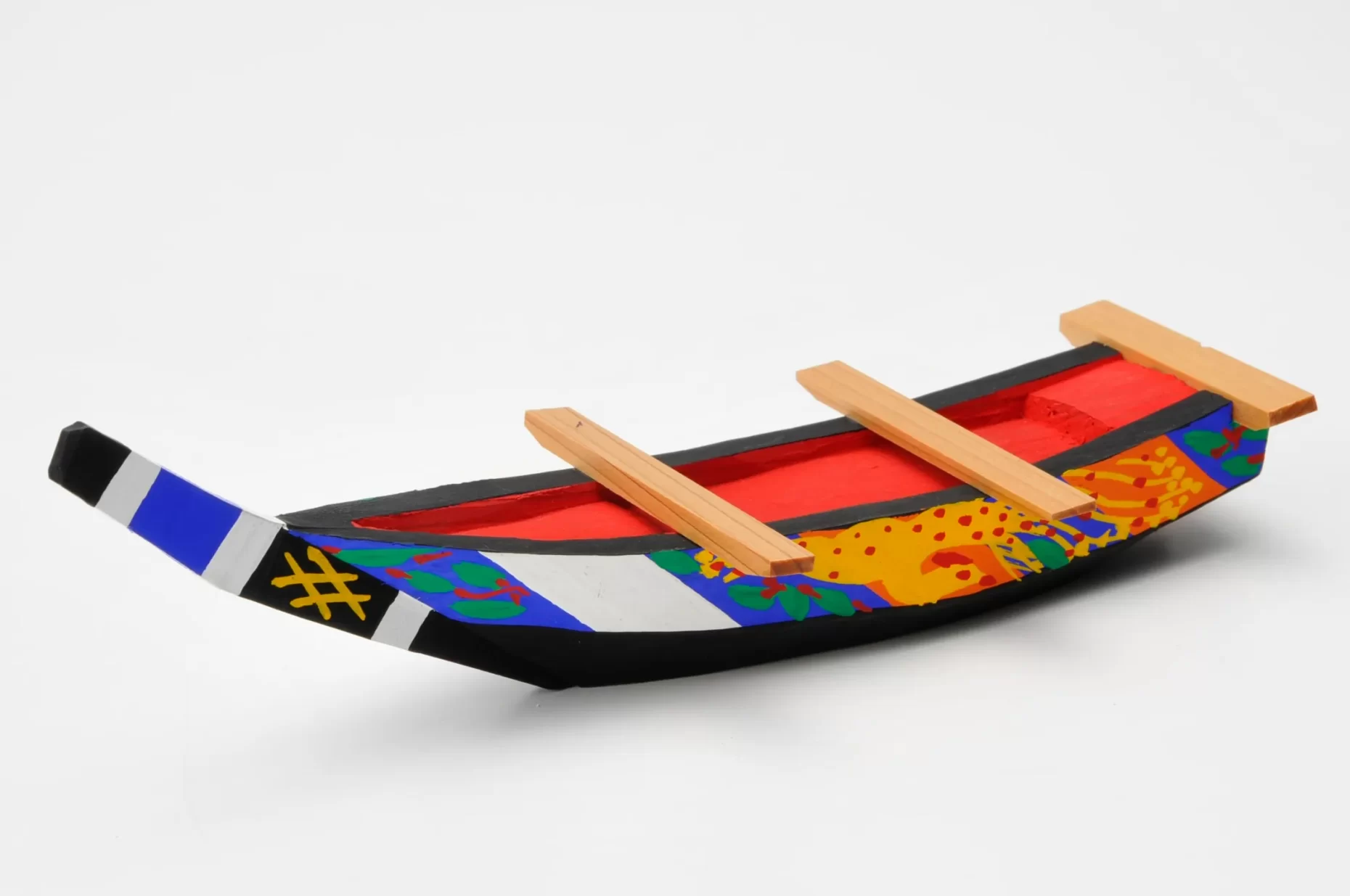
Image of a big catch
Another local toy from Kumano, also based on whaling ships, is called a "big catch boat" or "whale boat." This one has wheels, reminiscent of a ship sailing the sea. The entire toy is decorated with colorful ornaments and vibrant patterns, and its striking sense of color is similar to the design of a big catch flag. The whale boat itself symbolizes a prayer for a bountiful catch and represents an image of abundance.
A stylized whale
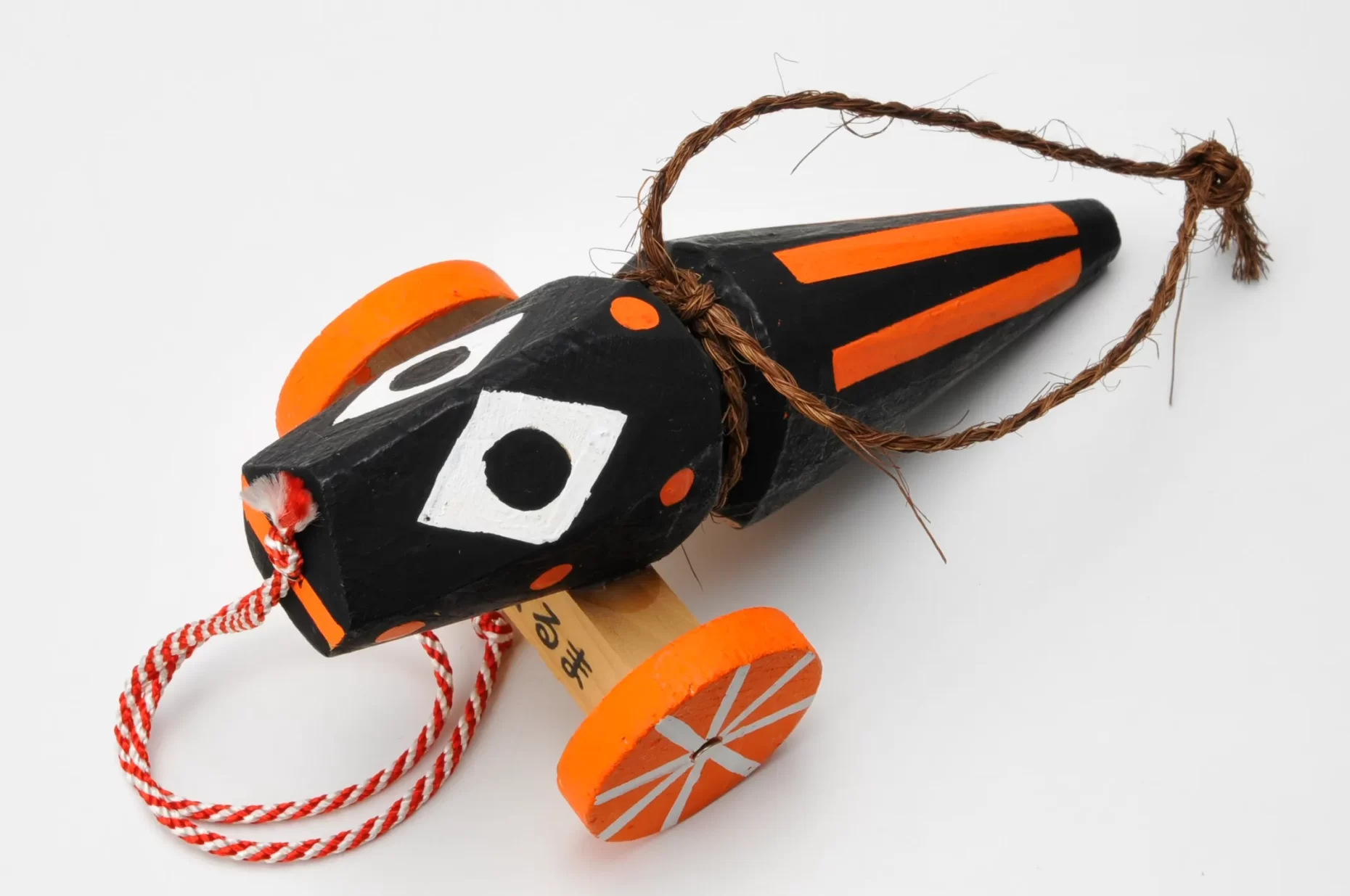
At Asuka Shrine in Taiji, a town that once prospered from traditional whaling, there is a ritual called the O-yumi Shinji, a festival used to predict the year's harvest and catch. In this ritual, children compete to grab a wooden whale-shaped object called a "semi." It is a traditional event to give thanks for the blessings of whales and to pray for a bountiful catch. A local toy, a miniature version of this "semi" with wheels attached, is known as the whale cart. Its boldly stylized form expresses affection for whales.
Traditional whaling in Taiji came to an end in 1878, a year of poor catches, when a whale crew attempted to capture a right whale with its calf—a species they were forbidden to hunt—and perished in an accident known as the "Seminagare" (back-facing drift), resulting in the deaths of over 100 fishermen. Although the introduction of modern whaling revived the industry, the whaling wagons still carry the weight of this tragic history.
The beautiful curves of a whale
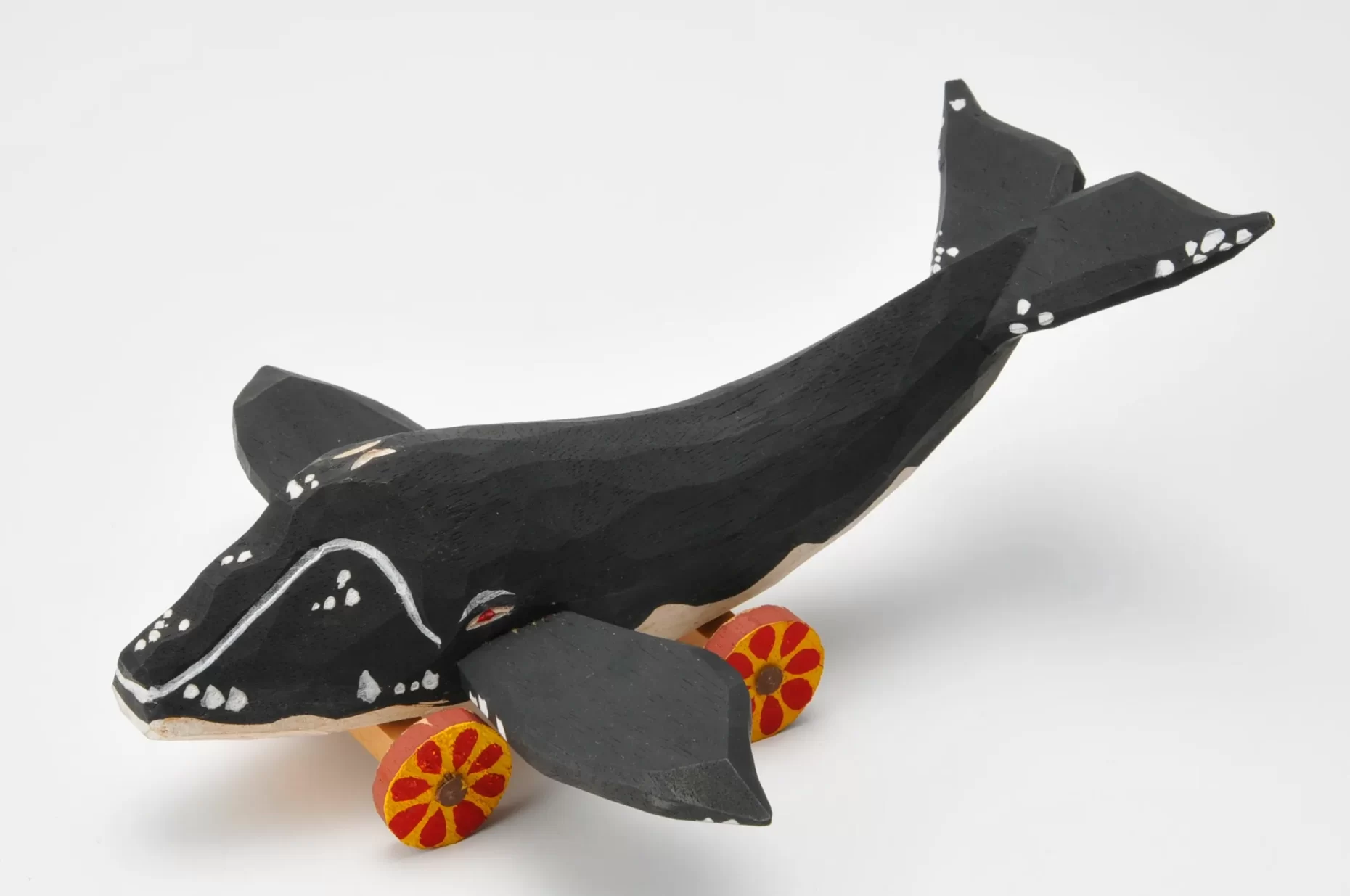
Whales are among the most captivating animals due to their streamlined, curvilinear forms. The whale carts from Kochi Prefecture are wonderful folk toys that beautifully accentuate these curves through their stylized design. The shape of the mouth reveals that it is a right whale. It is said that fishermen made them for their children in their spare time, but the realistic details throughout the carts are based on actual observations of whales. The flower-like coloring of the carts helps to further accentuate the black color of the whale.
Whale float
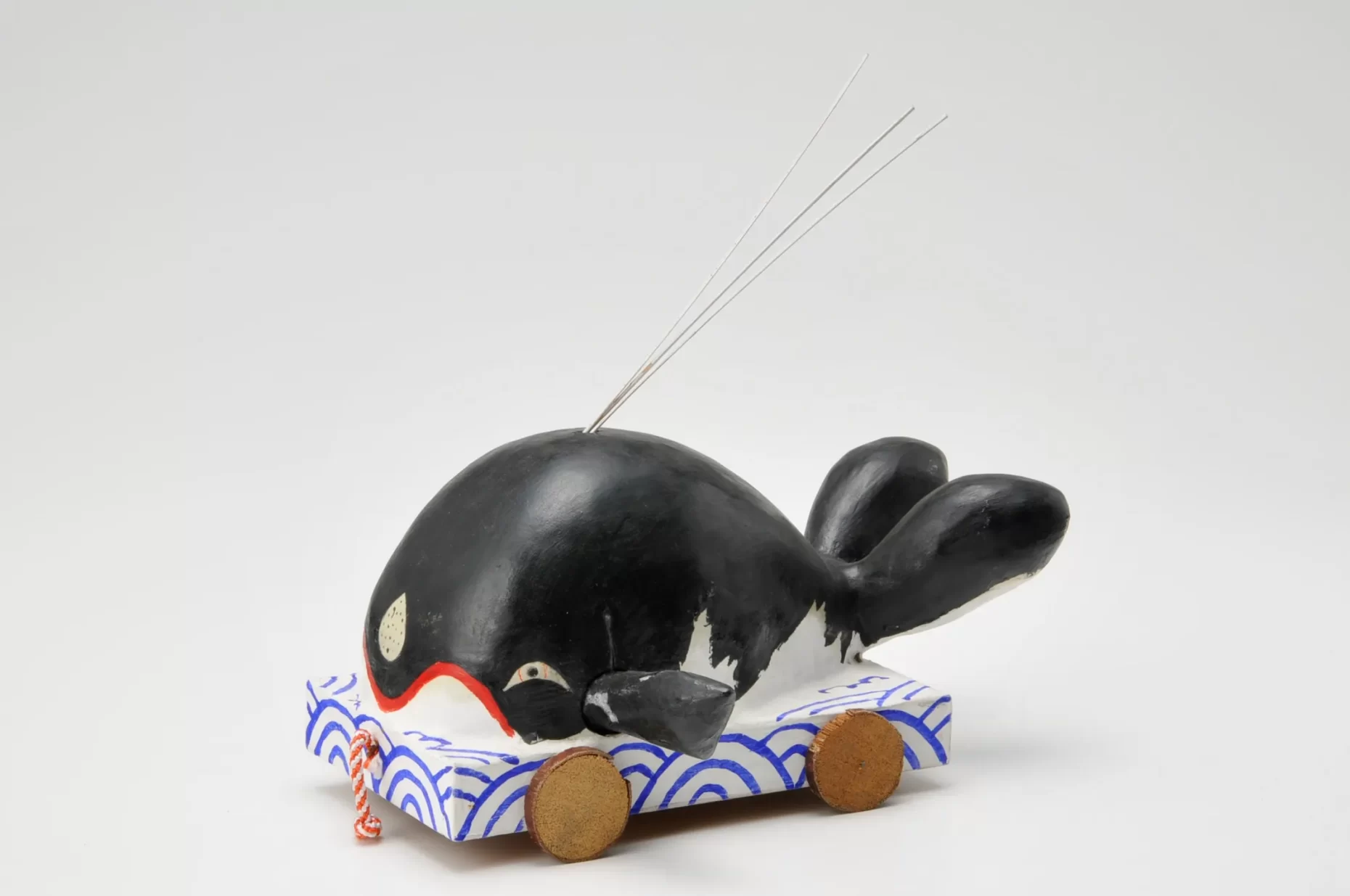
張子の郷土玩具の鯨の潮吹きは、長崎市で催されてきた長崎くんち(諏訪神社)で奉納される伝統的な山車(だし)がモチーフとなっています。クジラの山車から実際に潮を吹かせる演出が人気です。鯨船の山車もあり、古式捕鯨の勇壮さを今に伝えています。山車では竜吐水(昔の消防ポンプ)で潮吹きを再現しますが、郷土玩具では潮吹きを表現した細い竹ひごが、車を走らせると車軸に連動したカラクリで動く仕組みです。
Planning, supervision, and writing
Koji Kato
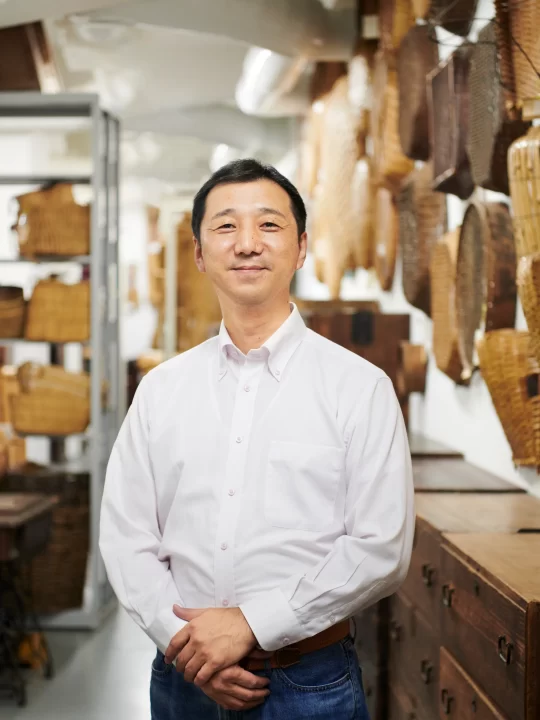
Professor at Musashino Art University, specializing in folklore (research on folk implements). Holds a PhD in Literature. Previously served as a curator at the Wakayama Prefectural Kii Fudoki-no-Oka Museum and a professor at Tohoku Gakuin University (concurrently serving as a curator at the university museum), before assuming his current position in 2019. His major publications include "Folklore: Facing and Expressing the Past" (Musashino Art Publishing Bureau/2022) and "Folklore: Public Studies: Learning and Practicing for Oneself" (Musashino Art Publishing Bureau/2025).