Listening to "The Future of the Sea" Vol. 4
Yuko Tajima (Senior Researcher, Vertebrate Research Group, Department of Zoology, National Museum of Nature and Science)
I became captivated by orcas after borrowing a book by chance.
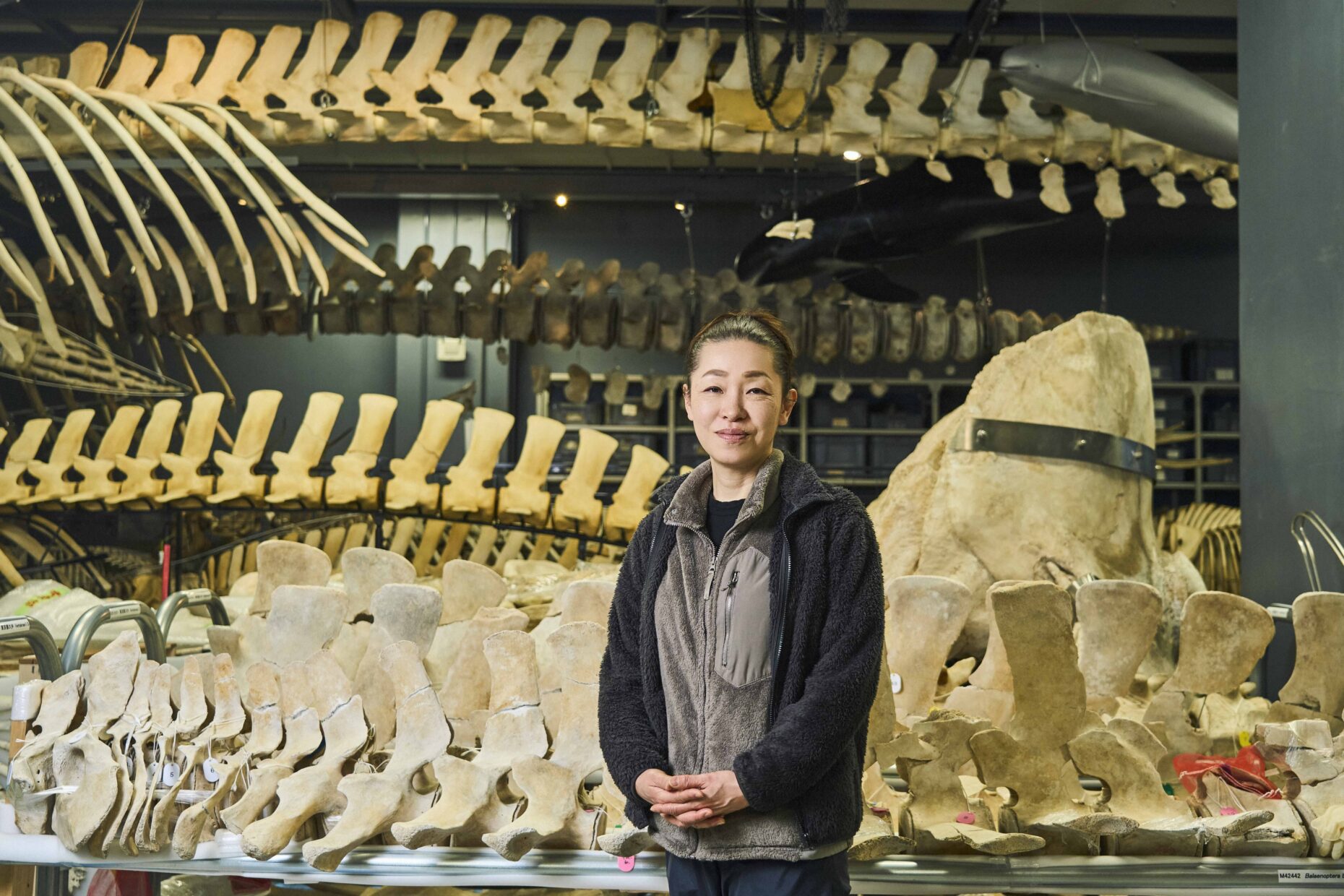
Yuko Tajima, based at the Tsukuba Research Facility of the National Museum of Nature and Science in Tsukuba City, Ibaraki Prefecture, conducts research activities on marine mammals such as whales, dolphins, seals, sea lions, dugongs, and sea otters.Marine mammal expert dissects whale' (2021 / Yama-kei Publishers),Listen to the whale's songHe is a well-known "whale expert" and author of books such as "The Whale's Secrets" (2023/Yama-kei Publishers). When he receives a report of a "stranding"—that is, when a whale or dolphin becomes stranded alive in shallow waters, wanders away from its natural habitat into a river or other body, or its carcass washes ashore—it is Tajima's job to fly there as quickly as possible to conduct an autopsy. He personally prepares specimens from the carcasses and uses them, along with his research findings, for museum exhibits and educational outreach activities.
"I never had any interest in the sea to begin with. My house was near the border between Tokyo and Saitama prefectures, and my sister doesn't like the sea, so we didn't go there as a family very often," says Tajima. What sparked her interest in marine mammals was her encounter with "Orca: The Story of the King of the Sea, the Killer Whale and the Wind" (Hayakawa Publishing), a book by photographer and journalist Hiroya Mizuguchi, which she happened to borrow from the library.
"It was purely by chance. If it had been a book about lions, I might be a lion researcher by now, but I really just happened to come across this book. I learned that orcas, also known as 'killer whales' in English, have a scary and ferocious image, but that they actually live in matriarchal societies, cooperating to raise their babies together, that they have deep parent-child relationships, and that each group has its own dialect. I think I felt a sense of sympathy for them at the time. And of course, their form is cool. So I wanted to see them in person and went to Canada. A senior in my research lab told me about an advertisement for a tour in a magazine, so I begged my mother on my knees, 'Please, I beg you, give me the money.' When I actually saw them, they were just as cool as I expected, and I thought, 'I want to live among them!'"
The tour was intended to support the research of Dr. Paul Spong, a researcher who runs the orca research facility "OrcaLab" in British Columbia, Canada.
"The person who organized the tour was actually the father of someone who now runs a skeleton specimen preparation club called 'Naniwa Honehone-dan' at the Osaka Museum of Natural History! I found that out later, and it made me realize how things really do connect. However, while I thought Dr. Spong's research was amazing, I had no intention of pursuing research on living mammals, nor did I want to dedicate my life to what he was doing. My career path remained uncertain."
Leveraging her background as a veterinarian, she researches marine mammals.
At the time, Tajima was majoring in veterinary pathology at university. When considering his career path after graduation, he wondered if there was a workplace where he could somehow connect his research with marine mammals, and he contacted professors at various universities.
"For my graduation thesis, I begged all the professors I knew, 'Please! Do you have any samples?' and somehow managed to get a assignment on marine mammals. But to begin with, there are hardly any places in the veterinary department where you can study wild animals. That's when I heard that my predecessor, Professor Tadashi Yamada, was conducting research and providing guidance at stranding sites and was looking for someone to do pathology. So I started by helping Professor Yamada at the National Museum of Nature and Science's research institute. After that, I went on to get my doctorate in graduate school and returned to the museum, but it's no exaggeration to say that meeting Professor Yamada changed my life."
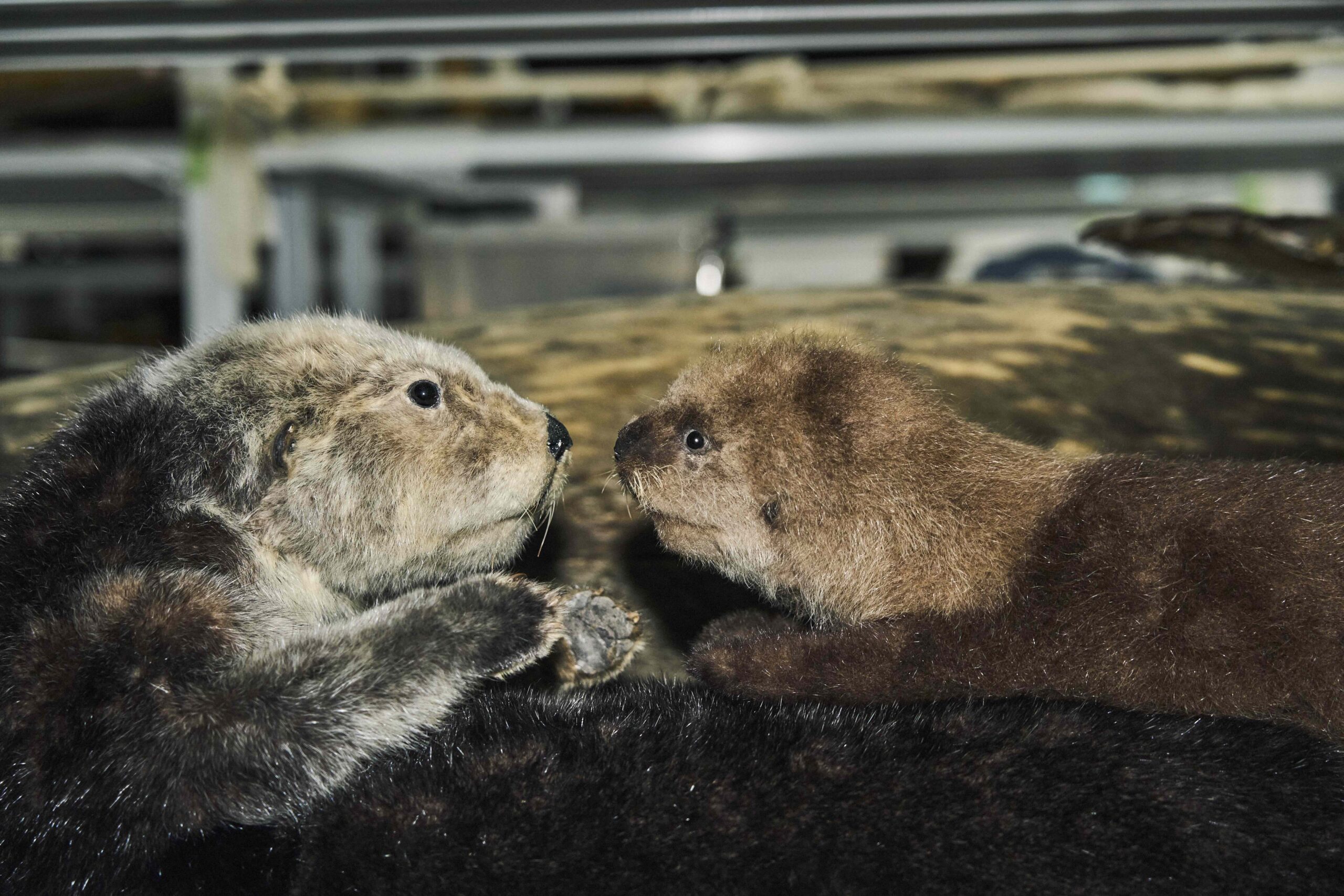
Since then, Mr. Tajima has continued his research, conducting a vast number of dissections, primarily of cetaceans.
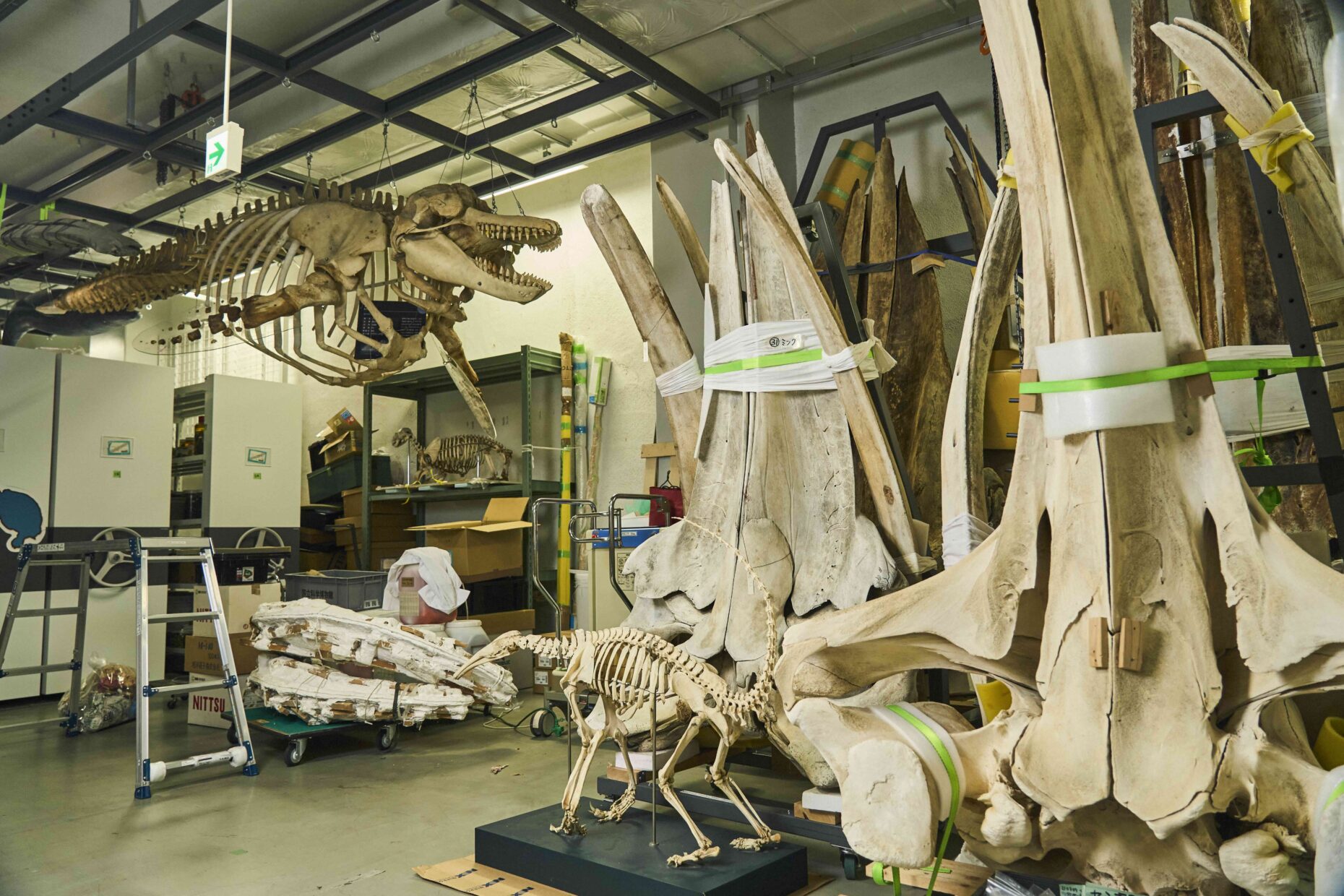
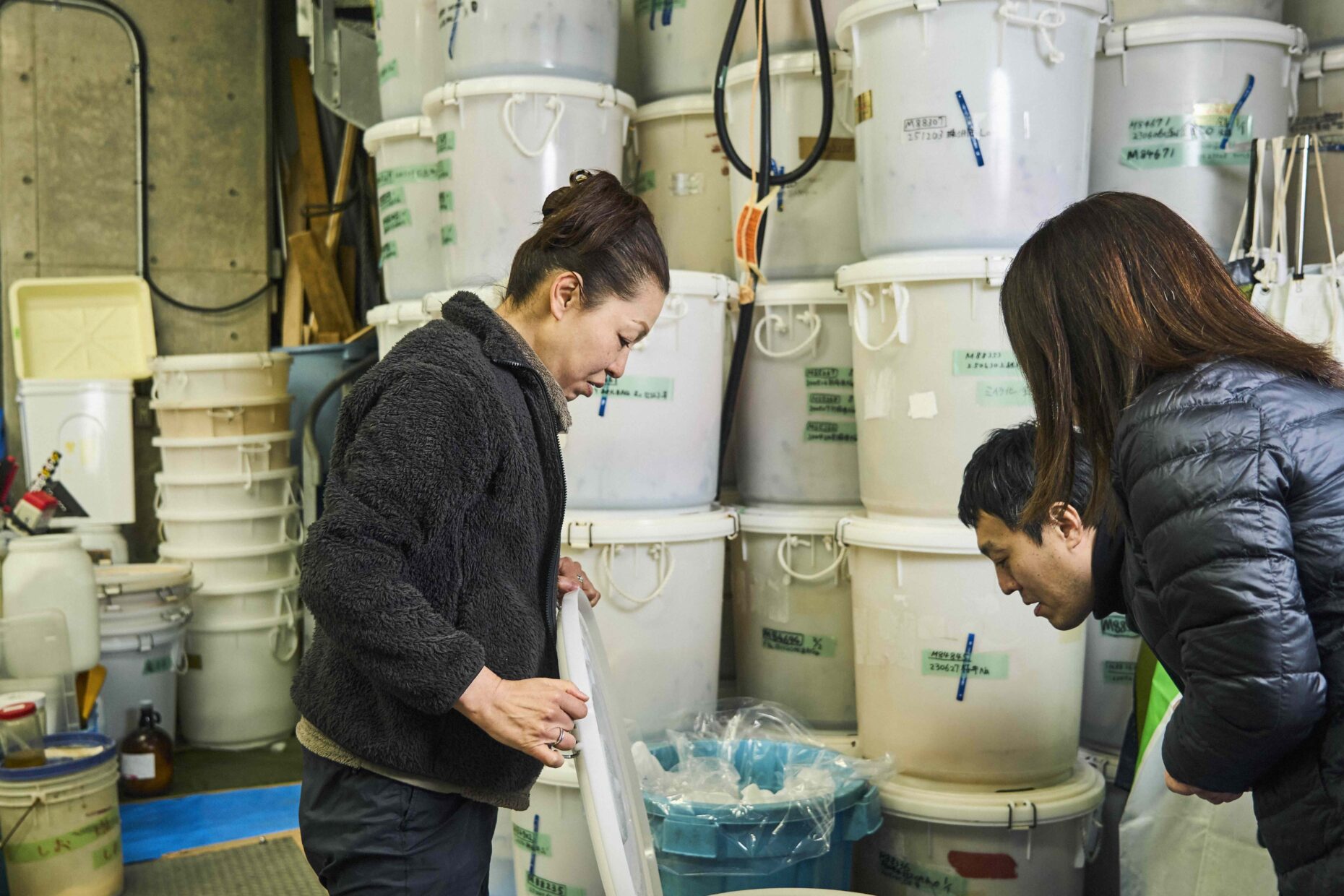
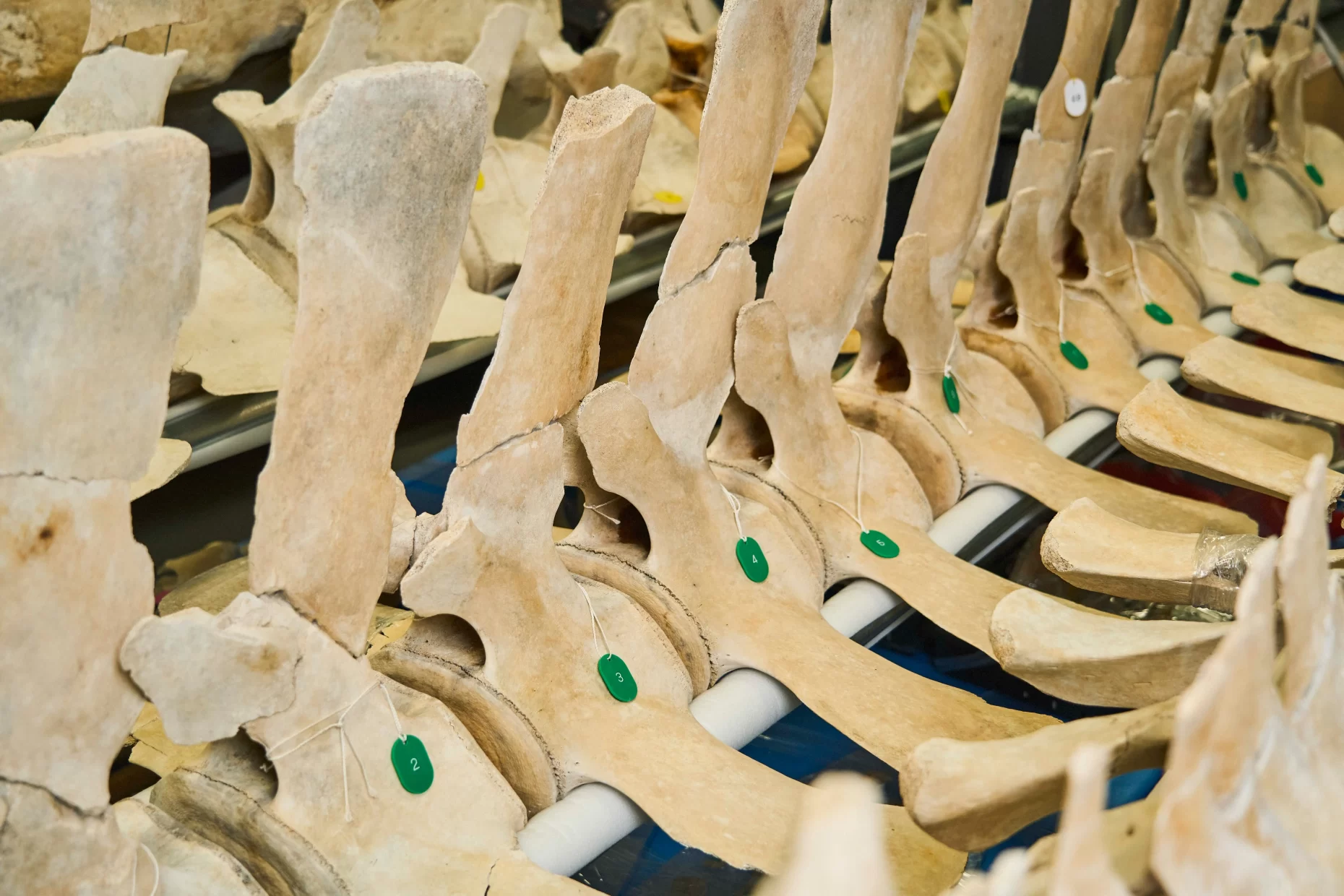
"Japan is home to about 45 of the approximately 90 species of cetaceans in the world. Of those, I think there are only one or two species that I haven't dissected. I've dissected blue whales and gray whales. At stranding sites, we dissect whales up to 5 meters in length on the beach, put them in barrels, and take them back ourselves. Once we get back, we boil them in a bone bleaching machine (a bathtub-like pot used to remove muscle and oil attached to bones when making skeletal specimens, and to clean them), then we clean them with a high-pressure hot water washer and brushes, dry them, and make skeletal specimens. For larger ones, over 10 meters, we bury them on the beach after dissection and excavate them after about two years. The male sperm whale that wandered into Osaka Bay in January 2024 and subsequently died was buried on prefectural land in Sakai City, Osaka Prefecture, and was excavated in January 2026, right? That will be turned into a skeletal specimen at the Osaka Museum of Natural History over the next few years."
The Tsukuba Research Facility of the National Museum of Nature and Science, completed in 2011, stores a vast amount of samples, including not only skeletal specimens but also formalin-preserved internal organs, teeth, and fur. "Each stranding is a once-in-a-lifetime encounter. We try to collect as much information and samples as possible from it. I've been doing this for about 25 years, and when I first started here, in the winter, we'd have about 12 of the same species stranded on the Sea of Japan side every week, so I was so busy I hardly had any time."
Rising sea temperatures are causing whale habitats to shift northward.
Through her research, Ms. Tajima has personally experienced how global warming is changing the habitats of individual organisms.
"The whales are moving further and further north. When I was a student, we never saw southern whales stranding in Hokkaido. We have data that sea temperatures are definitely rising, so when you compare that with the stranding situation, it makes you think, 'Yeah, that makes sense.'"
"At this point, while there are cases of animals starving to death due to a lack of food, we haven't been able to specifically demonstrate a causal relationship between disease and global warming," says Tajima. However, he believes that the impact of human society's development on the environment and marine mammals must be investigated and researched from various angles.
"We need to get a firm grasp on the fundamental question of 'How do organisms adapt and change in response to environmental changes?' For example, the number of beaked whale strandings in Japan has drastically decreased recently, but we can't simply say, 'Have they gone extinct?' based on that. We need to start by understanding the 'present state' of the ocean and the organisms that live there. So recently, I've started to think that 'it's no good just looking at what's happened after death,'"Miyakejima Whale Nasal Water Project"or"Whale poop project"We've also started to gradually begin research and studies on living whales, as well as research to understand the entire marine ecosystem."
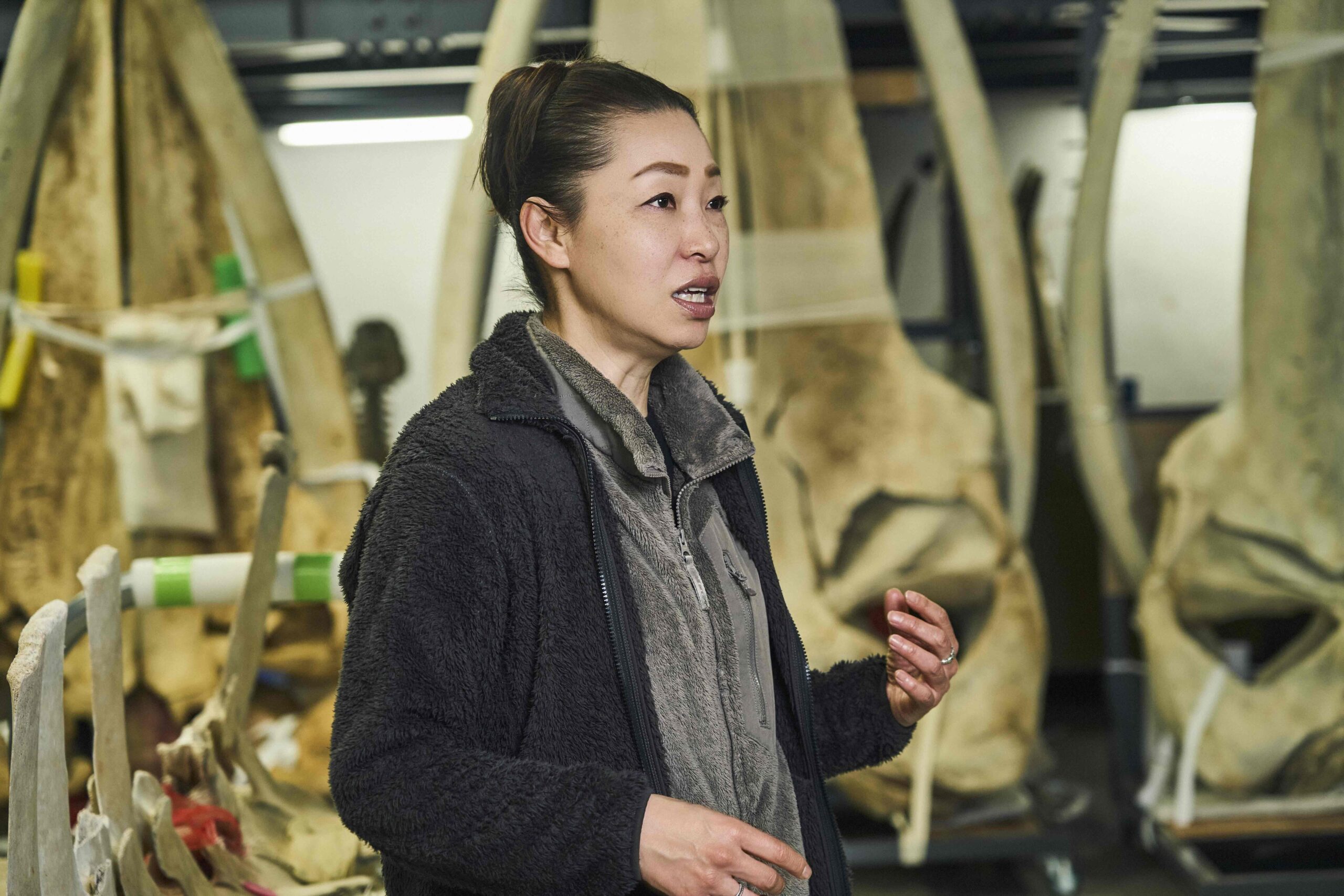
Horizontal connections within human society, as well as connections that transcend genres and national borders, are things that Ms. Tajima values very highly. She is always in contact with a variety of people, including researchers, conservation organizations, and companies.
"For example, in South Korea, 1,500 finless porpoises die every year. The reason is bycatch. Individuals that get caught in purse seines or fixed nets and suffocate are washed ashore. Finless porpoises are a species of cetacean found only in Asian seas, and if this continues, the finless porpoises in South Korea will one day become extinct. If they, who are at the top of the food chain, die out, we don't know what kind of impact it will have on the lower levels of the food chain. Ecosystems are not just about the predator-prey relationship, but also about the relationships of support and mutual support, the give-and-take relationship. So, in South Korea as well..."Plan Ocean(Lee Young-ran, CEO) is a non-profit organization that carries out marine conservation activities and is working diligently, but it seems it will take a little more time before things improve."
Not only South Korea, but Japan is also still slow to take action on marine environmental issues at the national level. This is because both countries view marine life only as "fishery resources."
"Even within the Asia-Pacific region, countries like Taiwan, Thailand, and Australia have very cooperative governments. Japan is still quite different. Although we are an island nation surrounded by the sea on all sides, I hope that more and more people will listen to the warnings from the ocean and the creatures that live there, and take action. Many people know that 70% of the Earth is covered by ocean, but I hope they will also think a little more about what would happen if that ocean disappeared. What we, as experts, can do is to let as many people as possible know what we have learned on the ground and use it as an opportunity to think. Adults' minds are rigid, so I hope that young people, who have minds that absorb like sponges, will learn as much as possible about the current state of the ocean and the problems facing creatures, and take action with the future in mind. I feel that young people are more serious about the wild environment and creatures, and are trying to live in a way that is kind to them. However, I think that we, who are on the ground, are the ones who can best convey the answers and significance to the question of 'why we must do this,' so I would like to continue to share the latest information with everyone."
“Interact with people at a museum where "anything goes" is its charm.
Humans are thinking creatures. We feel happy when our intellectual curiosity is satisfied and our intellectual wealth increases. Museums are not only ideal places to have such experiences, but also suitable places to share information with others. When asked about the role and appeal of museums, Ms. Tajima said, "Isn't a museum actually one of the few places where researchers and the general public can interact directly!?"
"At the museum, we can not only talk directly with everyone, but we can also hear all sorts of voices directly from you. For me, that's the biggest appeal. You can do research and surveys at university, but it's mainly professors and students there. On the other hand, at a museum, you can do research, and people of all ages can see and hear the exhibits, and we researchers can jump in and talk to them. I've been feeling lately that that's amazing. Another appeal is that a museum is a place where 'anything goes' comes together. The word 'natural history' means 'having a broad knowledge of things,' so conversely, it means that we can cover anything you want to know. Our museum is a natural history museum, so we have assigned taxonomic groups, but actually, we can cover anything related to natural history. That's why so many new things are created here, and the information and knowledge gained through research continue to fascinate people, which is why I think museums remain popular."
Tajima says that he particularly tries to convey to children that "there is no world that puts humans at the center."
"Humans are at the top of the food chain created by human ego, but in the natural food chain, humans are just a part of it. This is taught as a matter of course overseas, but in Japan, education continues to be based on a food chain where humans are always at the top. However, I feel that the idea that humans are 'living beings' just like everything else is very important now. I tell children, 'We are mammals, and dolphins and whales are actually the same kind of animals. So, knowing them helps us to know ourselves.'"
Finally, we asked Ms. Tajima what she would like to convey to the younger generation in particular when considering the future of the ocean.
"What should it be... well, I guess it's 'Let's go to the sea.' Let's go to the sea, let's go to the site, let's feel with all our senses. I think that's the most important thing."
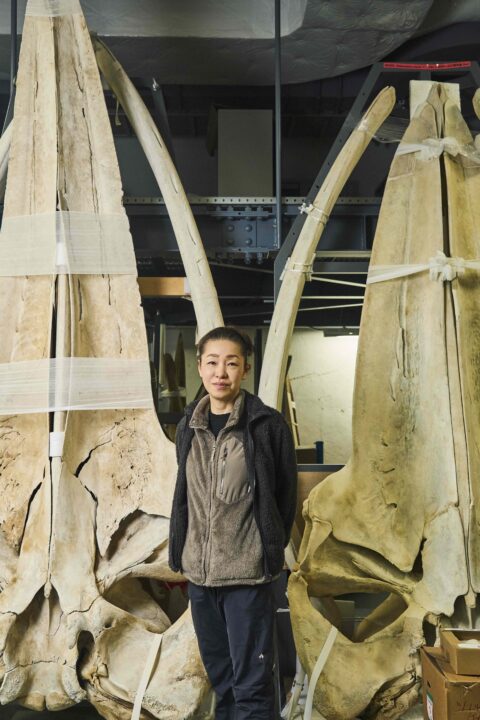
Yuko Tajima
Born in Saitama Prefecture in 1971. Graduated from the Department of Veterinary Medicine, Nippon Veterinary and Life Science University (formerly Nippon Veterinary and Animal Science University). After obtaining a PhD in Veterinary Medicine from the Graduate School of Agricultural and Life Sciences, University of Tokyo, he served as a special researcher at the same graduate school, and from 2005 worked as a visiting researcher at the University of Texas Medical Center and The Marine Mammal Center as a Marine Mammal Commission in the United States. After serving as a support researcher at the Department of Zoology, National Museum of Nature and Science, he assumed his current position in 2015. He is an associate professor at the Graduate School of Life and Environmental Sciences, University of Tsukuba.
National Museum of Nature and Science
https://www.kahaku.go.jp/
News
National Museum of Nature and Science/Special Exhibition
Event Information
■Special Exhibition "The Super World of Living Things: National Museum of Nature and Science x Darwin's Coming!"
Date: July 11th (Sat) – October 12th (Monday/holiday), 2026
Opening hours: 9:00 AM to 5:00 PM (Last entry at 4:30 PM)
Closed on Mondays
Venue: National Museum of Nature and Science (Ueno Park, Tokyo) 7-20 Ueno Park, Taito-ku, Tokyo
Organizers: National Museum of Nature and Science, NHK, NHK Promotions
<Click here for details.>
Marine Ecosystem Symposium
Event Information
■ Marine Ecosystem Symposium
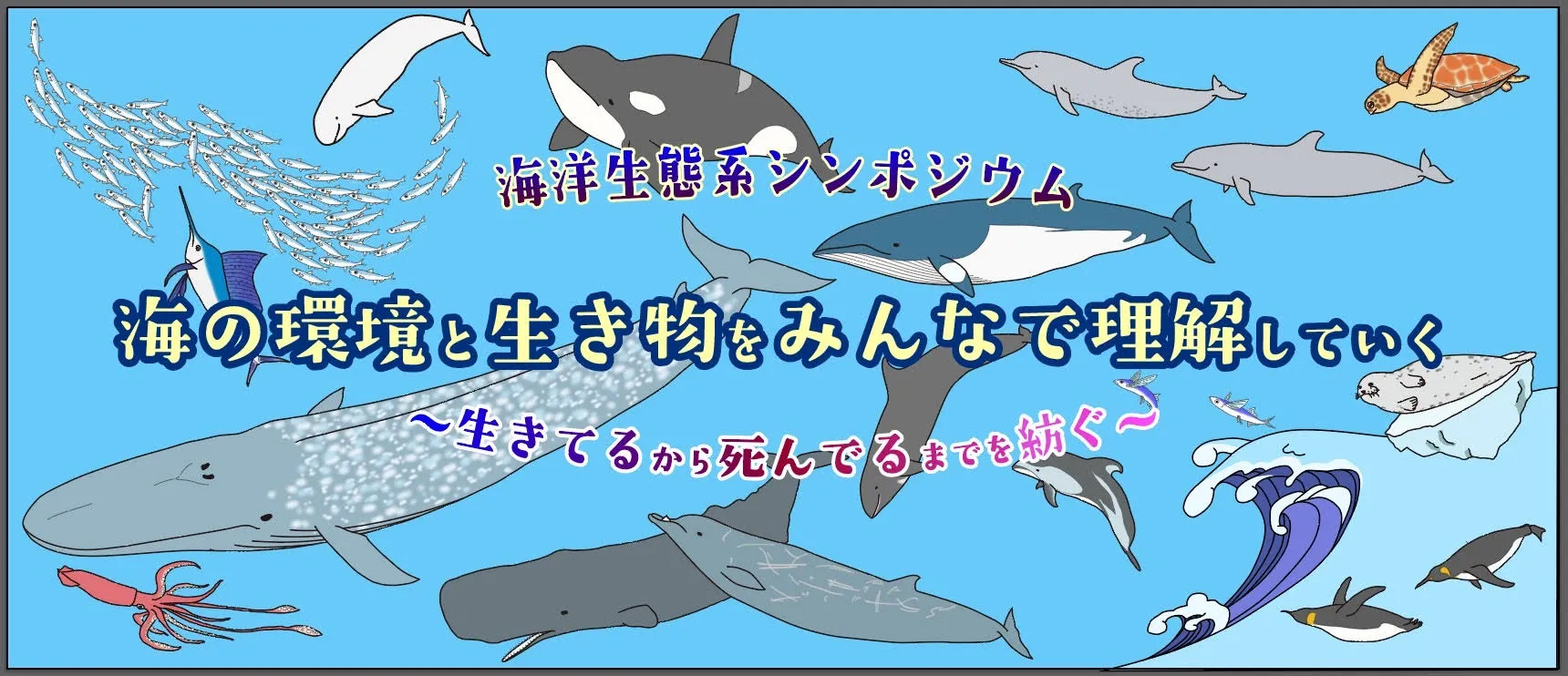
"Let's all come to understand the marine environment and its creatures - weaving together the story from life to death."
We will be holding a public symposium on Saturday, August 8, 2026.
(Pre-registration required, participation is free)
Venue: Auditorium, Japan Gallery, Ueno Main Building, National Museum of Nature and Science
Further details will be announced on the National Museum of Nature and Science's official social media accounts in the future.
IG:@kahaku_nmns