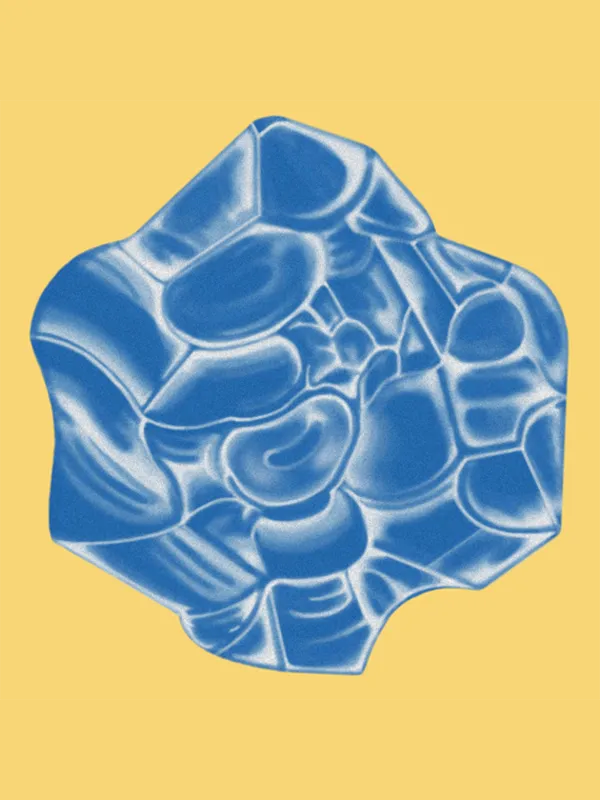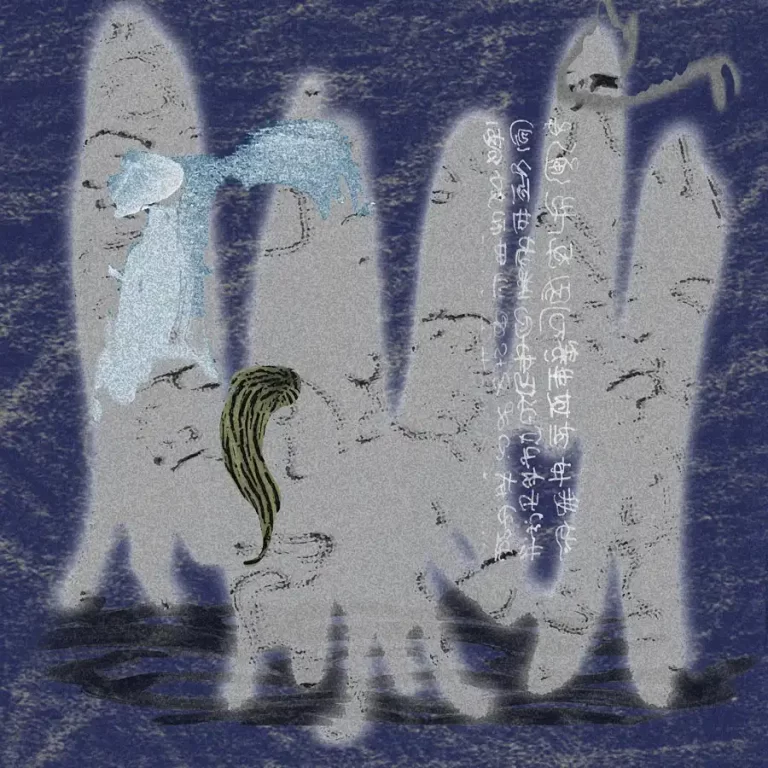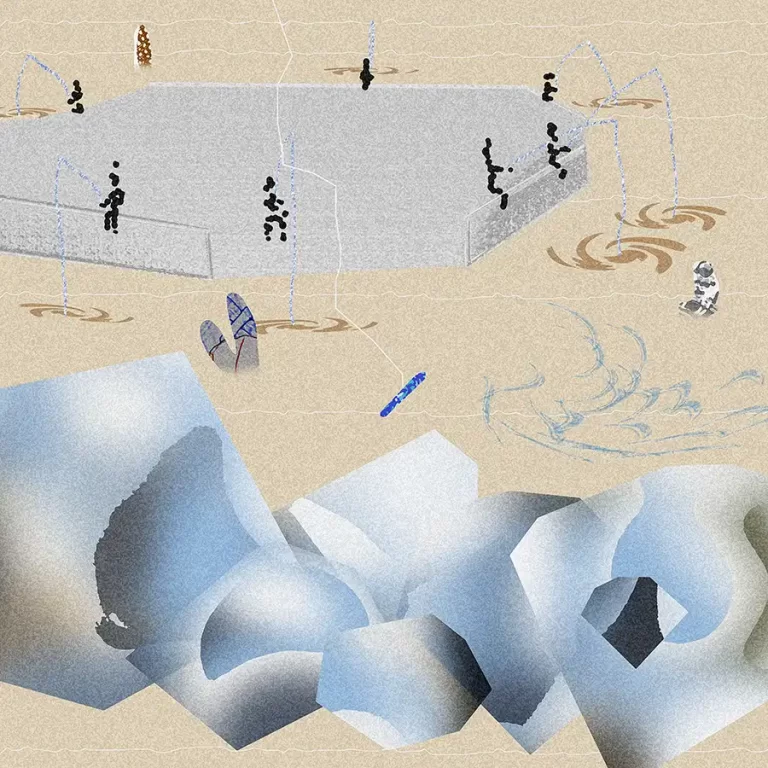

"Shiosai RADIO" is a playlist curated by musicians and DJs, featuring songs inspired by the ocean.
Volume 15 features DJ Jisui, who is based in the Kansai region. Born in Tsuruga City, Fukui Prefecture, Jisui grew up in an environment deeply connected to the sea, and we asked him to select tracks under the theme of "The Inner Sea of Japan."
The Sea of Japan: A rough and cold "inner sea"
—Ms. Jisuri is from Tsuruga City, Fukui Prefecture. I heard that her father was a marine biologist.
To be precise, my father used to work in the fisheries industry at a facility called the "Fisheries Experiment Station" run by the prefecture, where he researched marine life that was farmed. He was apparently a well-known figure for his research on the ecology of bigfin reef squid, firefly squid, and snow crab larvae. When I was little, I visited the experiment station and was quite impressed when they showed me crab larvae through an electron microscope. I was also excited by the professional research equipment, as I loved science fiction.
—So, does that mean you had close contact with the sea?
Actually, that's not entirely true. I wasn't particularly fond of the sea, and I didn't actively go out to play. However, I do remember that during a period when I was skipping school in my adolescence, my father would take me to the beach or sandy areas to cheer me up, and he often invited me fishing. Also, because I had childhood asthma, I attended swimming lessons for treatment, and although I learned all the strokes, my favorite was swimming by diving to the bottom of the pool. I don't think I disliked water.
Even after becoming an adult, I still didn't go to the sea very often. Nevertheless, thinking about it again, I feel that the sea has influenced me in some way within myself. That's why I selected songs for this playlist based on the theme of another "inherent Sea of Japan" within me.
—What kind of image comes to mind when you say "the intrinsic Sea of Japan"?
Tsuruga Bay and the Sea of Japan, located in my hometown where I was born and raised—they evoke images of rough and cold seas. I chose the music with the hope of creating soundscapes that evoke the feeling of diving into the deep sea, and expressing the way the sea surface becomes rough and then calm.
I try to select songs that I already own on record or CD, songs I listen to regularly, and even newly discovered songs, I choose based on whether they are by artists I've had some connection with in the past.
—Does the entire playlist have a story?
If anything, I selected the tracks from a sonic perspective, like a DJ, choosing songs that flowed smoothly together, like a chain reaction. I also looked for songs with titles that evoke water, the sea, or similar themes.
I think the way songs are connected, whether through clever wordplay, context, or background, reflects a wide range of song selection techniques. In actual DJ sets, when things go well, the story becomes a secondary element, and I often feel like it turned out to be interesting when I look back on it later.
The first track, Monolake's "Arte," begins with the sound of waves. Tracks 2 and 3 are Moodyman's "Oceans" and Shinichi Atobe's "Ocean 2."
When I was a teenager, I was obsessed with dance music like techno and house. These three songs are two representative works by artists I particularly liked, and the third one is from a recent release by an artist associated with my favorite label.
ーMonolake and Shinichi Atobe are both known for their releases on the German label Chain Reaction, and are pioneers of "dub techno," a genre often described as having a deep-sea-like sound.
I often listen to Monolake's first album, "Hong Kong," and since "Arte" includes the sound of waves, I thought it was a perfect fit and chose it as the first track. Apparently, this album was made using field recordings (recordings of ambient sounds outside the studio) made in Hong Kong. The sound of waves at the beginning is the sound of the sea in Hong Kong.
Incidentally, I've only ever traveled abroad to Hong Kong, but I've visited Hong Kong more than 10 times. Originally, my wife liked inexpensive Asian goods, and I would go along on her buying trips. A friend recommended a record store called "Vinyl Hero" in an old building, which had so many records piled up to the ceiling, so I would visit it every time I went to Hong Kong. Paul, the owner, who was born in Saigon, Vietnam, and describes himself as a hippie, taught me a lot about 1960s and 70s garage rock, group sounds, and Japanese pop songs that he had collected from all over Asia, singing and dancing along the way. It was a valuable experience to hear a part of Asian music culture during a time when Hong Kong still had that multicultural atmosphere. In that sense, it's a song that I feel very attached to, as it reminds me of Hong Kong during that period.
The fourth track is Pan Sonic's "Laptevinmeri / Laptev Sea." The title refers to the Laptev Sea, which is part of the Arctic Ocean.
This song evoked an image of a cold sea, so I thought it might connect to the winter scenery of the Sea of Japan.
—Next up is Enitokwa “Core”.
I first learned about Enitokwa through his mixes and the album "Floating Works 1996-1999," released on the Tokyo label "SONIC PLATE," which I purchased at "LOS APSON?" (a record and CD store in Koenji, Tokyo). Since Enitokwa was also from the Kansai region, he had performed at "FLOWER OF LIFE" (a party held in the Osaka "Misono Building" in the 2000s), and after becoming familiar with his work, I got to know him better by experiencing his live performances and DJ sets. In 2016, I was able to see him perform in Osaka with COMPUMA and bonnounomukuro from Kobe, an old acquaintance of mine. Sadly, Enitokwa passed away in 2025.
If you only listen to works like "2069" and "onsa," you might get the impression that he's a serene, minimalist, or ambient electronic musician, but he was also a listener of new wave and hardcore punk, so the techno and house tracks he's worked on have a wide range of styles. I chose this song because it evokes the image of the rough Sea of Japan.
—It's a rough track that feels like you're being swept up in a vortex. And then it leads into the next track, Takehisa Kosugi's "Wave Code #e-1".
I chose this as an introduction to create the feeling of sinking into the deep sea. This song has a minimal, or even minimal, structure, and it just keeps repeating the word "wave chord." I then loop a modulated version of that word.
- Mr. Kosugi has also had connections with musicians in the Kansai region.
I often got involved with Kansai artists that I liked. I went to see performances that he collaborated on with ∈y∋ and Kiyoshi Izumi when I was a student. I also saw Yasunao Tone's performance at the Ashiya City Museum of Art and History (Hyogo), in which Kosugi and ∈y∋ participated. Looking it up, that was in 2001.
—With a sinking feeling, it leads into "Lieber Honig" by the German band NEU!
I often played this song during transitions at ambient and psychedelic folk concerts. It's not a hammer-beat song (characterized by the mechanical repetition that is so typical of them), but it's my favorite NEU! song. The sound of bubbling water was used, so I imagined a scene of sinking deep into the music while singing.
Incidentally, this song is the last track on their first album, and on the record, it's the last track on side B, with a continuous loop of the sound of water bubbling.
—That's a "loop groove" where the sound repeats forever unless you stop it. Many musicians intentionally incorporate this into their record productions.
The loop section towards the end is easy to mix, so I often played it when DJing. I liked the playful side of the song, which made frequent use of mysterious gimmicks, fast forwarding, and reverse playback, but this song in particular has an addictive, strange emotion—a feeling of exhaustion after the frenzy—and I really like it.
Next up are three songs with "Blue" in the title. Akiko Kiyama's "Blue Cat" takes a contemporary music approach. Aphex Twin's "Blue Calx" has a relaxed soundscape. Tanzmuzik's "Blue" features emotional breakbeats that immediately grab your attention.
These three songs were chosen because they share the common characteristic of being emotional and introspective tracks by dance music artists. The image I have in mind is the feeling of a blue color continuously diving and drifting to the bottom of the deep ocean.
—Tanzmuzik is a group that has been active mainly in Osaka, right?
I've been a big fan of Tanzmuzik ever since I was working part-time at Parallax Records in Kyoto and managed to get my hands on their first album, 'Sinsekai,' which had been out of print for quite some time. Although (member) Akio Yamamoto has passed away, I used to visit the studio he ran and listened to their dubplates. (*1) I also have fond memories of being shown the production process.
*1 Dubplate: A custom-made record primarily produced for DJs. Because each one is individually engraved with sound, only a very small number are produced.
—Inspired by the currents of the ocean floor, Illreme's "Deep Sea" is a 2025 work by an artist who emerged from the Kansai region.
This is a naive, memorable, and catchy song. I had a brief encounter with Illreme when I was in my twenties. At the time, Illreme was a regular performer at "SPOTLIGHT" (a party held at "CLUB METRO" in Kyoto from around 1997 to the 2000s, centered around mikirov, matsu&take, Yabemilk, etc.), and I went to every event, so he eventually came to recognize me. Around the same time, I also started trying my hand at DJing... After that, I invited him to perform at my university festival, and we even performed together at club events.
I apologize for not having kept up with their recent releases, but finding this song made me feel like we'd been reunited.
Next up, John Cage and Stephen Drury's "In a Landscape."
“Since piano was used in "Deep Sea," I think they connected it with another song that also features piano, creating an image of an underwater landscape. This song was created for dancer and choreographer Louise Lippold. The three songs on the preceding "Blue" were also by dance music artists, so this selection follows that theme.
John Cage has also collaborated with dancer Merce Cunningham for many years. Kosugi-san, who was involved with the aforementioned "Wave Code #e-1," is also deeply involved with Merce Cunningham's dance company. The selection of music could be described as fitting within the frameworks of minimalism, dance, and ambient music.
—And then there's Gigi Masin's "Waterland" and Hiroshi Yoshimura's "Water Planet".
These two composers, known for their ambient/artistic style that directly evokes images of water and the sea, were not someone I had a deep connection to before. However, upon further research, I began to see a connection to the sea, albeit in retrospect.
Gigi Masin is from Venice, Italy, and used to work as a radio DJ there. Venice is a "city of water" facing the Adriatic Sea, which is connected to Tsuruga Bay, so I thought that might be why there are so many works with titles related to water and the sea.
Hiroshi Yoshimura is known as a pioneer of ambient music, and listening to his work again, I was struck by its delicate and beautiful music. In addition to "Water Planet," he has composed several other pieces with water-related titles.
—And finally, Yasuaki Shimizu's "Ore No Umi".
The song title perfectly concludes the theme of "the inner Sea of Japan." It's a new wave reggae track that evokes the feeling of gazing out at the calm, sunny Sea of Japan from a fishing boat. While it has a psychedelic and unusual atmosphere, there's also a somewhat goofy and cheerful side, a playful flavor, and a sense of openness, like looking out at the sea.
—We hope you enjoy the playlist while reflecting on your own "inner ocean"!
TRACKLIST
Monolake – Arte
Moodyman – Oceans
Shinichi Atobe – Ocean 2
Pan Sonic – Laptevinmeri / Laptev Sea
Enitokwa – Core
Takehisa Kosugi – Wave Code #e-1
NEW! – Lieber Hong
Akiko Kiyama – Blue Cat
Aphex Twin – Blue Calx
Tanzmuzik – Blue
Illime – Deep Sea
John Cage, Stephen Drury – In a Landscape
Gigi Masin – Waterland
Hiroshi Yoshimura – Water planet
Yasuaki Shimizu – Ore No Umi
Profile
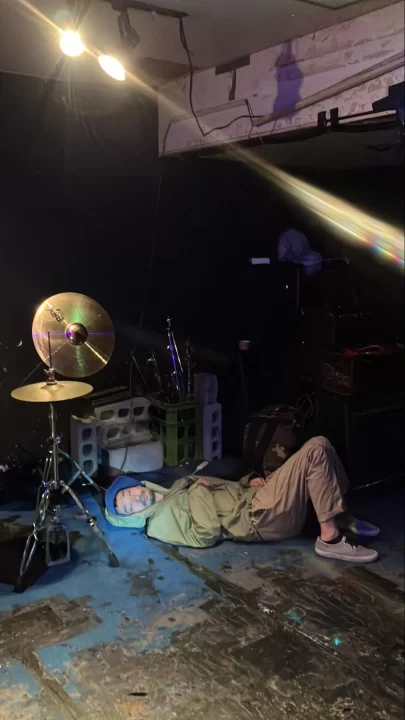
DJ Cooking | DJ Jisui
Based in Kansai. As part of the duo "Jibo-shi" with oboco, they hosted the soul-saving bar "Jiai/THE I" once a month on Wednesdays at Namba Bears, inviting unique talents, cultural figures, and eccentric individuals involved with historical records from various fields. In July 2026, due to the demolition of the building in which it was located, the bar ceased operations at that location. "Jiai/THE I" also came to an end, and they are currently wandering.
IG: @mansion.jisui
Interview and text by Hanazawa Ou
Illustration by Oki Masahide